![]() |
| Hugging a tree in New York State Park |
Independent Research Projects Conducted by Undergraduate Researchers (UR) and Continuing Undergraduate Researchers (CUR) Enrolled in the Accelerated OCE1001, OCE2013 and OCE3014 Labs at Daytona State College
IMES
Thursday, January 23, 2020
Holly-Noel (UR)--the Beginning of a Tree Huggers Dream!
Hello reader, my name is Holly-Noel Monroe and I am currently enrolled in the Daytona State College Environmental Science and Technology program, while also working towards my Associates and Arts degree in Wild Life and Ecology Conservation. I have always lived in Florida, but I have traveled and experienced many wonderful environmental sites. Like these top two photos for example were taken in New York state parks. As you can see I also really love photographing trees and also taking photos hugging them as an ongoing family joke.
Do you remember being a graduating high school student and being asked "What do you want to do career wise?" countless times? You may have had an answer or maybe you did not, like me. I honestly was unsure of what path would suit me, but then one day I realized. Luckily, through volunteer service on a local horse farm I was given the inspiration to persue a higher education in environmental sciences. It has always been a childhood dream of mine to make a difference in the science community and work for a zoo. This research blog here will be that stepping stone to an excellent future career. I look forward to blogging my research further soon!
Thursday, October 31, 2019
Andrew Hardwick- (CUR)
Alrighty then, boys and girls. buckle up cause I have two more devises that we can observe for Blue Energy:
First up is the Rotating Mass WEC (Wave Energy Converter): the basic principle is fairly simple. you have a hollow mass with a rounded bottom that has a heavier mass inside it that is attached to a vertical axle. The device is tipped over to and fro by the waves that causes the mass inside to rotate the axle, this rotation is then converted into usable energy. easy peasy. The difficult part is trying to find any amount of useful information about it other than basic concepts. Luckily the Finnish have me somewhat covered on this. Back in 2013, the Finnish company Wello Ltd. deployed such a device in Orkney, Scotland. This device had a maximum output of 300-700Kw and was able to take on waves up to 12 meters (when converted from the European's strange metric ways, that would work out to 39 feet, 4 inches). In the test, it was able to operate in waters as deep as 60 meters. keep in mind that the average water depth around the Florida Peninsula is around 50 meters. As seen on the map below.
With this being a primary model, there is much room for improvement in the second model, which is currently rated for a full Megawatt!

Now the second one is a bit trickier to wrap your head around: the Submerged Pressure Differential WEC. The concept behind this device is that as waves pass by, there is a change in pressure under the water's surface. this change in pressure can be used to drive a submerged mass or two up and down. This mechanical energy can then be converted to usable energy. think of it as a submerged point absorber. But the leading model for this method would be the mWave device developed by Bombora, a company founded in Australia. With this design (which resemble more of an attenuater design), it has the potential to be the most powerful WEC in the world at 1.5Mw. It is also the most well-funded, and the most well developed. Bombora is supposed to deploy their first full-scale model sometime early next year in 2020. It consists of a frame-like structure that is sealed with industrial rubber membranes around an air pocket. As waves pass over it, the pressure from those waves compress the rubber membranes which forces air through a unidirectional pipe. this air turns a turbine which is directly converted to energy.
---------------------------------------------------------------------------------------------------------------------
Why did the Witch's baseball team lose?
their bats flew away.
Alrighty then, boys and girls. buckle up cause I have two more devises that we can observe for Blue Energy:
First up is the Rotating Mass WEC (Wave Energy Converter): the basic principle is fairly simple. you have a hollow mass with a rounded bottom that has a heavier mass inside it that is attached to a vertical axle. The device is tipped over to and fro by the waves that causes the mass inside to rotate the axle, this rotation is then converted into usable energy. easy peasy. The difficult part is trying to find any amount of useful information about it other than basic concepts. Luckily the Finnish have me somewhat covered on this. Back in 2013, the Finnish company Wello Ltd. deployed such a device in Orkney, Scotland. This device had a maximum output of 300-700Kw and was able to take on waves up to 12 meters (when converted from the European's strange metric ways, that would work out to 39 feet, 4 inches). In the test, it was able to operate in waters as deep as 60 meters. keep in mind that the average water depth around the Florida Peninsula is around 50 meters. As seen on the map below.
With this being a primary model, there is much room for improvement in the second model, which is currently rated for a full Megawatt!
Now the second one is a bit trickier to wrap your head around: the Submerged Pressure Differential WEC. The concept behind this device is that as waves pass by, there is a change in pressure under the water's surface. this change in pressure can be used to drive a submerged mass or two up and down. This mechanical energy can then be converted to usable energy. think of it as a submerged point absorber. But the leading model for this method would be the mWave device developed by Bombora, a company founded in Australia. With this design (which resemble more of an attenuater design), it has the potential to be the most powerful WEC in the world at 1.5Mw. It is also the most well-funded, and the most well developed. Bombora is supposed to deploy their first full-scale model sometime early next year in 2020. It consists of a frame-like structure that is sealed with industrial rubber membranes around an air pocket. As waves pass over it, the pressure from those waves compress the rubber membranes which forces air through a unidirectional pipe. this air turns a turbine which is directly converted to energy.
---------------------------------------------------------------------------------------------------------------------
Why did the Witch's baseball team lose?
their bats flew away.
Thursday, September 26, 2019
Andrew (UR)--My thoughts on Improving my Project
My thoughts on improving my project would be to "narrow the search" so to speak. There are several ways of harnessing wave energy, the two that I mentioned just so happened to be the the two I could find the most information about at the time. Just as a general introduction to the idea of wave energy. There are different devices for on shore, near shore, and off shore. And there are different devices for each section.
I could focus on one section (on, near, or off shore) and try to find information on two devises in that section. As i am finding information on those devices, I can acquire wave data in those sections.
As I've stated before, we simply can't populate the World's Most Famous Beach with on shore wave technology. So we will have to resort to off or near shore devices. The definition for offshore that I was able to gather was anything more than 9 miles from the shore. This being Florida, the water can be relatively shallow quite a ways out, so we can mostly look at devices for near shore devices.
However, I have already covered two devices that can operate in near shore locales. So I will have to find two more.
For reference, here is my original project in PDF:
--------------------------------------------------------------------------------------------------------------------------
Why do graveyards have fences?
Because people are always dying to get in.
Monday, September 23, 2019
Katie CUR: Welcome back the wonderful Chondrichthyes Class
Hey Guys!
Right now I am in Phase 2 of my research. Isabella Storozkova,lab manager at Daytona State college, has been helping me in running the microbiological tests this week and we are waiting for the final tests to be done to be able to identify f the bacteria is Gram Positive or Gram Negative. Next week I will let you guys know the findings that we got from the plates so far.
Below I am attaching my abstract for this research that I am presenting at AGU this year. If you guys have any questions or are interested in learning more about my project don't hesitate to leave a comment or ask.
Also here is a link with an article on my research for In Motion.
-------------------------------------------------------------------------------------------------------------
Let me reintroduce myself to all the new people joining us! My name is Katelyn DiGirolomo and I am currently double majoring in Marine Biology and Secondary Biology Education. I am apart of the Fischler Academy and the Dual Admission Program at Nova Southeastern. I am currently doing research at Daytona State College on hopefully devolving some type of antibiotic that will help prevent bacterial infections from happening in shark bite victims. In this post I am going to present some of the information that I have found from the research I have come across and also the research phases I have to go to through to be able to get to the end goal.
------------------------------------------------------------------------------------------------------------
In early 2017 I came across some research that was done by a Nova Southeastern University Professor. He wanted to do studies on Blacktip sharks, Carcharhinus limbatus, on what bacteria was in their mouths and to see which of those possessed multi-drug resistance. What he found was that 4% of the 19 samples he took where multi-drug resistant to the antibiotics. Nathan R Unger was able to run microbiological tests on the samples that were taken and was able to identify the bacteria that was collected.
![]() |
| Blacktip Shark |
Later on in 2017 I took an Oceanography class where we were told to think of some research to do for the class. I thought back to the publication from Unger and wanted to build off of that. I wanted to start small and be able to build the project from start to finish with multiply species of sharks.
Here is how the phases of my research are going to work.
Phase 1
Collect usable samples from various East Coast sharks.
Phase 2
Run Microbiological tests to determine if the bacteria is Gram Positive or Gram negative
Phase 3
Do API tests to classify the bacteria.
Phase 4
Find or Develop an antibiotic that works with the multi-resistant bacteria that is produced in sharks mouths
Below I am attaching my abstract for this research that I am presenting at AGU this year. If you guys have any questions or are interested in learning more about my project don't hesitate to leave a comment or ask.
Also here is a link with an article on my research for In Motion.
-------------------------------------------------------------------------------------------------------------
Introduction
There is a preconceived idea that sharks attack in order to feed. This could be no further from the truth. Over 400 species of sharks inhabit our waters, ranging from the 8-inch dwarf Lantershark to the 40-foot-long Whale Shark (WWF,2018). Out of that 400 species of sharks, 35 Species are known to have attacked humans at least once, and a dozen of them habitually do so. Sharks are carnivorous and eat fish and other larger animals including humans. Between 2001 and 2011 an average of 59% of shark attacks took place in U.S Waters, Florida being one of the top spots for them To happen in (Elert, 2012). The teeth on a shark are not its only weapons they possess. Sharks harbor deadly and even drug-resistant bacteria that can cause extreme damage to the person who was bitten by them. Gram Staining has been a known test that can differentiate two large groups of bacteria based on their different cell wall constituents (Bruckner,2016). This test has been used in previous studies following the bacteria that reside in a sharks mouth.
What is Known
Nathan R. Unger and Colleagues did a study on Isolated Bacteria found in Blacktips (Carcharhinus limbatus)
Majority of shark attacks on Florida beaches occur over on the Atlantic Ocean side in Volusia County (FloridaLife 2009)
Vibrio alginolyticus, Vibrio fluvialis, and Vibrio parahaemolyticus have been found in Great White Sharks that and common to infections in humans (Burk,1996)
What is Unknown
What bacteria inhabits other shark species mouths
Which of these bacteria are harmful to humans
Scientific Question
Are there variations in the types of bacteria found in the mouth of sharks? What is the classification of these bacteria?
Work Cited
6.Unger, Nathan R., et al. “Antibiotic Susceptibilities of Bacteria Isolated within the Oral Flora of Florida Blacktip Sharks: Guidance for Empiric Antibiotic Therapy.” PLOS ONE, Public Library of Science, Aug. 2014, journals.plos.org/plosone/article?id=10.1371/journal.pone.0104577.
Work Cited
6.Unger, Nathan R., et al. “Antibiotic Susceptibilities of Bacteria Isolated within the Oral Flora of Florida Blacktip Sharks: Guidance for Empiric Antibiotic Therapy.” PLOS ONE, Public Library of Science, Aug. 2014, journals.plos.org/plosone/article?id=10.1371/journal.pone.0104577.
Friday, September 20, 2019
Allie (CUR): Home is where the magnetic field is
![]() |
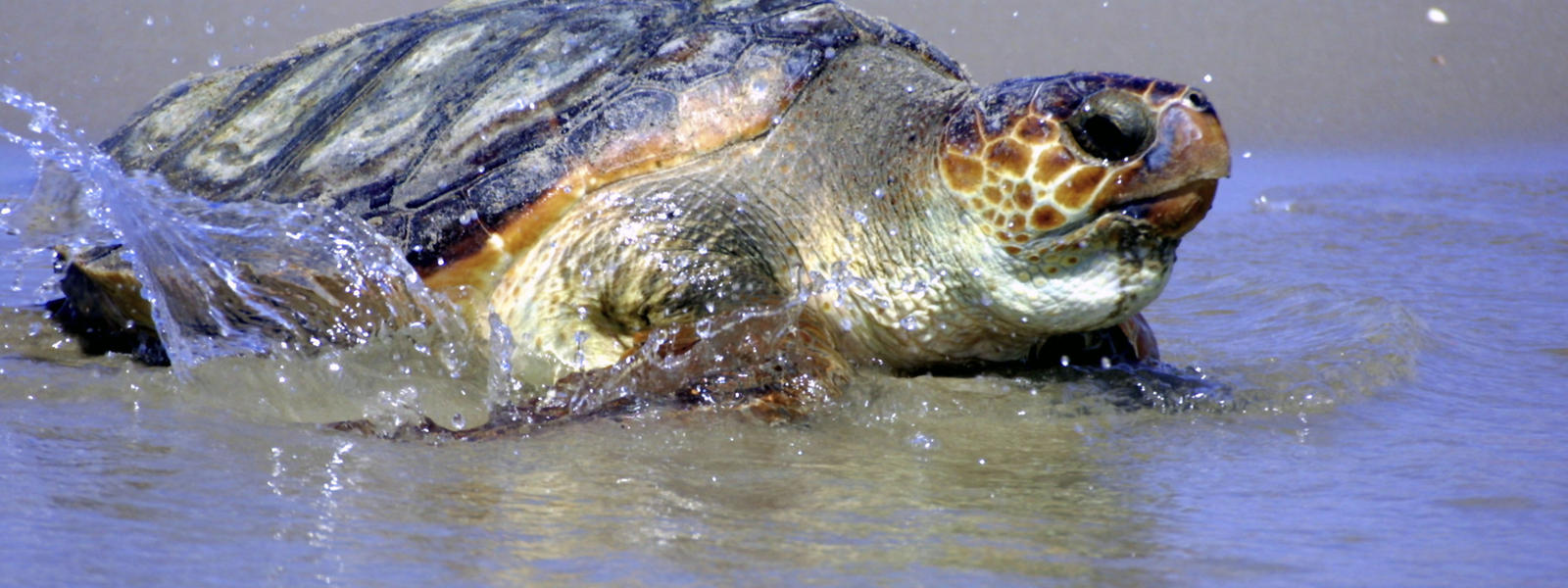
| Loggerhead Turtle |
The gender of many species is established by fertilization. However, reptiles such as turtles’ gender is established after fertilization due to temperature-dependent sex determination. This means the temperature of the eggs during embryonic development factors whether the offspring will be male or female. Loggerheads dig a nest with an average depth of 46 cm, when burying their eggs. The temperature and environmental conditions surrounding the nest during this thermosensitive period (TSP) are relevant after the egg is laid, these aspects influence egg clutches in nests and gender of sex.
![]() |
| Development period of Loggerhead turtle eggs |
The day the egg is laid to date of hatching is typically 75-80 days. This process involves a thermosensitive period (Day 28-52) occurring within the middle third of incubation, during this period the embryos gender is determined through temperature pulses.
The objective of research started May 2019 by classmate Jessica Jacono and Dr. Woodall is to determine
variations in sand texture between New Smyrna Beach and Daytona Beach. This
could be used to answer many questions about the impact sand variation has on
the incoming Loggerhead turtle population. Six temperature probes were buried
approximately the same depth as turtles dig their nests (46cm). Three sites contained
sand from New Smyrna Beach and the other three included sand from Canaveral
areas. They were left to record temperatures during the time of nesting season.
Recently as of Sept 9th, 2019, they were removed from the sand and
we await the results for further observations. Samples of sand from both sites
are going to be collected and compared for results of variations. This
information could answer the question of how sand variations and the condition
of the sand impacts turtles during hurricane season.
***The results of sand sediment will be compared and shared next blog post.
![]() |
| Turtles return to the same beach to lay their eggs by sensing the individual magnetic field of the beach where they were born. |
The article, “How Do Sea Turtles Find the Exact Beach Where They Were Born?” by Carrie Arnold explains how marine reptiles use Earth’s magnetic field to navigate. Scientists have proven many animals travel the sea by detecting the ‘invisible lines of the magnetic field.’ Author Carrie Arnold compares this ability to how sailors use latitude and longitude when sailing the seas. It is truly fascinating that Loggerhead turtles return to the location they were born to mate and lay eggs of their own.
Learning this
information, got me wondering.
How is sand sediment
impacted by storms and how does that influence nesting season?
Loggerhead turtles nesting season heavily depends on
environmental conditions such as temperature of the sand/ developing eggs. The
coastline of Florida is home to thousands of turtles during nesting season each
year. This time aligns with hurricane season, occurring June 1st to
November 30th. September is the peek of storms, which is also around
the end of the nesting season of turtles. It is common that tropical storms
such as hurricanes can impact the sand composition along the beach. Therefore,
the condition of the sand after powerful storms can greatly affect the outcome
of successful hatchings.
Works Cited:
Arnold, Carrie. “How Do Sea Turtles Find the Exact Beach Where They Were Born?” National Geographic, 16 Jan. 2015, www.nationalgeographic.com/news/2015/1/150115-loggerheads-sea-turtles-navigation-magnetic-field-science/.
Fernandez, Colin. “Sea Turtles Use Earth's Magnetic Field to Navigate Back to Beach.” Daily Mail Online, Associated Newspapers, 12 Apr. 2018, www.dailymail.co.uk/sciencetech/article-5608545/Sea-turtles-use-Earths-magnetic-field-navigate-beach-hatched.html.
“Loggerhead Nesting in Florida.” Florida Fish And Wildlife Conservation Commission, myfwc.com/research/wildlife/sea-turtles/nesting/loggerhead/.
“Loggerhead Turtle.” WWF, World Wildlife Fund, www.worldwildlife.org/species/loggerhead-turtle.
Tuesday, September 10, 2019
Monday, September 9, 2019
Jessica (CUR): Let me re-introduce myself...
![]() |
| Me holding juvenile green sea turtle |
Four years ago, I decided that it was time for me to get a degree. At first, I was headed the business route. I thought I had the head for it. I was wrong, but I realized it early. I decided I needed to follow my heart. My passion. The Ocean and all it holds has always had my love, but turtles are my passion 💖
![]() |
| Green sea turtle (Chelonia mydas) |
| Taping off the research site in New Smyrna Beach |
This has lead me to where I am today! My second semester of Oceanography. Continuing my independent research project (Stay tuned for more details!).
| Temperature Logger in sand |
Sunday, September 8, 2019
Hello,
My name is Andrew Hardwick (CUR). I am taking this class as a continuation from last semester to resume my project of seeing if Daytona Beach can be powered by using wave power. Otherwise known as blue energy. I was able to conclude from my project that using either (or both) the wave attenuator device or the point absorber device that though we may not be able to completely power Daytona Beach, we can still make a hefty dent in many a person's power bills. Especially if we were to incorporate Solar technology as well into the power grid. In my next project I will attempt to include one or more new devices with newer information (if available) on the previous devices, along with including other possible locations for these methods of energy absorption.
Now then, some information about me.
I was born and raised in Volusia County, Florida and have lived here my entire life (if you don't include that one year where me, mom, and dad moved to Virginia Beach for a year when i was five). Despite spending a significant portion of my life either on or near the beach, I have never learned how to surf. I'm sure that I could give it the good old college try, but I am afraid that that particular endeavor will most certainly end with me doing a copious amount of face plants in a myriad of ways onto either the surfboard, the sand, the water, or maybe even a shark that might be passing close by. I am also quite partial to horrible puns, or as they are better known: "Dad Jokes". I shall grace you with an example of one that was passed down from my own father to me:
What did the vampire name his boat?
The Blood Vessel.
I will allow you a moment to pick yourself up from the floor after what I hope was vigorous outburst of laughter.... Now that you have regained your composure, you will be pleased to know that I will attempt to accompany all posts I make to this blog with a joke of (hopefully) equal quality at the end. If you are one of those individuals who are of the persuasion that find these types of jokes to not be funny (i.e. someone without a sense of humor) then I shall afford you the courtesy of separating the joke with a series of hyphens at the end of the meat of the post.
Another pass time I quite thoroughly enjoy is that of video games. My personal favorite at the moment being a multiplatform (a game that is available for multiple gaming systems) title by the name of Warframe. I prefer to summarize this game to those that have had the misfortune of not hearing about it as such:
You play as a magical robot space ninja IN SPACE that turns out to have been piloted remotely by a Power Ranger-esque child that was exposed to ghastly inter dimensional energies at an early age, thus empowering said child to be able to pilot the afore mentioned magical robot space ninja in the first place.
My summary does not do the game justice. if you have an inclination to consume this particular piece of video game media, I would highly recommend playing on PC. If you do not have in your possesion a PC that meets the requirements to run the game, then I would say that you should play on the PS4 (which is what I use).
I also have a dog. She is a German Shepherd by the name of Marley (I got her at around the same time as the movie "Marley and Me" came out) and she is the goodest girl there ever was. Please feel free to send me your woefully invalid arguments as to why she isn't.
Unless I am forgetting to add anything else, that will be all. I hope you will enjoy my post.
Sincerely,
Andrew S. Hardwick.
My name is Andrew Hardwick (CUR). I am taking this class as a continuation from last semester to resume my project of seeing if Daytona Beach can be powered by using wave power. Otherwise known as blue energy. I was able to conclude from my project that using either (or both) the wave attenuator device or the point absorber device that though we may not be able to completely power Daytona Beach, we can still make a hefty dent in many a person's power bills. Especially if we were to incorporate Solar technology as well into the power grid. In my next project I will attempt to include one or more new devices with newer information (if available) on the previous devices, along with including other possible locations for these methods of energy absorption.
Now then, some information about me.
I was born and raised in Volusia County, Florida and have lived here my entire life (if you don't include that one year where me, mom, and dad moved to Virginia Beach for a year when i was five). Despite spending a significant portion of my life either on or near the beach, I have never learned how to surf. I'm sure that I could give it the good old college try, but I am afraid that that particular endeavor will most certainly end with me doing a copious amount of face plants in a myriad of ways onto either the surfboard, the sand, the water, or maybe even a shark that might be passing close by. I am also quite partial to horrible puns, or as they are better known: "Dad Jokes". I shall grace you with an example of one that was passed down from my own father to me:
What did the vampire name his boat?
The Blood Vessel.
I will allow you a moment to pick yourself up from the floor after what I hope was vigorous outburst of laughter.... Now that you have regained your composure, you will be pleased to know that I will attempt to accompany all posts I make to this blog with a joke of (hopefully) equal quality at the end. If you are one of those individuals who are of the persuasion that find these types of jokes to not be funny (i.e. someone without a sense of humor) then I shall afford you the courtesy of separating the joke with a series of hyphens at the end of the meat of the post.
Another pass time I quite thoroughly enjoy is that of video games. My personal favorite at the moment being a multiplatform (a game that is available for multiple gaming systems) title by the name of Warframe. I prefer to summarize this game to those that have had the misfortune of not hearing about it as such:
You play as a magical robot space ninja IN SPACE that turns out to have been piloted remotely by a Power Ranger-esque child that was exposed to ghastly inter dimensional energies at an early age, thus empowering said child to be able to pilot the afore mentioned magical robot space ninja in the first place.
My summary does not do the game justice. if you have an inclination to consume this particular piece of video game media, I would highly recommend playing on PC. If you do not have in your possesion a PC that meets the requirements to run the game, then I would say that you should play on the PS4 (which is what I use).
I also have a dog. She is a German Shepherd by the name of Marley (I got her at around the same time as the movie "Marley and Me" came out) and she is the goodest girl there ever was. Please feel free to send me your woefully invalid arguments as to why she isn't.
Unless I am forgetting to add anything else, that will be all. I hope you will enjoy my post.
Sincerely,
Andrew S. Hardwick.
CUR Allie- Introduction/ Storming the Beach
My name is Allie femiano, I was born and raised in upstate
New York and moved to Daytona Beach shortly after completing High School. I
have always had a strong love for science, nature and animals. My favorite
place to spend my time is the beach and around the ocean. This past summer I received
my associates in environmental science and in the future, I plan on earning my bachelors
in marine science. I ultimately would love to work in ocean sciences and make
waves to make the world a better, cleaner and safer place. During this semester I am enrolled in OCELAB1001 and am co-author to classmate Jessica Jacono's research on variations of sand composition in areas of Loggerhead turtle nesting.
![]() |
| A baby loggerhead turtle |
Nesting season for turtles is from May 1st to Oct. 31st and it is not uncommon for you to run into some of these little guys beachside. New Smynra, Flagler and Volusia county beaches host thousands of hatchlings during this season.
As of early September 2019, Hurricane Dorian affected the southeast coastline of the United States. Including Flagler, Volusia, NSB and many more. In the article, ‘Hurricane Dorian damages Daytona Pier, drowns sea turtle eggs’ author Mark Harper reports the damage done to our local shores and the impact this storm has had on the animals that inhabit these areas. Between Canaveral National Seashore (24 miles) including southern Volusia and northern Brevard counties, 13,000 nests have been recorded and more than half of these nests have successfully hatched eggs prior to Hurricane Dorian. Investigations have estimated around 25% of the remaining 6,000 nests were lost.
| Shoreline of Ponce days after Hurricane Dorian |
| Erosion pictured at Ponce Inlet |
Fortunately, for Floridians Hurricane Dorian downgraded to a category 2 hurricane and didn’t cause as much damage to the area as previous hurricanes.
Nonetheless, the damage was still severe in east coast Florida and now marine
animals are suffering. Volusia County community information specialist, Kate
Sark states the sand in Ponce Inlet has been affected. Dorian pivoted north about 100 miles along the southeastern coast, and still managed to cause erosion on the
beaches, resulting in thousands of sea turtle eggs to drown. Beth
Libert of Volusia Turtle Patrol reports, an estimated 150-200 nests have been
lost and with assessments still to be made, they estimate the real number might
end up close to 300.
This independent research project
is based on the readings of six separate temperature probes inserted approximately
18 inches into the sand of New Smyrna and Canaveral areas. The initial objective was to determine variations in sand texture. It is known that the temperature of the sand determines the sex of the turtle hatchling. Does the texture of the sand affect the temperature of the sand? The condition of the sand after a storm correlates to the population of new turtle hatchlings. This can possibly be further explained by examining the recent years of turtle hatchlings and severity of storms hitting within the turtle nesting season.
Works Cited
Harper, Mark. “Hurricane Dorian Damages Daytona Pier, Drowns Sea Turtle Eggs.” Daytona Beach News-Journal Online, Daytona Beach News-Journal Online, 5 Sept. 2019, www.news-journalonline.com/news/20190905/hurricane-dorian-damages-daytona-pier-drowns-sea-turtle-eggs.
Pulver, Dinah Voyles. “39,000 Turtles Hatch as Volusia-Flagler Sets Records in 2017.” Daytona Beach News-Journal Online, Daytona Beach News-Journal Online, 24 Nov. 2017, www.news-journalonline.com/news/20171122/39000-turtles-hatch-as-volusia-flagler-sets-records-in-2017.
Friday, April 19, 2019
Andrew Hardwick (UR)
Alrighty, so then:
There are several suggested ways to harness wave energy. However, the one we will be focusing on in this post would be the attenuator. More specifically, the Pelamis wave energy converter
These bad boys were already used in Portugal in 2008 about three miles off the coast of Agucadoura. Just using three devices, the farm was able to produce 2.25MW of power. For reference: the average American home uses about 867 kWh a month. However, these machines had to be taken out of operation after four months due to technical issues, and because it was during the economy incident (I wouldn't exactly call it a "crisis" in hindsight) occuring around that time, not many people were willing to pay so much money to have them brought back online. Since November 2014 the IP was owned by Wave Energy Scotland, and after two years of testing and trials, was dismantled. The parts are being recycled and the data collected will help future efforts with harnessing wave energy. However, the P2-002WEC device is still operational and used for testing (currently owned by the European Marine Energy Center).
Fast forward to June 2018: A brand new "sea snake" design from a team in Georgia Tech threw the hydraulics idea out the window and replaced it with a technology called triboelectric nanogenerators (otherwise known as TENGs). This tech could revolutionize any kind of method to energy harnessing in the industry. From what I understand, it is able to utilize any kind of mechanical and/or kinetic energy that comes into contact with a surface that is laced with these nano machines. This tech could increase the amount of energy we are able to harness from smaller and weaker waves. Let alone the amount of energy from the larger and more powerful waves.
Alrighty, so then:
There are several suggested ways to harness wave energy. However, the one we will be focusing on in this post would be the attenuator. More specifically, the Pelamis wave energy converter
These bad boys were already used in Portugal in 2008 about three miles off the coast of Agucadoura. Just using three devices, the farm was able to produce 2.25MW of power. For reference: the average American home uses about 867 kWh a month. However, these machines had to be taken out of operation after four months due to technical issues, and because it was during the economy incident (I wouldn't exactly call it a "crisis" in hindsight) occuring around that time, not many people were willing to pay so much money to have them brought back online. Since November 2014 the IP was owned by Wave Energy Scotland, and after two years of testing and trials, was dismantled. The parts are being recycled and the data collected will help future efforts with harnessing wave energy. However, the P2-002WEC device is still operational and used for testing (currently owned by the European Marine Energy Center).
Fast forward to June 2018: A brand new "sea snake" design from a team in Georgia Tech threw the hydraulics idea out the window and replaced it with a technology called triboelectric nanogenerators (otherwise known as TENGs). This tech could revolutionize any kind of method to energy harnessing in the industry. From what I understand, it is able to utilize any kind of mechanical and/or kinetic energy that comes into contact with a surface that is laced with these nano machines. This tech could increase the amount of energy we are able to harness from smaller and weaker waves. Let alone the amount of energy from the larger and more powerful waves.
Monday, March 18, 2019
Elizabeth (UR) - Let's test the Tomoka River
"How does the water quality vary from the head to the mouth?"
![]() |
| The water moves a lot slower as you move towards the head of the river |
This past weekend I went for a boat ride up the Tomoka River to see how far I could make it trying to reach the headwaters. I know that many portions are not passable by boat and probably not even by kayak the further you go but I was up for the adventure. I was able to get go south of Ormond Beach but not by much; probably bordering the city line between Daytona Beach and Ormond Beach.
![]() |
| Elephant ears |
![]() |
| Man made island with lots of dead trees |
Over the last few decades the areas around and on the Tomoka have changed. Some areas drastically and others showing only some signs of change. From housing developments to bridges to dragline / mosquito ditches there have been many ways this river has changed. My main focus though is to see just how far up the head the salt water reaches. The Tomoka River is a tidal flux river. The tide changes from high to low throughout the day and night. The tide runs about 5 hours difference from the Granada Bridge.
![]() |
| supergreen lawns = run off |
I plan to test the water of the Tomoka River in 5 different locations from the Tomoka Basin inland as far towards the headwaters as I can go. I will check the salinity, pH, turbidity, total suspended solids, oxygen and feces... yes poop! Many houses along the river are still using septic tanks and the waste water from those can and will eventually flow into the river.
![]() |
| An alligator sunning with a fishing lure stuck in his mouth :( |
Stay tuned as we see what is in the Tomoka River water samples.
Friday, February 22, 2019
Jessica (UR) - Sand Temperatures on the Canaveral National Seashore
Since sea turtle sex is determined by sand temperature, there is no better way to figure out if we are getting more males than females or vice versa than by measuring the temperatures at the nesting sites. Canaveral National Seashore is a National Park where sea turtle nesting happens every day/night during nesting season.
I am going to measure the temperatures at 6 different locations. The first will be just outside of the park, and the other 5 will be at the each of the 5 sections where there is parking. I will pick a marked nest and dig a hole approximately 80 centimeters (31 inches) deep. This is the depth at which Green Turtles lay their eggs. Each test hole will be approximately 2 meters (6 feet) North of the original nest.
( Did you know that when sea turtles lay their nests in Florida, they are marked and covered to keep predators out. )
I will get some morning temperatures, some afternoon temperatures, and some evening temperatures. I will also speak with the park rangers and see if they have any data that I may use. I would like to compare temperatures over the past 5-10 years. I would use line graphs to show the differences over the years. The more warming that occurs, the more likely it is to have for females being born.
Horrocks, J., & Browne, D. (n.d.). Questions About Sea Turtle Biology. Retrieved February 22, 2019, from http://www.barbadosseaturtles.org/pages/faqs/biology.html
![]() |
| Canaveral National Seashore |
![]() |
| Sea Turtle Nest |
I will get some morning temperatures, some afternoon temperatures, and some evening temperatures. I will also speak with the park rangers and see if they have any data that I may use. I would like to compare temperatures over the past 5-10 years. I would use line graphs to show the differences over the years. The more warming that occurs, the more likely it is to have for females being born.
Horrocks, J., & Browne, D. (n.d.). Questions About Sea Turtle Biology. Retrieved February 22, 2019, from http://www.barbadosseaturtles.org/pages/faqs/biology.html
Wednesday, February 20, 2019
Elizabeth (UR) - Mosquitoes SUCK!
Nobody likes that pesky buzzing or those itchy bites so why dig ditches giving them more area to breed? As early as the 1760's mosquitoes have plagued the people living and visiting Florida. William Bartram, during his many travels through Florida often wrote of the sleepless nights from the troublesome mosquitoes. During the late 1800's Florida was plagued by yellow fever and said to be caused by mosquitoes.
In the 1950's dragline ditches were dug in coastal marshland in Volusia County and all throughout Florida from the Canaveral area to north to Jacksonville. These ditches were thought to expand the areas where fish would breed and live to help control the black salt marsh mosquitoes (Aedes taeniorrynchus) and other mosquito populations by feeding on their larvae. The ditches were also dug to help with drainage. Many of the ditches are not more than 1.5 to 2.5 feet deep and are mostly a mud bottom that remains submerged during most tidal events except during low water events. Approximately 41 ditches were dug throughout the Ormond Beach area adjacent to the Tomoka River and the Tomoka River Basin.
There are numerous negative effects to this ditching. The mosquitoes were inevitably given more waterway to breed in which didn't exactly help in the long run. Digging left spoils on either side of the ditch altering the flow of water in estuaries. It changed the amount of and in some cases the types of fish inhabiting the marshes and wetlands. Wetlands also provide protection during storms and these ditches diminished that. The spoils on each side of the ditches are higher than the original wetlands themselves. This allowed for non native species to invade those areas. One species that did so is the Brazilian Pepper (Schinus terebinthifolius).
In the early 2000's small grant funding was provided to the St. John's River Water Management District to begin a restoration project to fill in dragline ditches and restore wetlands to their natural habitat. They partnered with the U.S. Fish and Wildlife Service, Florida Fish and Wildlife Conservation Commission and Florida Department of Environmental Protection and Florida State Park System. As funding became available they would do small portions in different areas to restore the wetland habitat as much as possible. An Amphibious Excavator is used to dig out trees and other vegetation. This is usually left to be used as fill in certain ditches. The soil is then leveled to the original elevation of the marsh. Some areas had grasses planted whiles others were allowed to restore itself naturally. Fish, birds, crabs and plants have been seen in restoration areas where they had previously moved on due to habitat loss. Marsh grasses have grown quickly in places where the soil was reestablished. During the restoration process, turbidity in the Tomoka River was monitored due to the sediments being disturbed during back filling. Turbidity curtains were installed to at the outlets of the river to minimize impacts.
![]() |
| A flier for a conference on the elimination of the disease carrying mosquito. |
| Dragline (excavator) circa 1950s |
| Dragline ditches before and after restoration |
There are numerous negative effects to this ditching. The mosquitoes were inevitably given more waterway to breed in which didn't exactly help in the long run. Digging left spoils on either side of the ditch altering the flow of water in estuaries. It changed the amount of and in some cases the types of fish inhabiting the marshes and wetlands. Wetlands also provide protection during storms and these ditches diminished that. The spoils on each side of the ditches are higher than the original wetlands themselves. This allowed for non native species to invade those areas. One species that did so is the Brazilian Pepper (Schinus terebinthifolius).
In the early 2000's small grant funding was provided to the St. John's River Water Management District to begin a restoration project to fill in dragline ditches and restore wetlands to their natural habitat. They partnered with the U.S. Fish and Wildlife Service, Florida Fish and Wildlife Conservation Commission and Florida Department of Environmental Protection and Florida State Park System. As funding became available they would do small portions in different areas to restore the wetland habitat as much as possible. An Amphibious Excavator is used to dig out trees and other vegetation. This is usually left to be used as fill in certain ditches. The soil is then leveled to the original elevation of the marsh. Some areas had grasses planted whiles others were allowed to restore itself naturally. Fish, birds, crabs and plants have been seen in restoration areas where they had previously moved on due to habitat loss. Marsh grasses have grown quickly in places where the soil was reestablished. During the restoration process, turbidity in the Tomoka River was monitored due to the sediments being disturbed during back filling. Turbidity curtains were installed to at the outlets of the river to minimize impacts.
| Amphibious Excavator in a restoration area |
| Aerial photo of the 121 Acre Restoration of the Tomoka Marshland |
Sources:
Flagler County Wetland Restoration Project – SJRWMD. (n.d.), Retrieved February 20, 2019, from
https://www.sjrwmd.com/facts/flagler-wetland-restoration-project/
Rey, J.R., Carlson, D.B. & Brockmeyer, R.E. Wetlands Ecol Manage (2012) 20: 197, from
https://doi-org.db06.linccweb.org/10.1007/s11273-011-9235-1
City of South Daytona, Florida // Home Page, Phase 2 Dragline Ditch Project Tomoka State Park,
Retrieved February 18, 2019, from http://www.southdaytona.org/egov/documents/13179195899818.pdf
Kathryn, Step Aboard for the Gospel of Good Health!, Retrieved February 18, 2019, from
https://www.floridamemory.com/blog/tag/yellow-fever/
https://www.sjrwmd.com/facts/flagler-wetland-restoration-project/
Rey, J.R., Carlson, D.B. & Brockmeyer, R.E. Wetlands Ecol Manage (2012) 20: 197, from
https://doi-org.db06.linccweb.org/10.1007/s11273-011-9235-1
City of South Daytona, Florida // Home Page, Phase 2 Dragline Ditch Project Tomoka State Park,
Retrieved February 18, 2019, from http://www.southdaytona.org/egov/documents/13179195899818.pdf
Kathryn, Step Aboard for the Gospel of Good Health!, Retrieved February 18, 2019, from
https://www.floridamemory.com/blog/tag/yellow-fever/
Andrew (UG)- Hang Ten (Kilowatts)!
Hello,
My name is Andrew Hardwick. I am a student at Daytona State College studying Marine Biology. Although I have been leaning more towards finding ways to harness renewable energy over the past year. Although I am fascinated by solar technology and want to find ways to make it more widespread, I recently discovered from my Oceanography professor (one Dr. Debra Woodall), that no one has yet to find out how much energy we could harness from the ocean waves. specifically Daytona Beach.
Of course, we can't realistically dedicate a significant portion of the World's Most Famous Beach to the machinery necessary to harness wave energy, so this will ave to be done offshore so as to not detract from the tourism that Daytona Beach attracts. Therefore I will survey information from four locations (with a bit of wriggle room in the form of .05 degree margin of error), the average height of the waves, the distance between wave crests, and windspeed/direction to determine weather or not:
Is Offshore Daytona Beach A Viable Location to Harness Wave Energy?
the website that I will be using is earth.nullschool.net. It has all of the necessary information which allows me to calculate how much (potential) energy a wave has per meter of length. The equation that is used to calculate the amount of energy a wave has involves the height of the wave crest and the time between waves. The equation is written thusly:
P=0.5xH⋀2xT(Kw/m)
P= power of the wave
0.5= constant
H= height of wave (in meters)
T= Time between waves (in Seconds)
Kw/m= Kilowatts per meter of wave length
My name is Andrew Hardwick. I am a student at Daytona State College studying Marine Biology. Although I have been leaning more towards finding ways to harness renewable energy over the past year. Although I am fascinated by solar technology and want to find ways to make it more widespread, I recently discovered from my Oceanography professor (one Dr. Debra Woodall), that no one has yet to find out how much energy we could harness from the ocean waves. specifically Daytona Beach.
Of course, we can't realistically dedicate a significant portion of the World's Most Famous Beach to the machinery necessary to harness wave energy, so this will ave to be done offshore so as to not detract from the tourism that Daytona Beach attracts. Therefore I will survey information from four locations (with a bit of wriggle room in the form of .05 degree margin of error), the average height of the waves, the distance between wave crests, and windspeed/direction to determine weather or not:
Is Offshore Daytona Beach A Viable Location to Harness Wave Energy?
the website that I will be using is earth.nullschool.net. It has all of the necessary information which allows me to calculate how much (potential) energy a wave has per meter of length. The equation that is used to calculate the amount of energy a wave has involves the height of the wave crest and the time between waves. The equation is written thusly:
P=0.5xH⋀2xT(Kw/m)
P= power of the wave
0.5= constant
H= height of wave (in meters)
T= Time between waves (in Seconds)
Kw/m= Kilowatts per meter of wave length
Thursday, February 7, 2019
Jessica (UR) - Sea Turtles Don't Like Climate Change
Everyday we hear more and more about climate change. the temperature increase slightly every year. The beaches get smaller. Then we will get a cold snap and all of a sudden you will hear a comment like, "What happened to global warming?"
I wish turtles could talk! What would they have to say about climate change? I can almost guarantee that they would not be happy.
![]() |
| Cold-Stunned Turtles |
In the northwest Atlantic, the number of cold-stunned sea turtles has been on the rise since the 1970's. This is due to the warming on the inlets and bays. As the waters warm, it attracts the turtles. When you thing of warming, you don't think of hypothermia. Well, that is exactly what is happening.
Now in Cape Cod Bay, Massachusetts it gets cold. They get Nor'easters and ice storms. They go ice fishing in the winter, skiing, and, one of my personal favorites, snowmobiling. Does this sound like a good habitat for a sea turtle?
![]() |
| Kemp's Ridley(Lepidochelys kempii) |
The most common sea turtle to get cold-stunned is the Kemp's Ridley. They are the smallest of all the species of sea turtles. Before 2009, only 2 (1999 and 2002) years had ever reached a 100 cold-stunned turtles. Since 2009, ever year over 100 cold-stunned turtles are found. Once the sea surface temperature drop to about 10˚C, it becomes dangerous. Once the waters reach about 5.0˚C - 6.5˚C, it is usually too late 😢
This is just the tip of the iceberg.
When things start warming up, this also creates some problems.
David T. Booth, from the School of Biological Sciences in Queensland, Australia, has really given some information that I find very valuable. He stated, "At low temperatures (typically 26–28 °C)
predominately males are produced; intermediate temperatures (typically 28–30 °C) produce a good proportion of both males and females, while high temperatures
(30–34 °C) produce predominantly females." So, cool equals boy and warm equals girl. Pretty straight forward.
![]() |
| Thermometer |
So let's raise the earth's temperature a little bit, only by a single degree or 2. It won't have that much of an impact you say. Wrong!
By raising the temperature just one or two degrees will produce a multitude of side effects. The nest temperatures will go up. Less males will be born, so the genetic diversity of these turtles will decrease. The polar ice caps will melt faster. Waters levels will rise. The beaches will start disappearing. Then what? Where will these amazing creatures go?
![]() |
| Just a swimmin' |
Griffin LP, Griffin CR, Finn JT, Prescott RL, Faherty M,
Still BM, et al. (2019) Warming seas increase cold-stunning events for Kemp’s
ridley sea turtles in the northwest Atlantic. PLoS ONE 14 (1): e0211503. https://doi.org/10.1371/journal.
pone.0211503
Booth DT (2017). Influence of incubation temperature on sea
turtle hatchling quality. Integrative Zoology 12, 352–60. doi:
10.1111/1749-4877.12255
Wednesday, February 6, 2019
CJ (UR) - A shark can only attack you if you're wet
Since I’m basing my research project off catching sharks and
eventually tagging them, these websites could be useful to my research project
because they are all websites of organizations that deal with sharks and shark
research here in Florida. I plan on catching them and taking data including
species, length, girth, sex, and the location where I caught it to further help
understand what kind of shark species call these local waters home which in
turn could help formulate a conservation and awareness plan here in our county
that prides itself in being the “Shark Bite Capital of the World”.
The first source I found was the NOAA Northeast Fisheries
Science Center whose mission “is to conduct life history studies of commercially and
recreationally important shark species. Our research is focused on distribution
and migration patterns, age and growth, reproductive biology, and feeding
ecology. We conduct fishery independent surveys of large and small coastal
sharks in US waters from Florida to Delaware.”. This source will be useful
because it has tagging information which has tips and instructions, research
information and species descriptions.
Like the source above the FWC has all the information you
would need about sharks but it is specifically Florida and the species and laws
associated with sharks and fishing for them. It gives you information on proper
gear, sharks that are prohibited from landing in state waters on top off
regulations and species identification.
The last source I found that could be useful is the Ocearch
Shark Tracker. These guys have an app that you can get on your phone that shows
you the locations of different shark species tagged by them around the world.
It’s one of the best visual representations you can get as far as shark tagging.
In addition to that, you can see the species, sex, length, weight, age, the
path in which the shark has traveled and where the shark was tagged.
Sources
National Oceanic and Atmospheric Association/Northeast Fisheries
Science Center. (2019). Apex Predators
Program. [Website]. Retrieved from https://www.nefsc.noaa.gov/nefsc/Narragansett/sharks/
Florida Fish and Wildlife Conservation Commission. (2019). Sharks. [Website]. Retrieved from https://myfwc.com/fishing/saltwater/recreational/sharks/
Ocearch. (2019). Shark
Tracker. [Website]. Retrieved from https://www.ocearch.org/?list
Subscribe to:
Posts (Atom)