
 |
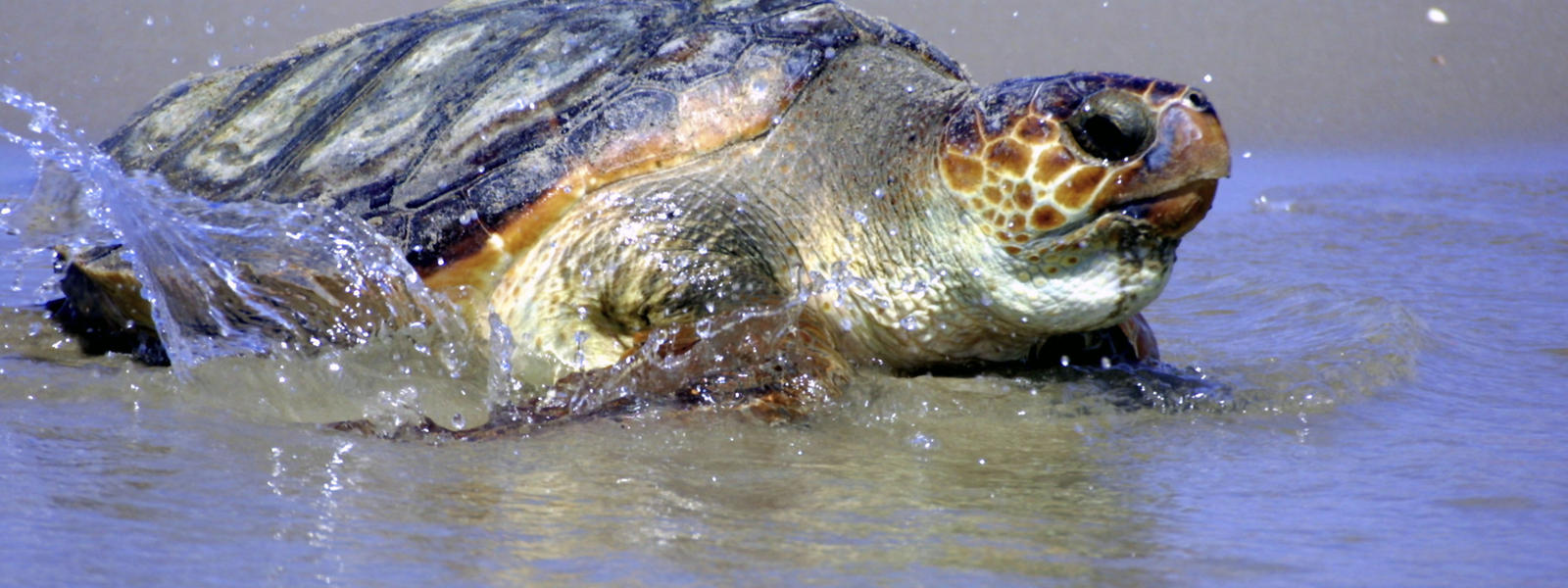
| Loggerhead Turtle |
The gender of many species is established by fertilization. However, reptiles such as turtles’ gender is established after fertilization due to temperature-dependent sex determination. This means the temperature of the eggs during embryonic development factors whether the offspring will be male or female. Loggerheads dig a nest with an average depth of 46 cm, when burying their eggs. The temperature and environmental conditions surrounding the nest during this thermosensitive period (TSP) are relevant after the egg is laid, these aspects influence egg clutches in nests and gender of sex.
 |
| Development period of Loggerhead turtle eggs |
The day the egg is laid to date of hatching is typically 75-80 days. This process involves a thermosensitive period (Day 28-52) occurring within the middle third of incubation, during this period the embryos gender is determined through temperature pulses.

The objective of research started May 2019 by classmate Jessica Jacono and Dr. Woodall is to determine
variations in sand texture between New Smyrna Beach and Daytona Beach. This
could be used to answer many questions about the impact sand variation has on
the incoming Loggerhead turtle population. Six temperature probes were buried
approximately the same depth as turtles dig their nests (46cm). Three sites contained
sand from New Smyrna Beach and the other three included sand from Canaveral
areas. They were left to record temperatures during the time of nesting season.
Recently as of Sept 9th, 2019, they were removed from the sand and
we await the results for further observations. Samples of sand from both sites
are going to be collected and compared for results of variations. This
information could answer the question of how sand variations and the condition
of the sand impacts turtles during hurricane season.
***The results of sand sediment will be compared and shared next blog post.
 |
| Turtles return to the same beach to lay their eggs by sensing the individual magnetic field of the beach where they were born. |
The article, “How Do Sea Turtles Find the Exact Beach Where They Were Born?” by Carrie Arnold explains how marine reptiles use Earth’s magnetic field to navigate. Scientists have proven many animals travel the sea by detecting the ‘invisible lines of the magnetic field.’ Author Carrie Arnold compares this ability to how sailors use latitude and longitude when sailing the seas. It is truly fascinating that Loggerhead turtles return to the location they were born to mate and lay eggs of their own.
Learning this
information, got me wondering.
How is sand sediment
impacted by storms and how does that influence nesting season?
Loggerhead turtles nesting season heavily depends on
environmental conditions such as temperature of the sand/ developing eggs. The
coastline of Florida is home to thousands of turtles during nesting season each
year. This time aligns with hurricane season, occurring June 1st to
November 30th. September is the peek of storms, which is also around
the end of the nesting season of turtles. It is common that tropical storms
such as hurricanes can impact the sand composition along the beach. Therefore,
the condition of the sand after powerful storms can greatly affect the outcome
of successful hatchings.
Works Cited:
Arnold, Carrie. “How Do Sea Turtles Find the Exact Beach Where They Were Born?” National Geographic, 16 Jan. 2015, www.nationalgeographic.com/news/2015/1/150115-loggerheads-sea-turtles-navigation-magnetic-field-science/.
Fernandez, Colin. “Sea Turtles Use Earth's Magnetic Field to Navigate Back to Beach.” Daily Mail Online, Associated Newspapers, 12 Apr. 2018, www.dailymail.co.uk/sciencetech/article-5608545/Sea-turtles-use-Earths-magnetic-field-navigate-beach-hatched.html.
“Loggerhead Nesting in Florida.” Florida Fish And Wildlife Conservation Commission, myfwc.com/research/wildlife/sea-turtles/nesting/loggerhead/.
“Loggerhead Turtle.” WWF, World Wildlife Fund, www.worldwildlife.org/species/loggerhead-turtle.

No comments:
Post a Comment