IMES

IMES

Friday, October 19, 2018

Small fibers, Big problems- CUR Allie


Image result for microbeads
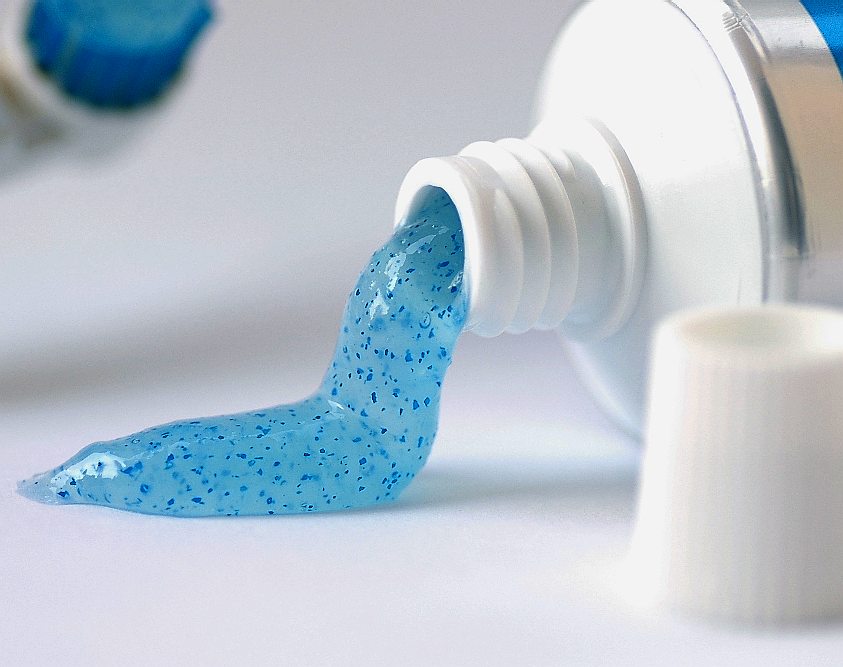
Microbeads found in toothpaste
Image result for microbeads
Microbeads
    Many products humans manufacture, and use can be very harmful to the environment. For example, many beauty and health products contain microbeads. According to the National Oceanic and Atmospheric administration, in 2015 the U.S banned intentionally small designed plastics called microbeads. Identical to microplastic fibers, microbeads also infiltrate the waterways and our oceans. Both tiny micro pieces less than five millimeters long form an indestructible army, forcing aquatic species to adapt to their new environment. The ocean inhabits many forms of species with countless different hunting methods/ feeding habits/ location of food source and more. It would be easy for any animal to receive a mouthful of tiny microplastics and microbeads in attempts to eat, especially with an environment invaded with tiny little balls of inevitable harm.

Image result for microbeads

  The article 'Our Oceans: A Plastic Soup' by Renee Cho, highlights one of Moore's expeditions in which hundreds of fish are investigated for microplastic consumption by conducting necropsies. The ending results were over 1/3 of the fish had ingested polluted plastic fragments. The same study showed a case of a 2.5-inch fish that had been recorded with 84 pieces of plastic in its stomach. That’s a full stomach for a tiny fish! Often the case is once they consume the plastics, they starve because their stomachs are full, and they cannot properly digest, resulting in internal blockages and death. In 1999 Moore’s research in the Central Pacific found six times more plastic than zooplankton in the water. Once the amounts of plastic start outnumbering the species, we have a problem. These are just a few examples of the fairly new studies on the consumption of plastics in aquatic life.

Laysan albatoss decomposed carcass

Photo: Algalita Marine Research Foundation

Decomposed carcass of Laysan albatross with bottle caps and plastic objects inside
Laysan albatoss on Kure Atoll, North Pacific. 


Important Figure

Charles Moore: An oceanographer and boat captain. Known for discovery of 'Great Pacific Garbage Patch' an area of the Pacific Ocean overwhelmed with floating plastic debris, (3x the size of Texas). 
  • Through continuous research and dedication, Moore has made numerous expeditions and collected important data concerning the increase of pollution in our seas. This relates to my research project because, just like my data- Moore has proven microplastics are affecting the aquatic environment. 
  • More details on Moore's expedition's can be found on the  "Algalita Foundation's website".
  • As well as this significant article written by Charles Moore, where he personally explains his strategy and discoveries.  


Work Cited:

Moore, Charles. “Trashed Across the Pacific Ocean, Plastics, Plastics, Everywhere.” Natural History Magazine, Nov. 2003, www.naturalhistorymag.com/htmlsite/master.html?http%3A%2F%2Fwww.naturalhistorymag.com%2Fhtmlsite%2F1103%2F1103_feature.html.

“Our Oceans: A Plastic Soup.” State of the Planet, 18 June 2018, blogs.ei.columbia.edu/2011/01/26/our-oceans-a-plastic-soup/.

“When The Mermaids Cry: The Great Plastic Tide.” Plastic Pollution, plastic-pollution.org/.

US Department of Commerce, and National Oceanic and Atmospheric Administration. “What Are Microplastics?” NOAA's National Ocean Service, 13 Apr. 2016, oceanservice.noaa.gov/facts/microplastics.html.

Wednesday, October 17, 2018

Katie: What's a Blog Without A Video Here and There?

Hey Guys! I am so sorry for the late post but the videos have taken way longer to download onto my computer than I thought it would! But anyways the video does not have sound for some odd reason, so below each video is a brief description on what is happening. I will also put a brief description under the video so you know which tube and plate I am inoculating.


I had some questions from Samantha V. in OCE1001. She asked if the bacteria from the sharks mouths differentiate between different breeds of sharks and the answer to that is yes and no. Just like humans, sharks are all different. So no matter the breed or the age of the shark, all their mouths are different. Just how one snowflake cannot be the same neither can bacteria in different sharks mouths. Yes the may have some of the same bacteria but all the samples I have taken do not look the same. Some pictures are provided around!


Samantha also asked if the bite is more dangerous the bigger the shark is. To be completely honest I haven't been focusing on what the bites do to the person, but I've been focusing more on what bacteria is living in their mouths and identifying it.

Here we are inoculating the plates with Specimen 10. I used a loop which is basically a wire with a loop at the end of it. I stated with the TSA plate just so we can do the oxidase test and catalase test on. Next I clean the loop with a flame and let it cool down. The starch plate I did next and all I do is run a line down the middle of the plate so I can add iodine to it after a couple days. After that we do the Blood Agar Plate which will see if the bacteria needs nutrients to grow. Next will be the EMB plate which I streaked along the plate. Lastly I did the MAC plate which I just ran the loop across it.


This week I post the results for all the tests for you all to see!


Monday, October 15, 2018

Josh Munsey: Answering Questions

Hello everyone, I hope you all have had a good past couple of weeks. I'm hoping to get out fishing soon in the next couple of weeks so hopefully I will have a good update for you then. Anyways today I will be answering some of you guys' questions.
My first question is: Robert M. Section 102 I'm assuming you are using electronic tags on the sharks, what is the effective range of the tags and what is the furthest from the area have you seen them ping? 

Actually we do not use electronic tags as they cost to much and we do nut have the funding to do that. Also, the Scalloped Hammerheads we are trying to catch are of immature size and some of the electronic tags will damage the shark if used on immature sharks. The tags we use really on the shark being recaptured by someone and them reporting the info on the shark.


CJ N. OCE1001 I've known about this "nursing ground" by scalloped hammers myself but have not actually been able to gather information as to why either. Do you think it has to do with the inlet essentially being an estuary where there's a pretty large congregation of fish and these sharks have figured it out and kept coming back?

I think that has a very large role. I think that these Scalloped Hammerheads know that their pups will have plenty to feed on in this area as it is a place where many fish, especially batfish come to congregate and these immature sharks can learn how to hunt in this area. 


Giavanna B Sec 101 If Daytona Beach is a nursing ground for these sharks, what are the steps that would need to be taken to preserve them and their habitat so that they can avoid further depletion of their population?

These sharks are protected in Florida state waters but I think the best thing we can do, if this does turn out to be a nursing ground for these sharks is to get the word out there that this is a special place for these sharks to make sure that no one takes these shark illegally and if you do catch these sharks that you don't do anything to harm them in any extra way.


  J Ogadah from 101. What threats are there to the safety and wellbeing of the sharks?-- hunting, disease, habitat destruction, etc? And what can be done to help them?

These sharks are highly sought after all over the world for their fins, thankfully, however these sharks are protected in Florida so the only threats to them hunting wise are from illegal poachers. One of the bigger threats is from recreationally catching these sharks, Scalloped Hammerheads have been known to have very high stress levels and if left on the fishing line to long or handled the wrong way when caught, these sharks can become very damaged or even die due to the high levels of stress.


Samantha V. OCE 1001 I am really interested in the results of this project. But,
Do they hang around their birth spot for any amount of time before venturing further off into the ocean, and do they usually return to their birth spot as they get older?

This is something we really want to learn from this project. One of the main questions in this project is that if it is a birthing ground is it also a nursery ground for these sharks? We think yes but we still need more research to see whether or not these sharks stay in this area to grow up or if they are just born here and then leave and go somewhere else to grow up.  

Wednesday, October 3, 2018

Slowly Breaking Away.. CUR: Allie

Image result for secondary plastic breakdown in water
How Microplastics develop in water

  Since the beginning of the global production and development of a plastic world, the percentage of production each year continues to grow greatly. Simultaneously, the amount of plastics and other artificial materials such as Styrofoam, are improperly discarded at an increasing rate into the native environment. Society has become undeniably reliant and dependent on materials often manufactured for one use only. Without the ability to naturally decompose, the breakdown process is like breaking off little tiny pieces of the substance, then breaking off little tiny pieces from that product and so on. This is called secondary microplastics.

Global plastic production from 1950 to 2016 (in million metric tons)

Image result for microplastic pollution fragments in ocean natural environment
Trash clutters the shoreline

  The article 'When the mermaids cry: The great plastic tide' by Claire Le Guern addresses how truly toxic plastic is due to its own inherent properties. Properties including, buoyancy, durability and propensity to absorb waterborne pollutants create an incredibly long breakdown. The process of fragmentation into microscopic pieces leaves the sea water contaminated with toxic Bisphenol A (BPA) and other toxins. The disintegration of plastic is gradual. A combination of physical, biological and chemical processes can weaken the debris structure. Typically ensuing a fragmentation of the once whole product. Artificial materials and plastic products are seemingly convenient for humans, but in the long run outlive us with decomposition rates of 500+ years and leave a toxic impact on the environment.

Works Cited

“Global Plastic Production.” Statista, www.statista.com/statistics/282732/global-production-of-plastics-since-1950/.

Le Guern, Claire. “Plastic Pollution.” Coastal Issues / Coastal Care, 2018, coastalcare.org/2009/11/plastic-pollution/.