
 |
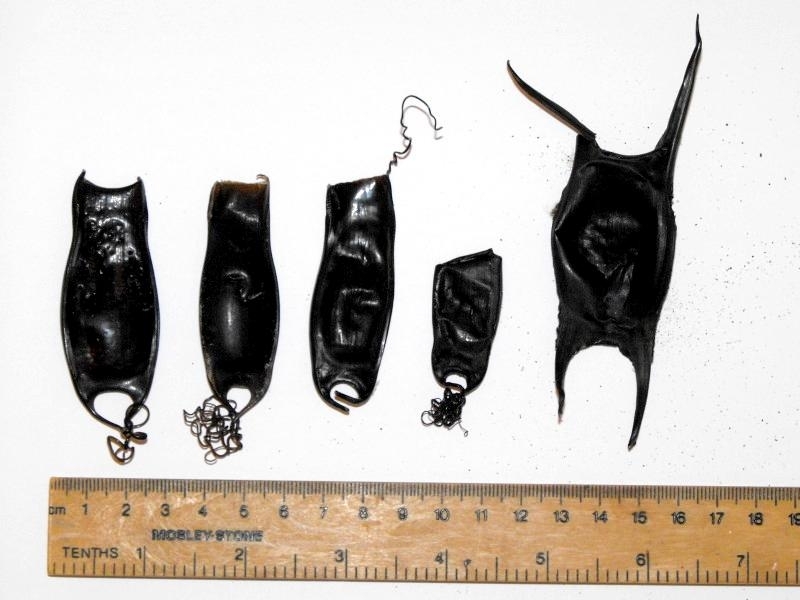
| Examples of egg cases. The case to farthest on the right is from the Common skate |
Materials:
- A stranded ruler
- Waterproof Container with freshwater (I will be using a 5 gallon bucket)
- 1 gallon plastic zip lock bag
- Field notebook and Pencil
- Camera
Method:
- Before leaving for your search site, fill your waterproof container with freshwater. This container can either be carried with you or left in your car.
- Once you find an egg case record your environmental conditions and location
- Take a picture of the case before collecting it either into your waterproof container or zip lock bag.
- Put the egg case into the waterproof container with freshwater and let soak for 1-2 hours so they can regain their full shape. (Some larger cases may need to soak for up to 24 hours)
- Take the egg case out of the bucket and record length of the body, length from horn to horn, and width of the body
- Identify the species belonging to the egg and record
- Set the egg out in the sun for preservation
In my research I ran a cross a website called sharktrust.org and planned to use the ID key that hey had to identify my egg cases. Upon looking further I found that they ID key was for the skate of Great Britain which isn't very useful for me. I am currently looking for another ID key that I can use but I might have to make my own. Happy hunting everyone!

Rachel--if someone wanted to help you locate/sample skate egg casings, what sort of information would you want them to collect for you? And how should we collect them (can we just place them in a baggie and bring them to the lab for later hydration?). I know we sometimes walk on the beach and we'd be happy to look/gather these cases.
ReplyDelete