IMES

IMES

Monday, April 20, 2015

Robin..UR Q & A to Natural based Oyster Mats

Natural Based Oyster Mats
Questions and Answers to concerns


I've been reading different articles on the "concrete being natural" situation, and some state that some concrete does have chemical additives. Quikrete lists in the ingredients of on of its products "and other ingredients approved for use in concrete". According to the following article "cement has constituents that...have corrosive effects" and thus should be "treated as hazardous materials" (http://www.ncbi.nlm.nih.gov/pubmed/15068132). This of course pertains to people handling the concrete and may not affect the oysters, but it could be a source of future error to consider since you can't test your product over a long time span. So should someone ask after your next presentation about potential ill effects of concrete, I wouldn't generalize that it is ok cause it is made of natural substances, but address potential issues that you weren't able to test in this short time period.
Angela Boney,
First let me say it was good to see, so I could thank you for taking me to a higher level of matters in my project, second I would like to write some of those things we talked about, so that others who have similar concerns may have some insight.
Concerns of ill effects, yes concrete over long term exposure or skin irritation “can” cause dermatitis which is a skin allergic reaction, it is recommended that glove be worn when mixing the concrete of any kind. It is also recommended to wear gloves when handling the oysters due to splinters which can cause the same skin irritations.
Long term use and Corrosive material: I have not personally been able to deploy my oyster Mats “Yet” because I have to wait for the season of the Oysters to spat, or do their thing, But I have read many articles over the years where they have used recycled concrete from bridges and water mains for a long time on restorations of coral reefs and those all have been positive feed-back.
Sincerely Hope you stay in touch, and thank you again, we will miss you and congratulations on the move.
Robin
What are currently the biggest threats posed to existing oyster beds? What is the biggest obstacle to synthetic oyster beds?

~Bethany Cobb, Sec. 1
Bethany Cobb,
 Very good question, one which I will have to do some digging into of research on this matter to be specific, but for the most part pollution/construction (oil spills) and over fishing or harvesting of oysters are the biggest threats.
Obstacles of Synthetic Oyster Beds: Testing and researching, so I would have to say “time and money”. Oysters  are seasonal as are most cycles of life are and therefore it gives people time to prepare and test the artificial mats, but in the same respect  research on what is actually better or as close to natural as possible takes time too. Trial and error and never giving up!
Robin

Jody ..UR - More answers!

arielnsb13March 29, 2015 at 8:55 PM
Ariel Chivers Section 50 Is the water used to water golf courses recycled? Are there conflicts with wildlife at golf courses?

Anna S. Sec. 01April 19, 2015 at 6:26 PM
What are the negative effects of these chemicals? Do the chemicals harm and/or kill any wildlife that live in or drink the pond water?

Thanks for the Questions Ariel & Anna. 
First Ariel; the answer is some do utilize reclaimed water for irrigation some don't. We at our course do not. The limiting factor to this is land. If the developer has enough land to invest in a full sized golf course then there should be no need to purchase water from a municipality. Plenty should fall as precipitation and the designer should have installed enough water holding capacity to accommodate the irrigation system. We seldom have any mishaps with wildlife other than an occasional fox running after a golf ball, or raccoons in the garbage. 
Anna your question is very broad, what chemicals are you referring too? if you are talking about N & P then you must read some more of my posts because all of them will only begin to answer your question! In short nitrogen and phosphate in excess can and will cause an over stimulation of photosynthetic organisms resulting in eutrophication of a water body which results in a depletion of Oxygen which will not only harm aquatic creatures, but can kill them if it is depleted too much. As far as wildlife that drinks the water. I have not a clue that would be for another whole set of parameters. My research has to do with water chemistry and the effects that has on water quality.

Sunday, April 19, 2015

Paul, UR - Answers and a Change

Janice P. Sec. 50. So thinking this through, where are you expecting more invertebrates to attach and why? I would think that being in the current would bring more organisms but the high currents would make it harder to attach? What do you think will happen? Thanks for your answer. Are you going to post any pictures? Colonization

Thank you for the great question. It is not unreasonable to think as you had stated, high current may bring more organisms, yet make it harder for them to attach, though I would have expected to see a higher coverage and diversity in a stronger current than slack water. However through researching this topic, I have learned that current plays quite a vital role in a fouling community. Species such as Leptogorgia virgulata absolutely require current to feed on zooplankton. While higher currents may make it harder for invertebrates to attach, it is required to feed. The Halifax River does not maintain a high current speed. There is a constant flux in low and high tides. However what current there is plays a vital role in filter feeding of these organisms. The organisms that are out in the main current will receive much more water passing through to allow them to adequately feed on microscopic prey to flourish and multiply while those in slack water may not receive adequate water flow.

Unfortunately the last time I went to collect data and see how things were going, I discovered that I would be forced to make a change in my methods of analyzing my data. I arrived to learn that one entire location had the PVC squares removed with the line securing them cut. This was as one would think, quite a bummer to put it lightly. I will now have to use the areas that were scraped originally to adhere these squares for my comparable data. Unfortunately this will affect my data and the results won't be as pretty, though there will be enough to get results. I was pleased to find that there was a significant amount of growth on the squares that remained. Yes, there are pictures that will be posted soon. Thank you again for your question.

Taylor - UR - Updates, Pictures, Questions


Thank you again for the wonderful questions! I have answered them at the bottom of this post. As an update, the octopus was fed the raw food for the first week and would come out of his den about 75% of the way to take his food from a stick. He was not very social at the beginning and would hide most of the time, playing with the toys put into the tank for only a few seconds.. The second week when we introduced the live food, he became much more active. He would come out to search for the live shrimp or crab in the tank and attack. He would then take a long time to digest and then become curious of the tank and other animals such as the slipper lobster and batfish and swim around. Along with this, he would play with the toys longer and grab onto my hand for a few moments, but then let go. The third week we started with the puzzles and the live food. He absolutely loves it. We have a jar that he is learning to open along with a hamster ball (the ball is his favorite, hes already an expert at opening it). He now will play for long periods of time and try to pull me into the tank (literally, he is extremely strong).

Unfortunately, I cannot get any videos to load of the octopus, as soon as they upload to YouTube I will post some (early this week)!  But here are some photos of him playing!


Questions:

Is there anything that would distinguish the gender of an octopus and if so, what are the features?

Yes, the difference between genders is that a male will have less suckers on the third arm to the right on his body. This is because this is where the male organ is to reproduce with the female.

Since an octopus has eight legs, does this increase it's overall strength compared to other sea creatures the same size? If so, what is the comparison. Also, does it have the strength to overpower something larger in size?

Absolutely. Octopus are mainly made up of mainly muscle and tissue, so having eight, strong, muscular legs compared to just two like us, their strength is definitely increases. I couldn't give an exact comparison, but most animals in the ocean don't have legs except for crabs, some fish, turtles, etc. and these aren't particularly "strong" animals even if they have other good adaptations. And yes, since they are so strong, they can overpower larger animals. As stated above, my octopus is strong enough to latch onto me with three or four legs and pull be down with the rest. There are some videos of giant octopus taking on sharks that try to eat them and winning.

Are there behaviorial difference between the sexes of octopus? If your octopus were a female, would it cause different results in stimuli?

As far as regular day to day behavior, feedings and stimuli in and out of the tank, the behavior seems to be the same. The only difference really comes to reproduction when males are looking for females they are very aggressive towards other males and "picky" in the females of their choice. When the females are protecting their eggs, they don't move and are very inactive besides keeping the eggs safe. The males will continue on to find more females to reproduce with until they die.

I just need to know about that head! What's the deal with it? In one picture is seems to be holding carrots while in all others it seems to drag it around. Is there a brain in there or what? And why does it drag it around rather than hold it upright like all other animals?

The head of the octopus or the "mantle" holds all of its organs. Its brains (they have three), stomach, hearts (three as well) intestines, etc are located within. It has a very strong muscle around the outside of it which protects everything inside (I've touched the head of my octopus as he lets me do that now, and it is a lot sturdier than it appears). When he is swimming around the tank, he will push it up against the side of the tank to somewhat hold it up, but since it is so large, it is very hard to hold up even though it is a muscle it still has his organs and everything else inside which make it very heavy. So, it kind of just drags behind them as they swim and rest. Sometimes you can actually watch them pump water in and out when they're digging in the sand and it will increase and decrease in size. I think what you mean by the carrots are the orange things on the sides of his head? Those are where he pumps water in and out of the mantle and over he gills. The tube you see is a siphon where he pumps the water out including waste and shedding.
  1. As always, I love all of the questions! Keep them coming!

Wednesday, April 15, 2015

Jody...UR Answer to (notafan) Dana P.'s Question

Dana P. sec. 50. Just so you know I"m not a fan of golf courses. I think they waste a lot of space and resources. What I want to know is this: they seem to cut the grass often and at different heights. What do they do with all of the grass clippings? Do they recycle them back into the course or what? Not sure if this has anything to do with your ponds but you never know!!
Thanks for the Question Dana, and your part of a large fan club (one I am leaning toward joining) unfortunately I'm making a living there during my academic endeavor.
To answer your question we and most all courses cut there grass very often. Greens once a day, fairways 2 to 3 times a week, and roughs once/week on average. And all but the greens clippings stay where they fall, adding organics back to the soil and hopefully lessening the need for fertilizer (which is expensive). But some of those clippings get picked up and washed into the ponds with heavy rain events adding to the organic material in the water already and yes adding to the nutrient problem.
Good Question!   

Monday, April 13, 2015

Jody,UR...Good Question Jessica T.

Jessica's question on April 6th was.... In oceanography we talked about how muck is now 'mucking' up the coastal waters due to high nutrient input and plankton blooms. Dr. Woodall also said that muck has to sometimes be dredged because it makes the water too shallow for boats. With all of the organic matter being created in your ponds do you ever have to clean out your ponds of the muck? If so what do they do with it?
My short answer is not to my knowledge have we ever had to de-muck our ponds although I'm sure during the 35+ years the ponds have accumulated some inches of muck on the bottom and become more shallow. As I stated in an earlier post our ponds are for aesthetic purposes and not used as navigable waterways. Although in extreme cases the build up of muck in recreational and commercial waterways can become a problem, one such recent case is Lake Apopka. It has taken millions of dollars to clean up that lake from muck created by agricultural runoff, and we continue to allow the same thing to happen to hundreds of other lakes and waterways. But we making a change and learning from are past mistakes.
Image result for peatMuck has been used for many years as a bio-fuel by humans. The English use peat as a fuel to heat their homes. Under the right geologic conditions and a couple of million years and it could possibly become one of our biggest sources of greenhouse gas emissions Coal.

Sunday, April 12, 2015

Todd Singleton U.R. answers to blog with water sample results


 Arielnsb writes: Are oil, gases and chemicals allowed to be dumped in the Tomoka Landfill?

                On the Volusia County’s Tomoka landfill site they impose that “NO! Motor oil may not be dumped.  Please use the non-commercial oil recycling igloo on site.”

They do however indicate that they have a “Household Hazardous Waste facility on site.”  This facility stores gasoline, paints, thinners/ solvents, pool chemicals and related substances.   


 Amber C. of Section 50 writes:  What kinds of adverse effects would high levels of these chemicals cause in the Tomoka River?

                Amber in regards to nutrient levels, chemicals that contain nitrogen and or phosphorus can create eutrophication.  Eutrophication is when a waterway becomes so loaded with nutritive compounds that algae and microscopic plant life become so abundant that they will choke up a waterway. 


Anna S. Sec. of Section 01 writes:

Do any of these chemicals negatively affect any of the animals or plant life in the area that live in the water or drink the water (animals)?

Yes, when the nutrient levels are high thus causing eutrophication.  (see above post for definition)  Plants that live at the bottom of the intercostal river (Tomoka River drains into the intercostal) such as seagrass can suffer because the nutrient levels stimulate algae which can block out the sun to the seagrass.  And when the seagrass suffer it creates an imbalance in this ecosystem. 

                The aquatic life that breathes oxygen underwater can die because the eutrophication uses up all the oxygen in the water.  As far as land animals that drink the water in regards to just phosphate levels because I have identified high levels of this nutrient.   Water-research.net explains:  Phosphates are not toxic to people or animals unless they are present in very high levels. Digestive problems could occur from extremely high levels of phosphate. 


On a side note, as far as government standards go unfortunately there is currently no national water quality criterion on total phosphorus and orthophosphate to protect surface waters.    The EPA states that this is “because the effects of phosphorus vary by region and are dependent on physical factors such as the size, hydrology, and depth of rivers and lakes. Nuisance algae growths are not uncommon in rivers and streams below the low reference level (0.1 mg/L) for phosphorus in this indicator, however (Dodds and Welch, 2000), and statistical analyses of water quality data suggest that more appropriate reference levels for total P range from 0.01 to 0.075 mg/L, depending on the ecoregion (U.S. EPA, 2002). Some streams in the lowest category may exceed these recommended water quality criteria.”

My sample levels of Total P were in mg/L: 0.17, 0.03, 0.31, 0.22, 0.16, 0.18, 0.33, 0.30, 0.01.    


Monday, April 6, 2015

Taylor - UR - Octopus Enrichment Questions Galore!

I received some wonderful questions last week, so lets start with those!

What does the change in color mean and why is it apart of your measurment? Is that your octopus in the picture? / Do the varying color changes indicate levels of well-being or stimulation? What affects these changes?

Octopus change color depending on their mood and activity level. My octopus will be measured on a 1-3 basis. 1 being white, 2 being spotted/mottled with color and 3 being a dark, purple red. White generally means the octopus is inactive/sleeping or uninterested. Spotted/mottles means that he is somewhat interested and moving around the tank exploring with some interest and dark purple/red means they are highly active and interested. The color can definitely indicate well being. The darker the octopus, the happier and more stimulated he is! Things that can affect these changes are abrupt changes. They are curious animals but as with most animals, quick movements and changes can frighten them and they will turn white. And yes! That is my wonderful octopus! :)

How does he see his food if his eyes are on the side of his head? Could this be a problem inside the tank that he can't see it? What do octopus see?

Although the octopus has eyes on the sides of its head, his pupils are actually faced horizontally. The cool thing is that no matter what position the body of the octopus is in, their eyes will rotate to stay horizontal. Its like if you put a marble in the bottom of a large ball and turn it, the marble always stays at the bottom while the ball rotates. So, even if the octopus is upside-down, they still see right side up!  They also have a very well-developed nervous system so they can recognize objects and can learn behavior. So I can't tell you exactly what they can see, but I can tell you that since I've been working with my octopus so much, he actually recognizes me and knows who I am! :) (Best thing ever.)

What kinds of stimuli and "playtime" would an octopus find in it's natural environment? / How do you play with him? What do you do to get him to move around?

Stimuli really consists of new objects and environmental stimuli that are different from their usual habitat. In the wild, shells and different objects laying on the ocean floor can be used for play. For my experiment, using my hand and colorful toys such as baby toys make them very curious and they will almost always come out to see what is new in their territory. My hand seems to be his favorite!

Why does the octopus not bother the small fish in the same tank? Are common octopi solely crustacean eaters or is he simple not able to catch them to make a meal out of them?

Honestly, I would have to get back to you on this one! I will write it in another post. All I can say is that octopus like crustaceans the most, but will eat fish is they can catch them. We just feed him raw fish, so they are not a priority. But as of tomorrow, the fish in his tank will be taken out because I have actually noticed that the fish have been biting at his eyes and not making him a very happy octopus :(

Do octopuses usually live by themselves or with other octopuses? Would having "friends" (other octopuses) in the tank with him help to lessen his boredom or would it make him mad?

Yes, octopus live by themselves. They are very territorial animals so other than mating, octopus prefer to be alone otherwise they will unfortunately fight to the death.

When you say "live food with puzzle," what do you mean? What type of puzzle/live food will you give him?

When I say "live food with a puzzle" I am referring to putting live food (live shrimp or crabs) in a jar, hamster ball or snorkel tube so that the octopus has to figure out how to open them and retrieve his food. This helps with stimulating/playing with him at the same time as feeding him and working his intelligent brains!

Keep them coming! I love all of the questions I can get!


Saturday, April 4, 2015

Courtney, UR-This Week's Horseshoe Crab Update!

Breeding pair that was found on my recent trip
So far I have been able to assist in two horseshoe crab surveys with the Marine Discovery Center since I have begun my research. Unfortunately both surveys at the Smyrna Beach Dunes site came up empty BUT we did make a pit stop at another site called Riverside Drive in New Smyrna and I was able to find one mating pair of horseshoe crabs (HSC),  YAY! I also was able to assist in tagging the first HSC ever tagged in Volusia County which is pretty cool! I have been taking note of all environmental data such as wind speed, water temperature, air temperature and collecting water samples for salinity testing all of which I plan to use in my IRP. I have also been noting every other environmental condition that comes to mind such as cloud coverage, moon percentage, beach conditions etc. in hopes to get some valuable data! I will be planning to conduct surveys at two other sites as well so I can have plenty of data to compare.


First tagged HSC in Volusia County
Also to answer a few questions;
What do horseshoe crabs eat? Also, do horseshoe crabs have any predators, if so, what are they?
Horseshoe crabs eat a variety of organisms such as small clams, crustaceans, and worms. They will also eat algae as well. As far as predators go, adult HSC have very few predators. Mainly sharks and sea turtles feed on them as well as some birds. If left vulnerable on shore they may become food sources for animals such as raccoons and fox's. Of course humans are a predator as well because we use them for bait to catch eel.
A wide variety of marine life feed on both the eggs and larvae of HSC such as sea turtles, many species of fish, crabs, other crustaceans and 11 different species of migratory shorebirds.

 Any idea why there aren't any giant horseshoe crab farms that would allow the scientist to regularly get small amounts of blood? Are there any other countries that have such a facility?
As far as I can determine from my research there are no horseshoe crab farms in the U.S or rest of the world due to the fact that they are extremely difficult to breed in captivity. Due to that main reason there is no sign of any farms starting up anytime soon. It is unfortunate that this is not possible because it would make a lot more sense if we could farm them.

Friday, April 3, 2015

Amanda, UR. Surfing the EPA

I'd like to open this post with what I've found with some digging:
The EPA  has set up standards on what is an allowable concentration of certain ions and chemicals before toxicity has been reached for freshwater. This site mainly focuses on Cu, not N and P concentrations. Though, I have found the following information on the concentration levels:
Maximum contaminant level (aka MCL) levels are as follows: Cu 1.3 mg/L, Nitrate 10 mg/L, Nitrite 1 mg/L, and P 10 µm/L.

Having stated this I want to now address a couple questions recently posed by Ariel Chivers in sec 50: "Are high levels of Cu harmful to people? or the animals that live in the lakes and ponds?" Though all of these (Cu, N, and P) are considered trace elements and essential to all life forms; they are only needed in minute amounts and toxic levels can be reached and therefore very harmful. Cu for example, in humans can cause problems from gastrointestinal distress to more severe problems like kidney and liver damage. In lab animals, elevated levels can cause cancer, however this was based on one study and hasn't been repeated thankfully.

Marta Fagundo in sec 65 asked: "Why did you specifically chose to look for N, P, and Cu? 
I'm looking for these specifically because I know that several yards that back up to these wonderful waterways do use pesticides, chemicals, and fertilizers! It is therefore plausible that I should find concentrations of any and or all of these in my waters, and unfortunately these waters already exhibit eutrophic conditions (as you can see from the picture to the right). 
This is one of the canals  I'll be going through to get from one sampling site to another.


It is a beautiful park that hosts an abundance of wildlife from minnows and bass to turtles and alligators. We also have brown pelicans and other water fowl that enjoy the waters. 

My hope is that once I have all my data, I can educate my neighbors as to some healthier alternatives to the nasty chemicals they have been using. Knowledge is power! As we educate ourselves, we can educate others. 
This company is reputable and a great alternative to Heron, Massey and the other "bad chemical companies"

Thank you ladies for your questions.


Sunday, March 29, 2015

Robin,UR…Answers to questions Re: Oyster Mats


                                    Responding To:

Anonymous / Lee  OCE 1001 50 (March 25, 2015)

First Let me thank you for responding to my post, you have very good questions, questions that I have asked myself and made note of them in my research log. Since you have multiply questions I’m going to break them down individually:

Q1)  What are the naturals materials being used?
A1)  Concrete. It is hard to except that concrete as a natural material since we know it as man-made, but it is made of all natural materials and when you look at the chemical composition you will get a better understanding.
·         Oysters creates its own environment by secreting a shell composed of  95% Calcium carbonate (CaCO₃) the remainder of the shell is made up of organic material and trace amounts of Manganese (Mn), Iron (Fe), Aluminum (Al), Sulfate (SO²⁻₄), and Magnesium (Mg). Shell grow by accretion of materials secreted at their edges.”
·         Concrete is made of:  “Lime or calcium oxide (CaO): from lime stone, calk, shells, shale, or calcareous rock. Silica (SiO₂), from sand, clay or argillaceous rock. Alumina (Al₂O₃), from bauxite, recycled aluminium, clay. Iron (FeO₃), from clay, iron ore, scra iron, and fly ash. Gypsum (CaSO₄ . 2H₂O) found together with lime stone.

Q2)  According to your graph, it takes longer to assemble a natural mat?
A2)  That graph was an example of what “type” of graph (bar graph) I am going to use to compare the differences in my findings, which are not finalized.

Q3)  Is there any way to streamline the process to make to make it more competitively effective?
A3)  The natural base oyster mat is a work in progress “trial and error” research takes several attempts to get it right and then there is always room for improvement and more questions. “The steps of the Scientific Method” might be helpful.

Q4)  Are these mats being made and set up on a large scale in lieu of the plastic matting?
A4)  I would hope that someday they will be! There are still many things to be considered such as:  effectiveness, cost, and time. This is where cost effectiveness comes in (good value, where the benefits and usage are worth at least what is paid for).


                                                Responding To:
 
Gail Burgard Sharon, SEC. 50

Q)  What made you want to eliminate plastic from oyster mats?
A)  Good question and one I hope others will relate to. It all started with a handful of concerns and question:  Here is how it all started…
A conversation of oyster mats came up in class and I had no-idea what they were, at this time all I knew was that I liked eating oyster, so I listen to the concerns of the conversation, then I had questions myself like:

a) If I am eating these oysters and enjoying them what am I putting into my body?
b) Can the oysters digest the plastic and pass it through to humans?
c) If we are so concern with eliminating plastics from our pollution problems, why are oyster mats being made with plastic?
 d) What about the injured animals that are getting caught in and rescued from plastic, or worst (dying) because of plastics?

So.. through research I discovered how very important oysters are to the aquatic ecosystems and how badly the natural oyster beds where declining (85% around the world / 5-21-2009), I felt a need to do something. My proposal, as a class project at DSC, to design one was accepted and with help from Dr. Debra Woodall, I started looking at some natural material alternatives to make a natural base for the oyster mats.


Thank you Gail for your question.

Saturday, March 28, 2015

Courtney, UR- Importance of Horseshoe Crabs, Why Study Them?

Samantha K asked a great question: why study horseshoe crabs and is there some value to your research?
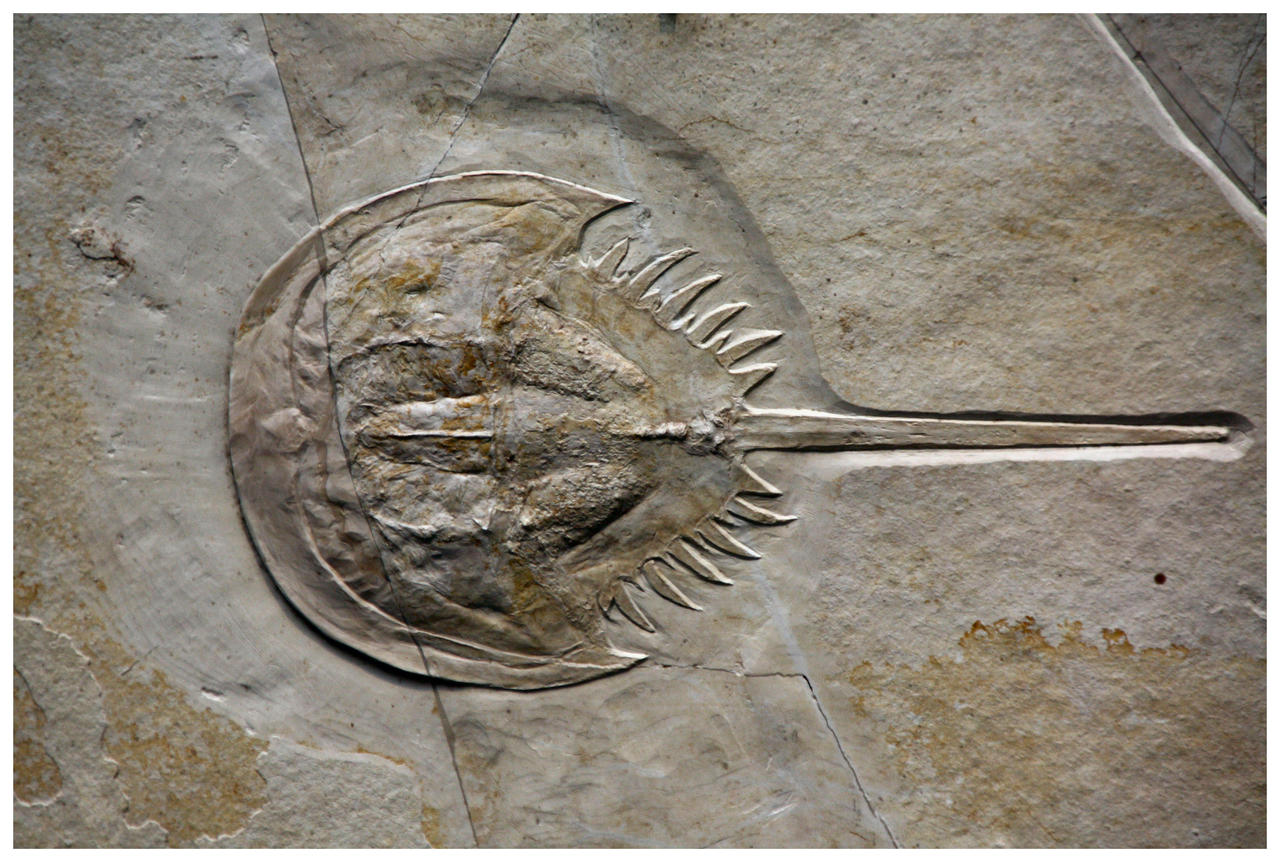
horseshoe crab fossil

Horseshoe crabs are the oldest living fossil, they have been around for 450 million years which is 200 million years longer than the dinosaurs! They have been able to survive through all of the plants major changes and remain unchanged which to me is pretty amazing! It still amazes me that even though they have been around so long there is so little know about these unique and very vital keystone organisms.


Red Knot
So what makes them so important? Well for one when horseshoe crabs spawn each female can lay up to 100,000 or more eggs in a spawning season. Both the eggs and larvae are a vital food source for various marine wildlife such as many species of fish, crabs, sea turtles and eel. Up to 11 different migratory birds need the eggs to replenish their energy during their migratory trip, the most noted being the Red Knot, a migratory shorebird that travels from the North Pole to the South Pole to breed. Without the eggs from the horseshoe crabs then the Red Knots among other shorebirds would not be able to make their very long migration and studies have shown decline in HSC populations has shown a decline in Red Knot populations. Studies have also shown that adult HSC are one of the most common vital sources of food for sea turtles.

The other important reason is the importance of HSC blood for humans. If you have ever had a vaccine or injectable drug then you owe it to HSC, their blood is vital in making sure all vaccines, injectable drugs, and medical tools and devices are safe for use. The blood of HSC immediately clots up when exposed to an endotoxin like bacteria, this is something that scientist have not been able to recreate and can only be obtain from the blood of HSC. So you owe your health to these pretty amazing organisms. If you look at one of my recent blog posts you can learn a little more about this.

The list can go on as to why horseshoe crabs are so important to our planet and humans alike. The value and goal of my research is to learn as much as possible about their spawning events to better help scientists protect beaches that they spawn on because their spawning is key to the survival of other organisms that rely on them, such as fish and crabs that we rely on to eat. We must also keep populations around so that we can continue to use their blood to benefit our health.

Jody's UR, Answers to Stacy S's Question!

Thanks for your question Stacy which was; we learn in oceanography that plankton blooms due to high nutrient levels can cause low levels of oxygen when the plankton sink and die. Do your ponds have fish and are there low oxygen levels in your ponds that could kill your fish?

 Phytoplankton are microscopic organisms that inhabit the upper sunlit layer of almost all oceans and bodies of fresh water. They are primary producers that create Oxygen (O2) from carbon dioxide (CO2) that is dissolved in the water, a process that sustains the aquatic food web. They are photosynthetic organisms that like aquatic plants and other particulate organic matter (POM) die and eventually fall to the bottom (hypolimnion) and decompose. This organic matter (OM) goes through a decomposition process, this is a process called aerobic respiration that uses the lake waters free oxygen (O2) and gives off carbon dioxide (CO2). The opposite (if you will) of the photosynthetic process. If  the CO2 production exceeds the photosynthetic O2 production the balance will tip and it will  deplete the water of it's O2 concentrations and will cause fish kills. I have not sampled this lake for O2 levels yet, I should do that. However I have worked at this course for five years and have not seen any fish kills. And yes, all the ponds are very much alive and active with aquatic life. I see many frogs, minnows, bass and carp and quite often wading birds and occasionally alligators munching on them.
Here is an article I found during my research that you might find interesting!


Friday, March 27, 2015

Todd Singleton U.R. Collecting water samples in the creek that becomes The Tomoka River

 
While driving down Tomoka Farms Rd., S.R. 415, on November 25, 2015 during the heavy rains of Thanksgiving break, I witnessed copious amounts of flood waters exiting the property around the Tomoka Landfill. The flood waters exiting the property were so substantial that I could see small rapids flowing from the direction of the landfill into the ditch that parallels 415. According to the Orlando Sentinel it rained 7 inches to 9 inches.  It also rained very heavily the days preceding and after.      
 This situation concerned me because, I knew the flood waters were coming from the direction of the Tomoka landfill.  And, if I was seeing the flood waters at S.R. 415, it meant the flood waters crossed over the creek that becomes the Tomoka River.   
Because I know the infrastructure of landfills I wondered, “Did one of the landfill’s holding ponds or, leachate ponds, break or overflow?”          
Landfill holding ponds contain a: "a high biochemical oxygen demand (BOD) and high concentrations of organic carbon, nitrogen, chloride, iron, manganese, and phenols. Many other chemicals may be present, including pesticides, solvents, and heavy metals" (Cornell WasteManagement Institute).


Look real hard, I am collecting water samples


 My scientific question is: 
 Does The Tomoka Landfill affect the nutrient levels in the Tomoka River causing it to exceed the EPA’s guidelines for acceptable levels?
To prove this I have conducted a transect sampling of surface water to see if the nutrient levels in the samples become dilute over distance.  So far, I have collected water samples from over 6 different sites over a period of 2 days.  The water samples are frozen because of the following factors:  gaining permission from property owners, weather conditions, access to four wheel drive vehicles, time constraints, help to haul gear.  
All field work performed at the collection sites was necessary because, it is the only way to prove or disprove my scientific question.  In addition, I want this project to serve as model (with exception to freezing of the samples) for others doing any research to find if the Tomoka River is affected by the Tomoka Landfill’s leachate.

Amanda, UR. Introducing my IRP

Hello, I'm Amanda Adams, a part of the wonderful IMES program at Daytona State College. The project I am doing actually started last semester on land when I became curious as to how many of the houses in my neighborhood use chemicals on their lawns.
One of the perpetrators in my neighborhood!
This semester Dr. Woodall has given me the priviledge of taking this project to the waters of Central Park. I take my dog from my house down Roble and around the park area. It's a beautiful park and my little guy loves it as much as I do.
I plan on sampling from the small lake at the top of the picture, the big lake in the middle of the picture, and the small pond by itself.
My scientific question is: Out of N, P, and Cu, which has the highest concentration in the waters of Central Park near my house? And, do these levels exceed what the EPA deems safe? 
I plan to go out on the lakes in a kayak and take 2 samples from the top lake, 2 from the middle lake and one from the small pond. I will take my water samples to the lab and run tests to see if there are concentrations of the above mentioned nutrients, and if so, how much. I will be able to input all my findings into excel to graph my results.
I have already been asked: why test for Cu? Where does Cu come from and if/why is it a problem in my lake? I can say that Cu has natural sources and anthropogenic. It is a naturally occurring metal but is also used in plumbing. Once it's aged it can start to leach out into waterways. I'm not certain that I will find any Cu but I want to test for it since our lab has the capability to test for the 3 nutrients I've listed.
Thank you for the questions and I look forward to uncovering the mysteries of a couple of the Central Park lakes once I get into the water. 


Thursday, March 26, 2015

Courtney, UR- Horseshoe Crabs and Environmental Conditions.

Horseshoe crabs are unique and very important marine organisms and there is so little known information about them. The spawning season on horseshoe crabs is very important because the thousands of eggs laid by eat female is a vital food source to many coastal and marine wildlife! Their numbers are decreasing and in order to help protect them we need to know more about them.
 
The underside of a horseshoe crab- intimidating but completely harmless
 
I have been lucky enough to be able to assist in the annual horseshoe crab surveys with the Marine Discovery Center. These surveys take place during the spawning season which has given me the perfect opportunity to study my IRP, "Is there a relationship between the number of spawning horseshoe crabs at Volusia County sites and the environmental factors such as salinity, water temperature and wind speed?"
 
Mating pair


Horseshoe crabs tend to spawn during high tides that occur during new moons or full moons. Sometimes wind surges can mimic a high tide which can be ideal to spawning conditions. I plan to gather my data by visiting various sites during the right moon and tide conditions. At each survey I plan to take down all environmental conditions in my field notebook such as water temperature, wind temperature, wind speed, etc each time I visit a particular site. I will take a water sample at each site using the correct sampling containers and methods to take back to lab to test the salinity with the optic refractometer. I will also be recording all live horseshoe crabs found, both pairs and lone HSC since the lone HSC are also considered part of the spawning season.
 
My results will compare the number of horseshoe crabs found at each site and the environmental conditions present using various graphs. This will show if there is a correlation between the number of HSC found and the environmental conditions in hopes that maybe we can learn a little bit more about these mysterious creatures.
 

Tuesday, March 24, 2015

Taylor - UR - Octopus Enrichment

My name is Taylor Reynolds and I am studying my Independent Research Project on Octopus Enrichment.
My Octopus Octavius!

Scientific Question: 
Does changing the octopus feeding conditions increase enrichment and exploration periods?

Enrichment pertains to giving animals in captivity stimulus (toys, playtime, puzzles) to increase happiness and health while living in a constant environment. I am studying octopus because they adapt quickly to their environments, are very intelligent and can become "bored" and unhappy which will decrease their health and make them self-destructive. (Examples of this are: hitting their heads against the sides of the tank and swimming sporadically around the tank).

So for three weeks, I will be studying a common octopus at the Marine Science Center. He is very anti-social at the moment since he is new to the tank, so we hope that this experiment will increase his activity and become more social in the tank with the other animals.

Each week, I will be changing the octopus food.
(Fed twice a day)
Week 1: Raw food
Week 2: Live food
Week 3: Live food with puzzle
—I will then be measuring how far out of his den/level of activity he is throughout the day(0-100%) and what color he is from 1-3 ( 1= white, 2= speckled 3= dark purple/red.)
Then I will be timing enrichment periods. These periods are where I will be playing with him. This happens in between feedings and I will time how long it takes for him to begin playing with the toy and how long he actually plays for. 

Robin..UR....Prototype Natural Oyster Mat Project

It started with a thought and a "want" for a natural, eco-friendly oyster mat. It was brought to my attention that it has to be cost effective, so I started work on a prototype. I have some information, but not all because there were some question that needed to be worked out, so "two" prototypes were made.

Prototype One.. 2 inches of sand was placed inside the form

  • then 36 oysters placed in the sand 
  • watered down the sand and oysters to compact the sand for a two inch leeway for concrete.
  • then concrete placed in over top of the oysters (about 2.5 to 3 inches)
  •  then smoothed out the concrete for proper finish
  • then set to dry    
Prototype Two..cement  was put into in the form

  • then 36 oysters were placed into concrete
  • then set to dry         
It took .03 second longer to put the oysters in place on prototype "one", also the clean up time after they were dry, plus the time of adding the sand into the form in the beginning, this was time adding up and did not look encouraging. 
Another problem in prototype "one" was that there was no way of seeing the concrete and some how took more product when finished, which made weight a problem. In prototype "two" it was simple, because when you wiggled the oysters into place it finished the concrete for you, also allowing you to use less product, better timing, and cleaner looking oyster mat.

Prototype #1                                                                                               Prototype #2


  While both were fun to make it will come down to the final numbers, (Cost, time,weight, and  transportation efficiency)                                   


Monday, March 23, 2015

Paul, UR--Colonization of fouling communities

When thinking about underwater communities that attach to docks, signs, bridges, boats and such, I would picture oyster beds or barnacles covering the bottom of boats. However when I went down to the marina where I am conducting my research, I was blown away at the biodiversity living just below the surface, never noticed by most of those that walk above. 
Floating docks with two different current velocities.

Just from walking from one side of the marina to the other, I could visually see that where there was massive clumps of life on the dock on the main river, on the dock closest to shore there wasn't nearly as much. This led me to question, How does the presence of current affect the successful recruitment of a fouling community?

First, what is a fouling community? Fouling communities are are communities of organisms found on artificial such as boats, docks, marinas, seawalls.

There are a wide variety of organisms that inhabit and create these communities such as, sessile organisms and predators, Brittlestarscrabs, shrimp, macro and red algae, stony corals which have a hard skeleton and octocorals which lack a hard skeleton, sea anemone, bivalves such as clams, mussels, oysters, or tunicates, sponges, sea urchins, feather dusters, sessile worms, bryozoans known as moss animals which are filter feeding invertebrates, hydrozoa which are tiny predators that have a stage in life known as hydroids where they attached to substrate.
PVC tiles.

 I will use Inlet Harbor marina in Port Orange to place 2 10cm PVC squares on two separate floating docks to determine how current velocity affects recruitment of marine biological organisms. 2 squares will be placed on the side of a dock that experiences a high current velocity while the other two will be placed on a dock that sits in very little current. These PVC squares will then be analyzed to determine which location has a higher coverage of marine organisms. Photos will be analyzed using image software and Shannon-Wiener diversity index.