My short answer is not to my knowledge have we ever had to de-muck our ponds although I'm sure during the 35+ years the ponds have accumulated some inches of muck on the bottom and become more shallow. As I stated in an earlier post our ponds are for aesthetic purposes and not used as navigable waterways. Although in extreme cases the build up of muck in recreational and commercial waterways can become a problem, one such recent case is Lake Apopka. It has taken millions of dollars to clean up that lake from muck created by agricultural runoff, and we continue to allow the same thing to happen to hundreds of other lakes and waterways. But we making a change and learning from are past mistakes.
IMES

Monday, April 13, 2015
Jody,UR...Good Question Jessica T.
Jessica's question on April 6th was.... In oceanography we talked about how muck is now 'mucking' up the
coastal waters due to high nutrient input and plankton blooms. Dr.
Woodall also said that muck has to sometimes be dredged because it makes
the water too shallow for boats. With all of the organic matter being
created in your ponds do you ever have to clean out your ponds of the
muck? If so what do they do with it?
My short answer is not to my knowledge have we ever had to de-muck our ponds although I'm sure during the 35+ years the ponds have accumulated some inches of muck on the bottom and become more shallow. As I stated in an earlier post our ponds are for aesthetic purposes and not used as navigable waterways. Although in extreme cases the build up of muck in recreational and commercial waterways can become a problem, one such recent case is Lake Apopka. It has taken millions of dollars to clean up that lake from muck created by agricultural runoff, and we continue to allow the same thing to happen to hundreds of other lakes and waterways. But we making a change and learning from are past mistakes.
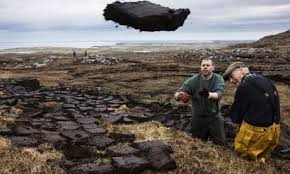 Muck has been used for many years as a bio-fuel by humans. The English use peat as a fuel to heat their homes. Under the right geologic conditions and a couple of million years and it could possibly become one of our biggest sources of greenhouse gas emissions Coal.
My short answer is not to my knowledge have we ever had to de-muck our ponds although I'm sure during the 35+ years the ponds have accumulated some inches of muck on the bottom and become more shallow. As I stated in an earlier post our ponds are for aesthetic purposes and not used as navigable waterways. Although in extreme cases the build up of muck in recreational and commercial waterways can become a problem, one such recent case is Lake Apopka. It has taken millions of dollars to clean up that lake from muck created by agricultural runoff, and we continue to allow the same thing to happen to hundreds of other lakes and waterways. But we making a change and learning from are past mistakes.

Subscribe to:
Post Comments (Atom)
Dana P. sec. 50. Just so you know I"m not a fan of golf courses. I think they waste a lot of space and resources. What I want to know is this: they seem to cut the grass often and at different heights. What do they do with all of the grass clippings? Do they recycle them back into the course or what? Not sure if this has anything to do with your ponds but you never know!!
ReplyDelete