
Native Florida crab species include:
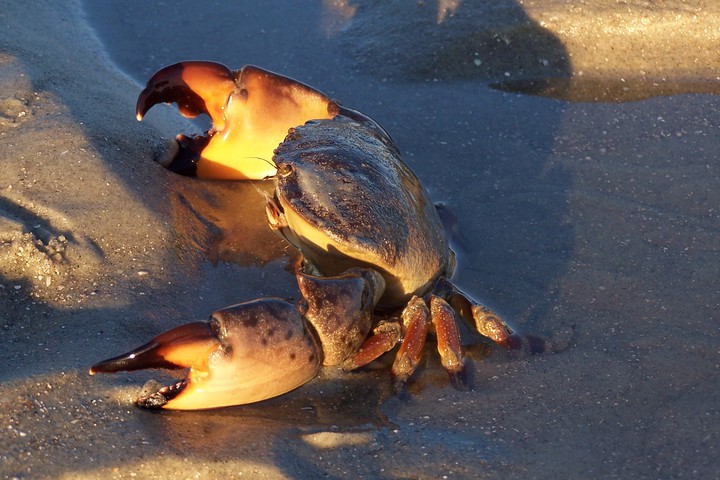
1) Menippidae Menippe mercenaria, Also known as, Florida Stone Crab, (Florida Fish and Wildlife conservation commission).
2) A second species of Stone Crab can also be found in Florida, but I need to further research this species (Florida Fish and Wildlife conservation commission).
3) Portunidea Callinectes sapidus, Also known as, Blue Crab, (2020, FAO Fisheries and Aquaculture- Aquatic Species)
 |
| Menippidae Menippe mercenaria |
 |
| Portunidea Callinectes sapidus |
Aside from identification, I have found some information regarding the crab traps. For a Portunidea Callinectes sapidus in particular the maximum trap size can be 2 feet (ft) by 2ft and the mesh (outer layer of the trap) size must be 11.5 inches (inch) or larger. Additionally a total of 3, 2 3/8inch escape rings must be on the trap and a 3inch by 6inch degradable panel (Florida Fish and Wildlife conservation commission).
 |
Portunidea Callinectes sapidus Crab Trap
|
Things to take into consideration include:
1) Noise/ Dunlawton Bridge vibrations.
2) The near by Dunlawton Bridge restaurants.
3) Other fishers near by (both locations).
4) If the trap is removed from either location.
5) Tides.
6) Weather.
Sources:
(2008). Science Dictionary. http://www.webquest.hawaii.edu/kahihi/sciencedictionary/I/invasivespecies.php
Florida Fish and Wildlife conservation commission. https://myfwc.com/research/saltwater/crustaceans/stone-crabs/
(2020). FAO Fisheries and Aquaculture- Aquatic Species. http://www.fao.org/fishery/species/2632/en
http://www.fao.org/fishery/species/2632/en
Florida Fish and Wildlife conservation commission. https://myfwc.com/fishing/saltwater/commercial/blue-crab/
Dictionary.com. https://www.dictionary.com/browse/estuary
(Menippidae Menippe mercenaria). https://animaldiversity.org/collections/contributors/jo_okeefe/stone_crab_100_5137/medium.jpg
(Portunidea Callinectes sapidus). https://upload.wikimedia.org/wikipedia/commons/9/99/The_Childrens_Museum_of_Indianapolis_-_Atlantic_blue_crab.jpg


Holly--I was told that we have some invasive species of crabs in our area. Are you familiar with these? We/you would want to know about them in case you catch some.
ReplyDelete