 |
| Dinner |
IMES

Monday, February 12, 2018
Jordan (UR) The Feeble Oyster vs the Mighty Microplastic
One of my favorite foods of all time, is steamed oysters with crackers, so when I was told about microplastics found in oysters, I was understandably concerned. Am I eating oysters full of plastic? I needed answers, which is one of the places my idea for the IRP, along with Dr. Woodalls guidance, came from. For my IRP I will be surveying the number of micro plastics found in maricultured clams or oysters from the Mantanzas inlet against oysters that have been growing naturally in the Halifax river or Indian River.
We already know that micro plastics in the ocean are a huge problem, however it seems to be based upon location, and season, according to one study done on filter feeding sharks and rays in the Philippines. So my scientific questions is will oysters that are harvested during winter, spring and the beginning of summer have different concentrations of microplastics. I may also include a separate group from each that are harvest before a storm, and harvested a few days after it has stormed. I do think that there is a correlation between runoff and the amount of plastics found in oysters and other filter feeding organisms around the Florida Coast. Please let me know what you think of these ideas.

Saturday, February 10, 2018
Hannah Vu-Bennett (UR): Toxic water
For my IRP, I want to test well water
throughout Volusia County for possible contaminate. The majority of the water we use for daily
living is pumped from aquifers beneath us. Due to the porosity and permeability
of Florida’s surface, it makes it easier for chemicals and toxic waste to leach
into our aquifers. Our groundwater is not only vulnerable to toxic runoff, but
the impacts of over pumping and development could lead to saltwater intrusion. It’s
a difficult and costly process to reverse the effects of saltwater intrusion.
Although our drinking water is filtered through water treatment plants and filtration
systems, it’s not uncommon for aquifers to be contaminated.
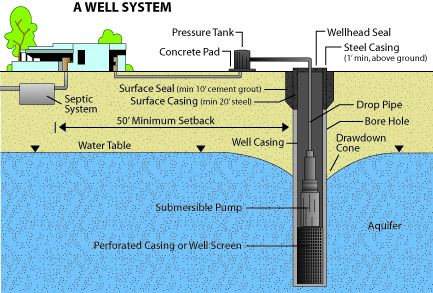 |
| This is a representation of a Well system pumping water from an Aquifer. |
Every year during hurricane season, toxins
are more likely to enter aquifers through storm surges and flooding. Floodwater
is contaminated with toxic bacteria and chemicals which is then absorbed into
our groundwater, affecting public, as well as private water supply. The effects Hurricane Irma had on our environment
lead me to wonder on the safety our water and what possible impacts the
hurricane had on our aquifers.
 |
| This image shows the process of contaminated groundwater can go. |
Friday, February 9, 2018
Cynthia UR Nature Bound
I am
disappointed, some things just require time you won’t have in a
semester. Pushing on, because there is
always more.
I’m
not one to write what isn't pertinent to say, but perhaps a few lines that
encourage others not to give up maybe in order.
Sometimes,
we accept a plan we know nothing about in hopes we will learn what will make it
a desirable concept. When we leave ourselves open to possibilities anything can
happen, and I think maybe it will.
My
IRP will examine to what extent seawater maybe anthropologically effected by a
heavily suburban populated area. Raising microorganisms in samples taken from
four sites along the east coast of Florida and the use of information by those scientists
whom conducted experiments already and shared the results. They will be
identified and differences recorded.
I will share if what you can’t see may harm you.
It will
be a surprise like the sudden appearance of a Ghost Crab. I will share if what you can’t see may harm you.

Where does your garbage end up? UR-Allie
My idea for my IRP involves the relationship between deaths of oceanic wildlife and human impact on the environment. Ever since the beginning of time, human beings have created and produced a life to tailor our wants and needs. People idolize a world of simplicity and ease. However often when thinking this way, people seem to only focus on the right now and not what the impact these things will have on the future. Unfortunately artificial objects that we love so much such as plastic, rubber and other various synthetics are being left discarded into our seas. Human influence impacts the environment and habitat for the oceanic wildlife greatly and ultimately, our fish are paying the price.

My scientific question is, what happens once plastic goes into the ocean and what can we as the species that introduced this to the natural environment, do now? To know more about this topic I had to research a little about plastic. I wanted to know how much of it is involved in our lives and also how much of it we dispose into our oceans.
Plastic is everywhere and anywhere you look in the modern world. I'm not just referring to the 5 water bottles most people consume a day or the container your lunch came in. This also includes TVs, keyboards, computers, screens, glasses, contact lenses, phones, cars, ect. Its overmanufactored and become a natural go to for people to consume. For all of its benefits, the good outweighs the bad. The environmental issues plastic will leave on this world will be forever.
http://www.abc.net.au/news/science/2017-02-27/plastic-and-plastic-waste-explained/8301316

My scientific question is, what happens once plastic goes into the ocean and what can we as the species that introduced this to the natural environment, do now? To know more about this topic I had to research a little about plastic. I wanted to know how much of it is involved in our lives and also how much of it we dispose into our oceans.
Plastic is everywhere and anywhere you look in the modern world. I'm not just referring to the 5 water bottles most people consume a day or the container your lunch came in. This also includes TVs, keyboards, computers, screens, glasses, contact lenses, phones, cars, ect. Its overmanufactored and become a natural go to for people to consume. For all of its benefits, the good outweighs the bad. The environmental issues plastic will leave on this world will be forever.
http://www.abc.net.au/news/science/2017-02-27/plastic-and-plastic-waste-explained/8301316
Niki UR Live every week like it's Shark Week
When I moved to South Carolina in 2013, I had no idea that I would be spending a lot of my free time fishing for sharks. I caught mainly black tip pups, but the entire experience has left me wanting so much more! My obsession has only grown in the last few years, and i've become a little disappointed in the amount of research done on sharks in general. There's so much we don't know!
For my IRP, I want to be able to discover more about the sharks that are living in my own backyard. I have done some research and found that apparently the Indian River Lagoon serves as a bull shark nursery!
Female bull sharks usually give birth in the north of the lagoon every spring, leaving the pups on their own until they are ready to become offshore adults in October and November.
This seems like the perfect opportunity to gather as much data as I can about the bull shark pups that live in the Mosquito Lagoon and the Indian River. I would prefer to do a study of the growth of these pups over time, however I am concerned with the amount of data I will actually be able to collect out in the field.
Any suggestions are welcome, please! I do not currently have the equipment to be able to capture these sharks or accurately collect any data. (such as shark weight, water measurements, etc)
https://jacquithurlowlippisch.com/2014/07/18/the-indian-river-lagoonthe-most-significant-bull-shark-nursury-on-the-u-s-atlantic-coast/
https://www.researchgate.net/publication/233147673_Seasonal_Distribution_and_Habitat_Associations_of_Bull_Sharks_in_the_Indian_River_Lagoon_Florida_A_30-Year_Synthesis
For my IRP, I want to be able to discover more about the sharks that are living in my own backyard. I have done some research and found that apparently the Indian River Lagoon serves as a bull shark nursery!
 |
| newly tagged bull shark pup ready to be released |
Female bull sharks usually give birth in the north of the lagoon every spring, leaving the pups on their own until they are ready to become offshore adults in October and November.
This seems like the perfect opportunity to gather as much data as I can about the bull shark pups that live in the Mosquito Lagoon and the Indian River. I would prefer to do a study of the growth of these pups over time, however I am concerned with the amount of data I will actually be able to collect out in the field.
Any suggestions are welcome, please! I do not currently have the equipment to be able to capture these sharks or accurately collect any data. (such as shark weight, water measurements, etc)
https://jacquithurlowlippisch.com/2014/07/18/the-indian-river-lagoonthe-most-significant-bull-shark-nursury-on-the-u-s-atlantic-coast/
https://www.researchgate.net/publication/233147673_Seasonal_Distribution_and_Habitat_Associations_of_Bull_Sharks_in_the_Indian_River_Lagoon_Florida_A_30-Year_Synthesis
Augustus UR What Could've Been and What Might Possibly Be
As with everything I choose to not make things very easy for myself and this IRP is no different. My interests are so far between that it makes it hard to choose then when I do make a decision its a little bit out of my pay-grade. So I will share to you what could've been my IRP and baring a miracle might still be...
My project was going to be on the DDT levels in the waters of the Indian River Lagoon. Some of you might know Volusia/ Brevard county is "renovating", for lack of a better term, the Indian River area. By renovating they are destroying mangrove trees and either burying them in the river or just cutting them down. These trees are very old which means when the United States used to use DDT back in the '40s, '50s and '60s, before being banned in the '70s, these trees absorbed the chemicals through the water and other ways and since DDT has a half life of 150 years it stayed in the trees until now, since they're being cut down that DDT is leaking back into the water and possibly affecting the marine life of that area. Now to explain what DDT is, it is a very powerful pesticide used primarily in Florida to control the Mosquito population back then but the EPA later banned it from use in 1972 because of the affects on Marine life.
So with all that said the question I wanted to answer was: Are the DDT levels rising again in the Indian River Lagoon and could the mangrove trees be the cause of this? Doing a quick search on the Daytona State Library I found the last paper written about this was in 1980 which even include a method they used to test the sample which is much safer than the other method of digesting the sediment with extremely harsh acids. While searching I also found a DDT fact sheet both of which I will include the links to here:
DDT fact sheet
1980 DDT research
*I'd include the sources they cited but its about two pages long
If I can't do this research I will need to come up with a new research idea and I am totally open to listening to any of my classmates!
My project was going to be on the DDT levels in the waters of the Indian River Lagoon. Some of you might know Volusia/ Brevard county is "renovating", for lack of a better term, the Indian River area. By renovating they are destroying mangrove trees and either burying them in the river or just cutting them down. These trees are very old which means when the United States used to use DDT back in the '40s, '50s and '60s, before being banned in the '70s, these trees absorbed the chemicals through the water and other ways and since DDT has a half life of 150 years it stayed in the trees until now, since they're being cut down that DDT is leaking back into the water and possibly affecting the marine life of that area. Now to explain what DDT is, it is a very powerful pesticide used primarily in Florida to control the Mosquito population back then but the EPA later banned it from use in 1972 because of the affects on Marine life.
 |
| An Dichlorodiphenyltrichloroethane molecule or DDT for short |
So with all that said the question I wanted to answer was: Are the DDT levels rising again in the Indian River Lagoon and could the mangrove trees be the cause of this? Doing a quick search on the Daytona State Library I found the last paper written about this was in 1980 which even include a method they used to test the sample which is much safer than the other method of digesting the sediment with extremely harsh acids. While searching I also found a DDT fact sheet both of which I will include the links to here:
DDT fact sheet
1980 DDT research
*I'd include the sources they cited but its about two pages long
If I can't do this research I will need to come up with a new research idea and I am totally open to listening to any of my classmates!
Thursday, February 8, 2018
Ray, UR, I'm Not a Flamingo!
If
you are in Florida and see a pink bird flying over-head, you are most likely
seeing the Roseate Spoonbill, which is commonly confused with the Flamingo. The
Roseate Spoonbill is not a Flamingo, they are not even related. Although, like
the Flamingo, they are thought to
have the same process of developing their pink feathers by eating a diet of
carotenoid-rich organisms like shrimp. The Roseate Spoonbill has not been well
researched like the Flamingo. I think this is one of the reasons why they are being
mis-identified and shoved to the side. I mean really, have you ever seen a
Spoonbill lawn ornament? Does nobody care about this incredible, cutlery-shaped,
pink and red bird?!
 |
| NOT A FLAMINGO |
My scientific question is: Are Roseate Spoonbill populations
decreasing?
Yes, this seems like a relatively easy question to gather information
on, but when I started to indulge myself I could not find any solid answers. In
fact I found three articles that seem to have different opinions of this
species status. From what I gathered, it seems that this species is not
threatened on a global scale, but state-wide they are imperiled. Also, they are
not listed Federally. I am inclined to believe that their populations are on
the decline due to major habitat loss and disturbance here in Florida, but I
could be wrong. The Roseate Spoonbill is known to make a come-back. About one
hundred years ago they were hunted to near extinction in the famous plume trade
of the late 1800’s, with a record of only 15 breeding pairs left by the early
1940’s. However, in the late 70’s the breeding pairs peaked to around 1,300,
then apparently started to decline in the 80’s, and went back up in the 90’s (FWC 2003). So,
how are their populations doing today? I have not been able to find an internet
resource for this question. There really has been very little research on this
magnificent bird. My goal is to speak up for our pink, native bird and get some
more published research out there!
 |
| My educational tool. |
http://www.fnai.org/FieldGuide/pdf/Ajaia_ajaja.PDF
http://www.eol.org/pages/1064972/overview
Cited works:
Florida Fish and Wildlife Conservation Commission. 2003, January 6. Florida's breeding bird atlas: A collaborative study of Florida's birdlife. http://www.myfwc.com/bba/ (Date accessed 02/08/2018).Michelle (UR) - Microplastics, Oysters, and Filters, Oh My!
I am going to attempt to create a filter to capture microplastics before they enter the environment. The filter is going to be based on the way oysters filter water, since they are known to contain plastics. Oysters are pretty hardworking, with the capability for a single oyster to filter more than 50 gallons of water in a day. The water enters the oyster, and the pumping of the gills forces the water and nutrients through the stomach, excreting the waste (or, in the case of microplastics, not...).
I believe this pumping action is one of the keys to creating a viable filtration system. The filter must act more as a muscle than a traditional filter. I have been doing research into the use of static electricity to capture the microplastics. My research is still early, but an electrostatic charge could possibly attract the microplastic particles, preventing escape from the filter. I have also considered whether using a membrane-type design would be more beneficial than a traditional filter design.
Sources:
Chesapeake Bay Program. (n.d.) Oysters. Retrieved from https://www.chesapeakebay.net/issues/oysters
Jones, Adrian B. and Nigel P. Preston. Biofiltration of Shrimp Pond Effluent by Oysters in a Raceway System." [PowerPoint Slides]. Retrieved from http://slideplayer.com/slide/8732045/
Williams, Lyle. (2017, March 2). We struck plastic...Again. [Blog Post]. Retrieved from https://oce1001lab.blogspot.com/2017/03/lyle-ur-we-struck-plasticagain.html
 |
| Photo courtesy of Adrian B. Jones and Nigel P. Preston |
Sources:
Chesapeake Bay Program. (n.d.) Oysters. Retrieved from https://www.chesapeakebay.net/issues/oysters
Jones, Adrian B. and Nigel P. Preston. Biofiltration of Shrimp Pond Effluent by Oysters in a Raceway System." [PowerPoint Slides]. Retrieved from http://slideplayer.com/slide/8732045/
Williams, Lyle. (2017, March 2). We struck plastic...Again. [Blog Post]. Retrieved from https://oce1001lab.blogspot.com/2017/03/lyle-ur-we-struck-plasticagain.html
Wednesday, February 7, 2018
Katie UR: Bacteria Loves You & Sharks
From the beginning of this class I was sure I was going to do a project on sharks. I wasn't sure what it would be t first but after awhile I realized that I really wanted to learn more about bacterial infections. So why not do it on bacterial infections in sharks mouths. Sharks harbor deadly bacteria that have been fund to be drug-resistant. I also wanted to look at all the different aspects on what can be causing the bacteria in the first place. I want to pick at least 3 kinds of sharks that live in human populated areas and compares those sharks bacteria swabs to the sharks that inhabit places that aren't in populated areas surrounded by people. My scientific question will be Is there more bacteria found in sharks mouths more serve coming from sharks that inhabit water that is closer to human population compared to sharks that live further away from human population?
I know I couldn't do all of the sharks that inhabit the waters in Volusia County so I am choosing to do 3 types of species and have an extra one just in case I cannot get the 3 that I want. The 3 sharks will be Blacktip Shark, Lemon Shark, and Nurse Shark.
 |
| Blacktip Shark Carcharhinus limbatus |
 |
| Lemon Shark Negaprion brevirostris |
 |
| Nurse Shark Ginglymostoma cirratum |
Since these are very common in the Daytona beach area I believe it will be easier to catch them. Everything will be a catch, swab and release process. I want to follow what Nathan Unger did with his Antibiotic Susceptibilities of Bacteria Isolated within the Blacktip Sharks.
Unger caught Blacktip sharks In February and April of 2013. Unger used a remote swabbing device that he places under the lower teeth and inside and outside of gums. He then placed the samples in a tube and put them on ice right away. I want to follow this procedure with the sharks I plan on swabbing.
I will be using a Big game pro extreme 10 foot rod, with a 25 pound grade line. I will be aiming for juvenile sharks of the 3 species I have chosen. Each shark will be brought out of the water and I will have help with putting water on the shark continuously while the swabbing of the mouth takes place. I will swab the inside and outside of the gums and roof of the mouths and pace the swab in a test tube and put it on ice to bring back to the labs to test for bacteria.
Its all an idea right now but once the procedure is more in place and is approved I will be starting on this project!
Karen (UR) Duckweed: A Story of Bioremediation
This is the story of the little "weed" that can; Duckweed. The world's smallest flowering plant. Lemna minor in the family Lemnaceae. Obviously considered a "weed", after all it's common name is Duckweed.. In general, a plant is named a "weed" when it is a nuisance. But is it really? Yes and no. Yes, because it reproduces like crazy. No, because it has the ability to filter excess nutrients and impurities out of water. It's
everywhere, in Florida, you can see it in almost every pond and
reservoir. That crystal clear water in those reservoirs, well, duckweed may be the reason.
Not only does it filter excess nutrients and impurities out of the water, but it is edible! Animals and even people can eat it and in some Asian countries they have been growing it and using it for centuries.
I think because I have been around horses my entire life, my interest in livestock and farming comes naturally. Having lived in many different areas of the United States and also in other countries, I have seen first hand how difficult it can be for small land-holders and subsistence farmers to irrigate crops and feed their livestock. In many under-developed countries, subsistence farmers can not do both. I'd like to see how Duckweed could be used for small scale farm holdings. I'm not exactly sure of my scientific question, there are too many possibilities, I still have to narrow it down.
We know that pollution and entrophication from fertilizers and waste is a monumental problem. We also know that feeding livestock and people can also be a monumental issue. Can Duckweed be part of the solution? There has been a lot of research, small scale and large scale, into whether using Duckweed as a water filter and fodder for livestock is a viable part of the answer.
The Missouri Botanical Gardens has a lot of information and links to some of the research.
The University of Florida, Center for Aquatic Plants and Invasive Plants has the Taxonomic information of the species most common to Florida.

Not only does it filter excess nutrients and impurities out of the water, but it is edible! Animals and even people can eat it and in some Asian countries they have been growing it and using it for centuries.
I think because I have been around horses my entire life, my interest in livestock and farming comes naturally. Having lived in many different areas of the United States and also in other countries, I have seen first hand how difficult it can be for small land-holders and subsistence farmers to irrigate crops and feed their livestock. In many under-developed countries, subsistence farmers can not do both. I'd like to see how Duckweed could be used for small scale farm holdings. I'm not exactly sure of my scientific question, there are too many possibilities, I still have to narrow it down.
We know that pollution and entrophication from fertilizers and waste is a monumental problem. We also know that feeding livestock and people can also be a monumental issue. Can Duckweed be part of the solution? There has been a lot of research, small scale and large scale, into whether using Duckweed as a water filter and fodder for livestock is a viable part of the answer.
The Missouri Botanical Gardens has a lot of information and links to some of the research.
The University of Florida, Center for Aquatic Plants and Invasive Plants has the Taxonomic information of the species most common to Florida.
Jenna Westfall (UR), The Sea Was My Calling.
I have lived in Florida for my entire life, that being said I practically grew up at the beach. Since my dad taught me how to surf when I was really little, its all I ever did growing up. I think just being over there all the time influenced me to pursue a career that dealt with the ocean. Volunteering at the Marine Science center and being able to learn more about such interesting creatures really had an impact on me, but it was when I got to learn about sea turtles that really pulled me in. Our oceans are beautiful and its so sad seeing what damage humans are doing to it. I haven't really chosen a topic for my independent research project yet, but I'm kind of liking the idea along the lines of how micro plastics affect sea turtles and maybe some ways to help prevent it.
 |
| This is a re-posted picture because it happens o be relevant to my topic. My parent and I doing a plastics beach clean up in New Smyrna Beach. |
Saturday, February 3, 2018
Cynthia UR Nature Bound
Narrow
the research!!
Instruction:
Challenge the single aspect about a problem using something within your reach,
then test and examine this characteristic for further or alternative
applications. Focus: In our water resources: Waste?, plastics?, and man enriched (anthropological) nutrients?
How can we capture and remove in a fiscally responsible
manor?
Now
discover there are a vast number who pursue a similar purpose, and learn from
their contributions, and create your own offering.
 |
| Sand Hill Crane |
Using a common Water Hyacinth (Eichornia crassipes) known for its filtering properties in other
studies, I will test its ability to filter/ capture micro plastics. This plant
is introduced to Florida and quickly spreading; I want to perform the same filtering
studies on the Water speedwell (Veronica anagallis-aquatica); a Native plant with its own known filtering
studies. Sadly my decision is still a work in progress.
Friday, February 2, 2018
Rachel, UR, Nature's custodian
Most people would agree that humans impact on the environment is negative. We seem to take natural resources for ourselves with little thought to how it will effect the other creatures that also live on Earth. My goal in life is to not be this kind of human. My first step to reaching this goal was to volunteer, so I signed up to pick up trash at a local state park. Once I saw the positive effect I was having on this parks environment, I was hooked. Making positive environmental changes became a passion that I have dedicated my life to. Just imagine if every person in America volunteered to make a positive change on a weekly basis? Seriously, think about it.
I know I will want to use my IRP as a reference tool for guests and volunteers when I resume my positon at the park. With that in consideration, most guests are interested in wildlife, and how they can observe/protect certain species. One animal that sparked many questions is the roseate spoonbill. My personal favorite.
Yes folks, the bird literally has a spoon shaped bill. It is awesome. Unfortunately, not many people know about this magnificent pink bird, or they will mistakenly call them "flamingos," especially native Floridians! Flamingos are native to South America, Africa, and India, not North America. Educating people about to this bird species is the first step to protecting it.


Jordan UR Blue Planet Creatures of the Deep
When I was 6 or 7, I can remember watching Blue Planet, episode 2, it was about the deep ocean, and I instantly fell in love with all the kooky fish and evolutionary adaptations. From that moment on, I knew that I wanted to be involved in the ocean somehow. I chose my field simply because I feel like I have a connection to the ocean, and I have to be near it at all time, why not make a job out of it. I have been surfing my entire life, which keeps me going, along with my love of reef keeping. Reef keeping has been the motivation I need to get through all my classes, there's nothing better than staring at a reef after a long day or homework. I care very deeply about coral reefs and the kelp forests on the west coast. Hopefully I will be able to dabble in both ecosystems with my research.
I believe my IRP will be about microfibers in clams up in the inlets near St. Augustine.
 |
| Photo Credit: Elliot Y Lim. This is my newest Moyeri Wrasse |
Allie(UR) What drives you?
What do you want to be when you grow up? I'm sure just like me, many of you have been asked this question countless times as a child and young adolescent. Careers are not only important to have but more important for you to be happy and excited about. When I began the journey of exploring my interests and hobbies, this question stuck with me. Clueless and overwhelmed, I started with the strengths and successes of my academic career. English and history have always been my better courses, although I have always been more interested in science and math.
When I decided I wanted to further my education, I had to ask myself important questions pertaining my field of study. Two questions in particular stood out to me when making my choice. First, what am I passionate about? Second, what is a field I could be happy with investing my time and money into enough to attend college for?
I am passionate about the world and being able to leave it a better place than I found it one day. This is what motivates me everyday to be the best person I can be. Discovering my field as well as my motivation was a process, but my passion and love for the natural world was always there. I learned to not allow my fear of failure distract me from expanding my limits, and to with my heart.
 |
| Thousands of rubber tires found on the bottom of the ocean floor. |
To me, this photograph says it all. As time unfolds, human beings have come up with new ways to live easier lives. For example, inventions such as vehicles and new transportation. The environmental impact on the world has been devastating. In addition to pollution, we have filled our oceans with trash and in result ultimately dangering our wildlife animals. An idea I was considering of IRP is the impact of pollution on the oceanic wildlife. I think this is a good topic to express because people need to be aware of the consequences of their actions.
Augustus (UR) - We are so Small, but Face such Big Problems.
I’ve spent my whole life fascinated
by the world around me. Why everything works the way it
does. Growing up I was a tinkerer, which is just a polite way to say I liked to
destroy things and take them apart and never figure out how to put them back
together. I took my affinity for math and science as a calling to become an
engineer so I spent a good portion of my academic career preparing myself to
become an Electrical Engineer until one day I was sitting in one of the hundreds
of math classes it seems you have to take and realized that I had no passion
for what was going on in my classroom or what was happening in the next class
or any class that I was scheduled to take for the next 2 years. It’s difficult
to spend your whole life preparing yourself for one thing and then to realize
that it isn’t the path you were meant to be on, that you chose wrong. I needed that realization to remember what I wanted as a child, I wanted to find solutions to problems
that affect us all and threaten our world. I want to help people
and the animals that we share this world with. Environmental Science/ Engineering really
gives me that platform and the chance to make a difference. It motivates me
because I could possibly reach and help so many people and animals with any
research I get involved in. Global Warming, Endangered Species, the unknown whether
it be the ocean or space and everything in between are all things I could see myself doing now, I feel
like I’m not restricted anymore.
 |
| We are so small compared to the universe around us, but our world has such big problems that need solutions |
As for my Independent Research
Project, I have a few ideas. I haven’t fully narrowed it down yet, but when I
do decide, I want it to make an impact, I want it to be something that I can be
proud to present to my peers and something that I could possibly continue to research
throughout my career. I’m sure those are the famous last words of every science
major, but I feel like my ideas are big enough to get me there.
Thursday, February 1, 2018
Cynthia UR Nature Bound
I grew up in California where smog alerts were common place,
waste and litter covered our beaches, species had been hunted to the brink of
extinction for their fur; many including myself, would not accept these new
norms. We are part of this beautiful natural world. I appreciate its detail.
I
want to share and protect what is left. I chose this field for the same reasons
so many before me did; for the singing bird; for the fish in the water; for the
sake of our children and breathable air.
The
earth my home, is priceless and not for sale. |
| Young Wood Stork |
Michelle (UR) - They say fortune favors the bold...
For my IRP, I hope to create a filter that works similar to oysters in filtering microplastics. This is an extension on Lyle Williams' IRP, which was incredibly eye-opening. In my own research, I learned that the majority of microplastics in the water come from synthetic clothing, since wastewater treatment plants can't filter them. I'm no engineer, but I'm going to give this a try. Failure is always an option, right?
I had originally come to DSC to become a teacher. After an internship, I realized that teaching was not for me. That experience made me realize that I needed to do something that I'm passionate about, which has always been the environment. I've been gardening for years, and I even have my own composting bins at home. I decided to get my A.S. in Environmental Science because it allowed me to learn a little of everything, instead of just focusing on one area.
I had originally come to DSC to become a teacher. After an internship, I realized that teaching was not for me. That experience made me realize that I needed to do something that I'm passionate about, which has always been the environment. I've been gardening for years, and I even have my own composting bins at home. I decided to get my A.S. in Environmental Science because it allowed me to learn a little of everything, instead of just focusing on one area.
Tuesday, January 30, 2018
Jenna Westfall (UR)- Shark Bait?
Ever since I was about 6 years old I've always loved surfing. My dad taught me when I was young and I grew up just enjoying being in the water and getting the thrill of dropping in on a wave. As a little kid you're always afraid of something. Well when I was 8 years old, I was out in the water one day and I saw a shark swim right underneath me. Let me tell you, that scared the living crap out of me but my dad told me they aren't going to hurt me unless I hurt them and I eventually began to like them and not be afraid. I'm and animal and ocean lover. I'm 18 years old and I have been stung by three jellyfish, one manowar, and pinched by a gazillion crabs but even that doesn't scare me. I love the ocean just as much.
I chose this field because the ocean means everything to me and I want to do everything I can to save it and all of the marine life it holds. I care about the health of marine organisms, the quality of their habitat and what might be affecting them. I think the thought of taking a sick or injured marine organism and making it healthy and stable again really helps motivate me. The ocean is beautiful and we should do everything we can to keep it that way. I love doing beach cleanups. Its sad seeing just how much garbage washes up on the shore, it just makes me wonder what else is out there.
 |
| One of my many jellyfish stings. |
 |
| A stingray that washed up ashore. |
 |
| My parents and I during a beach clean-up in New Smyrna Beach, FL. |
Karen (UR) - I see dead people
I have always been fascinated with archeology. Digging up (excavating) things that could be thousands of years old, WOW ! It's only been recently that I have become interested in anthropology as well. A few years ago I was fortunate enough to spend a year and a half living in the high desert of northern New Mexico. I was living on the Navajo Indian Reservation and the artifacts and history captivated me. So, of course, that's how I came to love Paleo-anthropology, the best of both worlds.
I also love anything with fur, feathers and scales. For my entire life I have had pets of all kinds. Armadillos to Zebras ! Horses are my true love though, well and dogs !! I also am crazy about plants of any kind, especially trees. I thought I would combine my love of animals and plants for my research project.
So, here goes.....
In many areas of the world, small holding farmers have a difficult time feeding their livestock and growing crops. There are many reasons for this but one of the main reasons is water. Clean water. I'm not talking about drinking water, that is a whole other conversation. Because of this difficulty, especially in under-developed countries, I will be researching the use of Lemnaceae lemna minor or the common Duckweed as a water purifier. This plant can be used to clean water that has been contaminated with nitrates and phosphates (from animal manure and/or fertilizers). The plant can then be dried and used for animal feed (fodder) or as an organic fertilizer because once dried, it no longer retains the nitrates and phosphates. A dual purpose aquatic "weed".
I also love anything with fur, feathers and scales. For my entire life I have had pets of all kinds. Armadillos to Zebras ! Horses are my true love though, well and dogs !! I also am crazy about plants of any kind, especially trees. I thought I would combine my love of animals and plants for my research project.
So, here goes.....
In many areas of the world, small holding farmers have a difficult time feeding their livestock and growing crops. There are many reasons for this but one of the main reasons is water. Clean water. I'm not talking about drinking water, that is a whole other conversation. Because of this difficulty, especially in under-developed countries, I will be researching the use of Lemnaceae lemna minor or the common Duckweed as a water purifier. This plant can be used to clean water that has been contaminated with nitrates and phosphates (from animal manure and/or fertilizers). The plant can then be dried and used for animal feed (fodder) or as an organic fertilizer because once dried, it no longer retains the nitrates and phosphates. A dual purpose aquatic "weed".

 |
| New Mexico |
 |
| Shiprock, New Mexico Navajo Sacred Mountain
|
Sunday, January 28, 2018
Katie U.R : Sharks are Friends, Not Food !
If you asked anyone I'm pretty sure I first fell in love with seeing the commercials of the trainers performing with Orcas. I thought it was the coolest thing being able to spend your time working while swimming with animals that weighed a small truck (Don't get me wrong, after growing up and seeing the truth for the animals that are kept in captivity, I am against all of that!). Living by the beach also played a huge roll in why I wanted to Marine Biology. I chose this field because the ocean is still undiscovered. There is still so many things that need to be explored and I honestly hope to be apart of that group of people who get to.
The ocean and the life that inhabit's it is what motivates me. The wrecks that have happened through out the ocean that have not been discovered is something I would really like to take part in finding. The ocean inspires me to become a better person for the world. It makes me want to help make people see that we cant keep throwing trash into it and that its not okay to not clean up the debris that is all around it.
I care about everything in the ocean. I believe there are other things that are more important than other things, but I do care about them all. Sharks are a huge thing for me. I believe there is a lot going on with them that we are not made aware about. When I first got certified for diving, my first dive I went on I got the chance of seeing a couple Blacktips. It was a beautiful thing. Knowing that some sharks aren't so lucky to keep their fins was something that made me upset. Learning more about that is what got me into the whole Sharkwater stuff. Rob Stewart showed everybody what is happening in other countries to the sharks that swim in those waters. People are cutting off their fins and using them for food and other things. Some are even using the whole meat of the shark for things.
Since I cant really stop people from Shark finning in a semester I think I want to maybe do my independent research project on the kinds of bacteria found in sharks mouths that cause bacterial infections in shark bite victims. I might start out by going out on my grandfathers boat and catching and releasing the sharks that I am able to catch and do a lot of swabbing's on their mouths, and get as many as I can so I can do a range of sharks not just a couple. I also need to find shark bite victims that are opened to telling their stories on what bacterial infections they got. Just some ideas for now though!
The ocean and the life that inhabit's it is what motivates me. The wrecks that have happened through out the ocean that have not been discovered is something I would really like to take part in finding. The ocean inspires me to become a better person for the world. It makes me want to help make people see that we cant keep throwing trash into it and that its not okay to not clean up the debris that is all around it.
I care about everything in the ocean. I believe there are other things that are more important than other things, but I do care about them all. Sharks are a huge thing for me. I believe there is a lot going on with them that we are not made aware about. When I first got certified for diving, my first dive I went on I got the chance of seeing a couple Blacktips. It was a beautiful thing. Knowing that some sharks aren't so lucky to keep their fins was something that made me upset. Learning more about that is what got me into the whole Sharkwater stuff. Rob Stewart showed everybody what is happening in other countries to the sharks that swim in those waters. People are cutting off their fins and using them for food and other things. Some are even using the whole meat of the shark for things.
 |
| Blacktip in BVI's 2015 |
Since I cant really stop people from Shark finning in a semester I think I want to maybe do my independent research project on the kinds of bacteria found in sharks mouths that cause bacterial infections in shark bite victims. I might start out by going out on my grandfathers boat and catching and releasing the sharks that I am able to catch and do a lot of swabbing's on their mouths, and get as many as I can so I can do a range of sharks not just a couple. I also need to find shark bite victims that are opened to telling their stories on what bacterial infections they got. Just some ideas for now though!
Friday, January 26, 2018
Jenna Westfall, UR- All About Me
Hey everyone, my name is Jenna Westfall. I have lived in Florida for my entire life, my dad grew up surfing and fishing and as a kid he sort of passed it on to me. Growing up at the beach every weekend, feeling the calmness of the ocean and seeing all of the amazing marine life made me want to become a marine biologist. It has always been my dream ever since I was a little kid. Two summers ago, I volunteered at the Marine Science Center in Ponce Inlet and I got to teach kids and adults all about starfish and dogfish sharks. I think that basically sealed the deal for me. I am currently working on my A.A. degree and after I receive that, I will be transferring to Florida Gulf Coast University to get my bachelors.
 |
The sunrise from my families condo in New Smyrna Beach, Florida.

Me carrying my surfboard up to the room after unpacking the truck for the week.
 |
Subscribe to:
Posts (Atom)