IMES

IMES

Wednesday, January 23, 2019

Jessica (UR) - The Crazy Turtle Lady

Westport, NY
Jessica Nicole Corrado. That is the name I was given on November 7, 1982. Born and raised in the state of New York. Now thinking about N.Y., you think of the city. Wrong! I grew in up a small town on Lake Champlain called Westport. About as far north and east as you an go in the state, but before you enter Canada or Vermont. My graduating class had 18 people in it and we all graduated. We had our very own Loch Ness monster, but ours is named Champy. Tons of people have seen him!


New Smyrna Beach, FL
I moved to New Smyrna Beach in 2010. Best decision I ever made! Moving so far from where I grew up gave me the courage to follow my dreams and go back to school. I always knew I wanted to work with animals. As a child, I remember wanting to be a veterinarian. Then I grew up.
My grandfather gave me my love of the ocean and my love of science. Moving to Florida gave me the opportunity to use both of my passions rolled into 1 awesome Major. Marine Biology!


Julianna, Joseph II, Joseph III
I met my husband while serving at a local restaurant, The Sand Bar Cafe. We were friends for a few years before dating and then getting married on February 18, 2017. I gained 2 step-children, which is perfect since I want no children of my own. We love to cruise! We have been to many of the islands in the Caribbean. My top 2 places are Cuba and Grand Cayman!

Havana, Cuba


 The Cuban culture has been one of the most amazing experiences. The people, the architecture, the food, the cars! We have been there twice!

Jess holding Juvenile Green
 Grand Cayman is by far my favorite! That is where the Cayman Turtle Farm is located. I was able to hold a juvenile Green Sea Turtle. I was also able to see Leatherbacks and a Kemp's Ridley.
I Love Sea Turtles!
I am the crazy turtle lady!
Best Shoes Ever!
Look at my truck. Heck, look at my wardrobe. I own sneakers with turtles on them!


"Jim", Juvenile Green
I named this one Jim! It didn't matter where I went around the tanks, this Green loved to follow me! We are planning another cruise soon so I can go back and hopefully see Jim again! He has special black marks on his head, so I would be able to recognize him easily enough!


Any more about me and you might start crying! If you have any questions about my travels or passions, don't hesitate to ask! I love talking about my life!

Tuesday, January 22, 2019

Gray (UR) - The Most Beautiful Baby in the World

The Baby

Me at 2 years old
I wanted to introduce everyone to the most beautiful baby ever. It's me, if you hadn't already figured it out! At least, that is what my mother said. Could she be a little biased, maybe? She did take me for a Gerber baby model interview. However, when she got there it was a residence, the shades were pulled and there were not any signs. Her motherly instinct said something was amiss. So she did not even get us out of the car. My career as a baby model ended before it even began.


The Farm


Berkshire cross pigs raised to sell and eat.
I grew up on a farm in southern Virginia. It was hard work, but we experienced a lot. We had all sorts of animals: some for food, some for work, some for pets and some just for fun. To the left is a picture of some Berkshire cross pigs, that were raised to sell and eat.  In addition to having animals from fowl to equine, we raised a multi-acre garden every year. Ugh, the upkeep was a tremendous and daunting task. When we finished weeding it was time to start all over. This went on for half the year.
After I graduated, I worked for a while, living on my own. Then I decided that I was going nowhere. So I joined the U.S. Navy. I took a contract as an avionic electronics technician, and fixed airplane electronics at Naval Air Station Jacksonville, FL for five years. After that I did some traveling and even moved to Phoenix, AZ for a year. Now I am in school full time on the G.I. Bill and working on an envitonmental science degree. 


The Fishing
Fishing at sunset
in Sanibel Island, FL
Jack Crevalle (Caranx hippos)
that I caught.

One of my favorite outdoor hobbies is fishing. Here are a few picture of my doing just that in Sanibel Island, FL.


The Marriage


My wife and I just after the ceremony
I recently got married, 12/22/18 to be exact. We became friends while I was in the navy and stayed friends for nine years. Then we decided to give dating a shot and were married soon after. We had a small intimate ceremony with an Irish theme. We decided on that theme because of the type of rings we chose. They are called "Claddagh." If you do not know about them, look it up, its a cool story. Above is a picture of us dressed up on our wedding day right after the ceremony. Her parents couldn't attend in person. So we decided to set up an iPhone and Skype them for the ceremony. Below is a picture of them joining in on the wedding photos. 
Her parents, on Skype, participating in the wedding photos


The Pets
The cats

I also love animals. Here are a few pictures of ones that reside in my home. To the right are my two cats. However, they are more like roommates that we support than pets. "Jet" is the stripped one. He got his name because he is the loudest purring cat on the planet. He was rescued from a hoarder with over 100 cats and he is 17lbs because he has an emmotional eating problem. He does play fetch and will sit on command for a catnip treat. The white one is "Widdle" because of how little she was when we first picked her up. She was smaller in size than a dollar bill. There is a picture of her, at six weeks old and weighing one pound, below. She was the baby of a neighborhood stray.
The day we brought "Widdle" home

Although I do love the cats, they are not my favorite animal. That is given to these guys: 
The ferrets
 Yes, they are ferrets! You guessed it. From left to right there names are: Eenie-meenie, Miney, and Mo. Yes, they are a business. Yes, there are three. They do best in groups. If they are by themselves they will become depressed and not eat. They sleep eighteen hours a day, but when they are awake and out it is full throttle. They give the cats their daily exercise. 

Well, that is me in a brief nutshell. I hope everyone has a great, fulfilling semester and fun in the field. I know I am looking forward to it.

If you fall flat on your face, atleast you fell forward and forward momentum is everything,

Gray Cochran

The End

Sunday, November 25, 2018

Augustus (CUR) - Almost to the Finish Line


Sorry for the delay! Between school and the research I've gone a little scattered brained.
Over the past few weeks our little HOBO has been running non stop and collecting precious data. We have offloaded the data twice and have gotten some pretty good looking graphs.


Questions 

J Ogadah from section 101. I have some questions... How would rising sea levels affect human life in Florida? How would it affect animal life? Is there concrete evidence that Florida is sinking and the sea level is rising, or is it mostly a hypothesis at this point? Does global warming cause this? Could rising sea levels have any effect on weather?


Thank you for your questions, I'll answer them in order. Rising Sea Levels would easily affect human life and animal life in a multitude of ways, the most obvious being that we slowly start to lose land as the ocean rises, animals that are native to our coasts are pushed further inland or begin to leave to find new areas to live or breed. As for concrete evidence NASA has our waters rising at 3.2 mm/year as for Florida sinking, since it is on top of porous limestone which easily erodes over time due to water. Climate Change can have an affect on this certainly, as the world heats up ice deposits melt adding more water to the ocean causing it to rise. Rising sea level can absolutely have an affect on weather as well, as the waters get deeper and the world gets warmer it can easily produce more and more powerful storms and hurricanes, we have seen this recently with Irma, Michael and Harvey, 3 catastrophic storms back to back is something we have not experienced before but is becoming a more frequent occurrence.  


Friday, October 19, 2018

Small fibers, Big problems- CUR Allie


Image result for microbeads
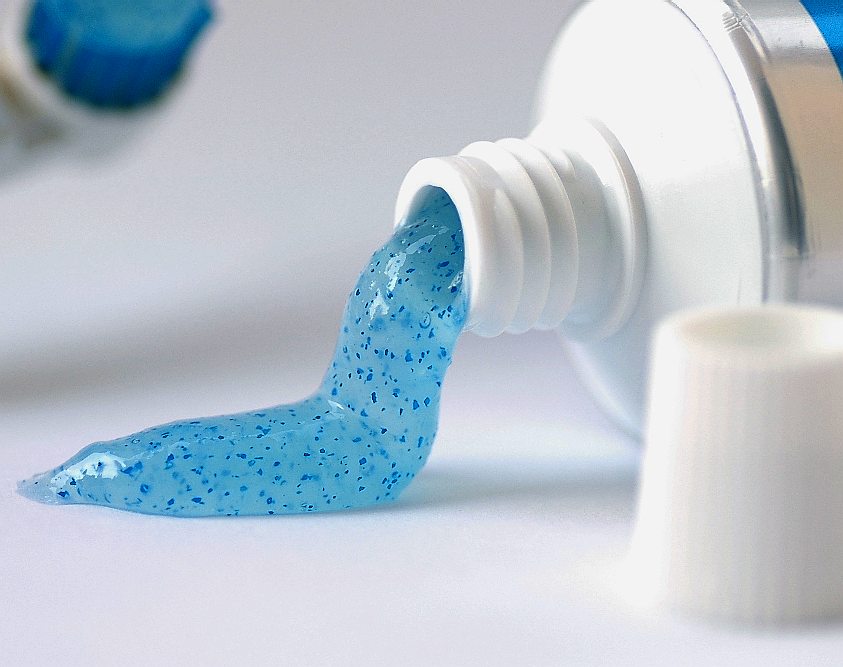
Microbeads found in toothpaste
Image result for microbeads
Microbeads
    Many products humans manufacture, and use can be very harmful to the environment. For example, many beauty and health products contain microbeads. According to the National Oceanic and Atmospheric administration, in 2015 the U.S banned intentionally small designed plastics called microbeads. Identical to microplastic fibers, microbeads also infiltrate the waterways and our oceans. Both tiny micro pieces less than five millimeters long form an indestructible army, forcing aquatic species to adapt to their new environment. The ocean inhabits many forms of species with countless different hunting methods/ feeding habits/ location of food source and more. It would be easy for any animal to receive a mouthful of tiny microplastics and microbeads in attempts to eat, especially with an environment invaded with tiny little balls of inevitable harm.

Image result for microbeads

  The article 'Our Oceans: A Plastic Soup' by Renee Cho, highlights one of Moore's expeditions in which hundreds of fish are investigated for microplastic consumption by conducting necropsies. The ending results were over 1/3 of the fish had ingested polluted plastic fragments. The same study showed a case of a 2.5-inch fish that had been recorded with 84 pieces of plastic in its stomach. That’s a full stomach for a tiny fish! Often the case is once they consume the plastics, they starve because their stomachs are full, and they cannot properly digest, resulting in internal blockages and death. In 1999 Moore’s research in the Central Pacific found six times more plastic than zooplankton in the water. Once the amounts of plastic start outnumbering the species, we have a problem. These are just a few examples of the fairly new studies on the consumption of plastics in aquatic life.

Laysan albatoss decomposed carcass

Photo: Algalita Marine Research Foundation

Decomposed carcass of Laysan albatross with bottle caps and plastic objects inside
Laysan albatoss on Kure Atoll, North Pacific. 


Important Figure

Charles Moore: An oceanographer and boat captain. Known for discovery of 'Great Pacific Garbage Patch' an area of the Pacific Ocean overwhelmed with floating plastic debris, (3x the size of Texas). 
  • Through continuous research and dedication, Moore has made numerous expeditions and collected important data concerning the increase of pollution in our seas. This relates to my research project because, just like my data- Moore has proven microplastics are affecting the aquatic environment. 
  • More details on Moore's expedition's can be found on the  "Algalita Foundation's website".
  • As well as this significant article written by Charles Moore, where he personally explains his strategy and discoveries.  


Work Cited:

Moore, Charles. “Trashed Across the Pacific Ocean, Plastics, Plastics, Everywhere.” Natural History Magazine, Nov. 2003, www.naturalhistorymag.com/htmlsite/master.html?http%3A%2F%2Fwww.naturalhistorymag.com%2Fhtmlsite%2F1103%2F1103_feature.html.

“Our Oceans: A Plastic Soup.” State of the Planet, 18 June 2018, blogs.ei.columbia.edu/2011/01/26/our-oceans-a-plastic-soup/.

“When The Mermaids Cry: The Great Plastic Tide.” Plastic Pollution, plastic-pollution.org/.

US Department of Commerce, and National Oceanic and Atmospheric Administration. “What Are Microplastics?” NOAA's National Ocean Service, 13 Apr. 2016, oceanservice.noaa.gov/facts/microplastics.html.

Wednesday, October 17, 2018

Katie: What's a Blog Without A Video Here and There?

Hey Guys! I am so sorry for the late post but the videos have taken way longer to download onto my computer than I thought it would! But anyways the video does not have sound for some odd reason, so below each video is a brief description on what is happening. I will also put a brief description under the video so you know which tube and plate I am inoculating.


I had some questions from Samantha V. in OCE1001. She asked if the bacteria from the sharks mouths differentiate between different breeds of sharks and the answer to that is yes and no. Just like humans, sharks are all different. So no matter the breed or the age of the shark, all their mouths are different. Just how one snowflake cannot be the same neither can bacteria in different sharks mouths. Yes the may have some of the same bacteria but all the samples I have taken do not look the same. Some pictures are provided around!


Samantha also asked if the bite is more dangerous the bigger the shark is. To be completely honest I haven't been focusing on what the bites do to the person, but I've been focusing more on what bacteria is living in their mouths and identifying it.

Here we are inoculating the plates with Specimen 10. I used a loop which is basically a wire with a loop at the end of it. I stated with the TSA plate just so we can do the oxidase test and catalase test on. Next I clean the loop with a flame and let it cool down. The starch plate I did next and all I do is run a line down the middle of the plate so I can add iodine to it after a couple days. After that we do the Blood Agar Plate which will see if the bacteria needs nutrients to grow. Next will be the EMB plate which I streaked along the plate. Lastly I did the MAC plate which I just ran the loop across it.


This week I post the results for all the tests for you all to see!


Monday, October 15, 2018

Josh Munsey: Answering Questions

Hello everyone, I hope you all have had a good past couple of weeks. I'm hoping to get out fishing soon in the next couple of weeks so hopefully I will have a good update for you then. Anyways today I will be answering some of you guys' questions.
My first question is: Robert M. Section 102 I'm assuming you are using electronic tags on the sharks, what is the effective range of the tags and what is the furthest from the area have you seen them ping? 

Actually we do not use electronic tags as they cost to much and we do nut have the funding to do that. Also, the Scalloped Hammerheads we are trying to catch are of immature size and some of the electronic tags will damage the shark if used on immature sharks. The tags we use really on the shark being recaptured by someone and them reporting the info on the shark.


CJ N. OCE1001 I've known about this "nursing ground" by scalloped hammers myself but have not actually been able to gather information as to why either. Do you think it has to do with the inlet essentially being an estuary where there's a pretty large congregation of fish and these sharks have figured it out and kept coming back?

I think that has a very large role. I think that these Scalloped Hammerheads know that their pups will have plenty to feed on in this area as it is a place where many fish, especially batfish come to congregate and these immature sharks can learn how to hunt in this area. 


Giavanna B Sec 101 If Daytona Beach is a nursing ground for these sharks, what are the steps that would need to be taken to preserve them and their habitat so that they can avoid further depletion of their population?

These sharks are protected in Florida state waters but I think the best thing we can do, if this does turn out to be a nursing ground for these sharks is to get the word out there that this is a special place for these sharks to make sure that no one takes these shark illegally and if you do catch these sharks that you don't do anything to harm them in any extra way.


  J Ogadah from 101. What threats are there to the safety and wellbeing of the sharks?-- hunting, disease, habitat destruction, etc? And what can be done to help them?

These sharks are highly sought after all over the world for their fins, thankfully, however these sharks are protected in Florida so the only threats to them hunting wise are from illegal poachers. One of the bigger threats is from recreationally catching these sharks, Scalloped Hammerheads have been known to have very high stress levels and if left on the fishing line to long or handled the wrong way when caught, these sharks can become very damaged or even die due to the high levels of stress.


Samantha V. OCE 1001 I am really interested in the results of this project. But,
Do they hang around their birth spot for any amount of time before venturing further off into the ocean, and do they usually return to their birth spot as they get older?

This is something we really want to learn from this project. One of the main questions in this project is that if it is a birthing ground is it also a nursery ground for these sharks? We think yes but we still need more research to see whether or not these sharks stay in this area to grow up or if they are just born here and then leave and go somewhere else to grow up.  

Wednesday, October 3, 2018

Slowly Breaking Away.. CUR: Allie

Image result for secondary plastic breakdown in water
How Microplastics develop in water

  Since the beginning of the global production and development of a plastic world, the percentage of production each year continues to grow greatly. Simultaneously, the amount of plastics and other artificial materials such as Styrofoam, are improperly discarded at an increasing rate into the native environment. Society has become undeniably reliant and dependent on materials often manufactured for one use only. Without the ability to naturally decompose, the breakdown process is like breaking off little tiny pieces of the substance, then breaking off little tiny pieces from that product and so on. This is called secondary microplastics.

Global plastic production from 1950 to 2016 (in million metric tons)

Image result for microplastic pollution fragments in ocean natural environment
Trash clutters the shoreline

  The article 'When the mermaids cry: The great plastic tide' by Claire Le Guern addresses how truly toxic plastic is due to its own inherent properties. Properties including, buoyancy, durability and propensity to absorb waterborne pollutants create an incredibly long breakdown. The process of fragmentation into microscopic pieces leaves the sea water contaminated with toxic Bisphenol A (BPA) and other toxins. The disintegration of plastic is gradual. A combination of physical, biological and chemical processes can weaken the debris structure. Typically ensuing a fragmentation of the once whole product. Artificial materials and plastic products are seemingly convenient for humans, but in the long run outlive us with decomposition rates of 500+ years and leave a toxic impact on the environment.

Works Cited

“Global Plastic Production.” Statista, www.statista.com/statistics/282732/global-production-of-plastics-since-1950/.

Le Guern, Claire. “Plastic Pollution.” Coastal Issues / Coastal Care, 2018, coastalcare.org/2009/11/plastic-pollution/.

Tuesday, September 25, 2018

Katie CUR: I Don't Know About You, But I'm Feeling 22!

22 Results of Biological Tests
I don't know about you, but im feeling 22..biological results that is. Jackson F. in section 31A asked me a question on last weeks blog post and I thought I would focus this blog post on the questions he asked. I have so far caught a total of 11 sharks. Some were caught by Josh Munsey and his dad and some were caught by me. We have a total of 11 samples, but the first 3 samples were contaminated so there are no results for those test. We have gotten samples from Scalloped Hammerheads, Sandbar, and Atlantic Sharpnose. We are trying to get more of a variety of sharks to swab, but fishing is a very tedious activity and with the hurricanes recently the waves have been a little high for my grandfather's boat!

Biological Tests: The Stains
The samples that are gathered are taken back to the Microbiology lab where I run biological tests on them. Soon we will hopefully be able to start classifying the bacteria once we figure out what type of identification test we need from them. I have made 3 tables with all of the biological tests I have ran and what they can tell us about the bacteria that grows on/in them.
I unfortunately lost my Go Pro to the ocean this past week while fishing and I wasn't able to do the virtual tour of me doing the biological tests. But do not worry because today I was able to get another one for my birthday so next week will be the week for the virtual lab tour.

Biological Test: The Plates
Biological Test: The Plates 

With that being said, get familiar with the stains and the plates since this week I will be doing the virtual lab with the plates and stains! If you have any questions leave them in the comments below!
Or feel free to email me at katelyn_digirolomo@daytonastate.edu.

Monday, September 24, 2018

Josh Munsey: How we get the Data!

Hello everyone, I hope all of you have had a good couple of weeks! Today I want to go over my procedures and some of the materials that I use so all of you know a little more about my project.

I typically go shark fishing within a mile and a half offshore of the Ponce Inlet Jetties. First to attract the sharks we use a constant output of chum. We then use a rod and reel setup with a hook, weight or float and line to catch the sharks. For bait, we typically use cut dead Bonita, whole dead Finger Mullet, or live Pinfish.
Bonita
Finger Mullet


Pinfish


Once we catch the shark we take a total length measurement, a fork length measurement, we take identification photos of the full body and the dorsal fin of the shark and we tag the shark depending upon the size. We use a spaghetti style tag to identify different individual sharks so if we or someone else catches the same shark we can gain data on the species.
Spaghetti Shark Tag
I received a question on my last post from Jackie sec. 102. We are collecting the data through the catching, tagging and measuring of the sharks. If we can catch enough Scalloped Hammerheads of juvenile size and maturity in this area then I believe that we have enough to prove that this is at least a nursery area for these sharks and if we get enough of the right data we can conclude that this is a birthing site for these sharks.

The New Food Chain- CUR: Allie

   Fay C. sec. 101. Have you found anything in the birds or fish? Why do they eat plastic?

   The current data collected within the Daytona Beach area, include the findings of positively identified microplastics consumed by 5 fish and 2 birds. These discoveries contain microplastic fibers and Styrofoam bits. Plastic is a foreign substance to the natural environment and unfortunately many animals end up consuming them. The two main reasons for this are succumbing to their surroundings by nature and mistaking microplastics for food. Regardless of how consumed, microplastics are found in the stomachs of many different species and have severe negative effects on the environment and the animal’s habitats that it invades.
Image result for how fish vacuum suck food in their mouth
Bass fish open wide while feeding 

   As stated in the article ‘How Freshwater Fish Eat: Usually in One Go’ by Max Lepley, it is referenced that many fish use a vacuum method to suck up their food. This occurs by opening their mouths and expanding their buccal cavity. Creating an area of low pressure as water rushes in from the outside, this captivates and traps any prey within their surroundings. Once the fish close their mouths, the food is caught, and the excess water is released through the gills. Generally, the larger the fish the stronger the suction. Tiny floating microparticles of plastic and other materials can easily be accidently accepted for prey or product of the environment. This is how plastic becomes part of the new food chain. 

Click here to watch a video that shows fishes' feeding method in a 3D demonstration.

This week, research continues..

   Recently recovered microplastics and styrofoam particles have been located in 3 local lionfish and 1 whiting fish.


Styrofoam bead found in Whiting fish


Styrofoam takes 500+ years to decompose into the natural environment. This styrofoam particle was found in a local Whitefish.

Microplastic fiber found in Lionfish #1

Lionfish #2
Lionfish #3


3/3 Lionfish after microscopic examination were found to have consumed microplastic fibers. 


   The next question I ask is, to what extent are our local fish/ marine animals influenced by the increase in foreign materials into their natural environment. Thank you for your question, as my research continues I hope you have many more!


Citations

Lepley, Max. “How Freshwater Fish Eat: Usually in One Go.” Infolific, 12 Oct. 2013, infolific.com/pets/fish-in-the-wild/underwater-eating/.

VOA. “Fish Use Whole Bodies When They Eat.” VOA, VOA, 19 July 2015, learningenglish.voanews.com/a/fish-use-whole-bodies-when-they-eat/2856879.html.


Tuesday, September 18, 2018

Augustus CUR - DEPLOYED!

I am so excited to announce that the data loggers are now deployed! With the help of Dr. Woodall and her husband, Paul, we were able to deploy both of our data loggers this weekend and begin capturing data for this research. Ive included a link to a basic ArcGIS app showing the locations.

A very Simple Web App showing the locations of the Loggers
The still which the logger is housed in is made up of about 2 10' PVC pipes attached together with a 4" locking cap at the top. At the bottom of the housing are holes drilled to allow the water to pass through the PVC, while being covered in copper mesh to keep any organisms from finding their way into the still.
The still at Canaveral Sea Shore
The stills themselves are tied down to the wood columns on the dock using metal straps to stop them from moving up or down and skewing our data and the PVC lays on wooden support blocks drilled into the dock, which I don't know if you've ever tried to drill while floating on water but as a little physics lesson, if you are applying a force in one direction you will generally move in the opposite direction of that force if you have nothing stopping you.

Trying to keep ourselves stationary.....Keyword Trying
Drilling the wood support blocks into the Dock.


We have started collecting the data, which basically gives us a graph inside the software provided by the company, but we can also export it as an excel file so we can create our own graphs with said data.
An example of the data in Excel

I received a question on my last post from Fay C. sec. 101 asking: How will you take sea level measurements and how often? Seems like a lot of work to have to go out everyday to take water level measurements.

Thank you and Good question! Actually the data logger itself records the water level and temperature every 30 minutes on its onboard computer, it will save that data until it runs out of memory, so we plan to download the data about every 2 weeks and create on ongoing graph with that data.

Please keep the questions coming! This is a big project and I want everyone to follow me, so if you have any questions please ask and I'd love to answer them!


Wednesday, September 12, 2018

Kayla Grubbs--HSR: about me and what I do.

Hello,
My name is Kayla Grubbs. I am 16 years old and a high school student. I am in the marine biology field and I'm not dual enrolled. I am a advanced open water, boat, and nitrox diver. I love the ocean and everything in it. I am working with micro plastics in our water ways and our oceans. I will be presenting my work at the Shores conference in 2018.
I like scuba diving, figure skating, hapkido (martial arts), cooking, weaving, and photography. I have 2 cats, 1 fish, 2 shrimp, 1 guinea pig, 1 hamster, 2 snakes, and 1 red footed tortoise. My goal is to make sure that I can get a point out to people about plastic and what we need to do.


My baby boy tigger.
My baby girl meeka.