
Independent Research Project- Investigating the digestive track of bottom feeding fish in Flagler county waterways for micro beaded plastics and micro fibers.
Scientific Question- Are Micro-plastics finding their way into bottom feeding species intestinal track in Flagler County, Florida, fresh and brackish waterways?
Micro-plastic's triple threat- The billions of tons of plastics that we release into the environment for the most part do not biodegrade. But they do degrade, breaking into ever smaller particles that end up in the oceans. Eurasian perch larvae exposed to microplastics were less active, less responsive to predator cues, more likely to be eaten, and less likely to thrive—preferring to eat plastic rather than their natural prey.
 |
| Google Photo of a channel cat |
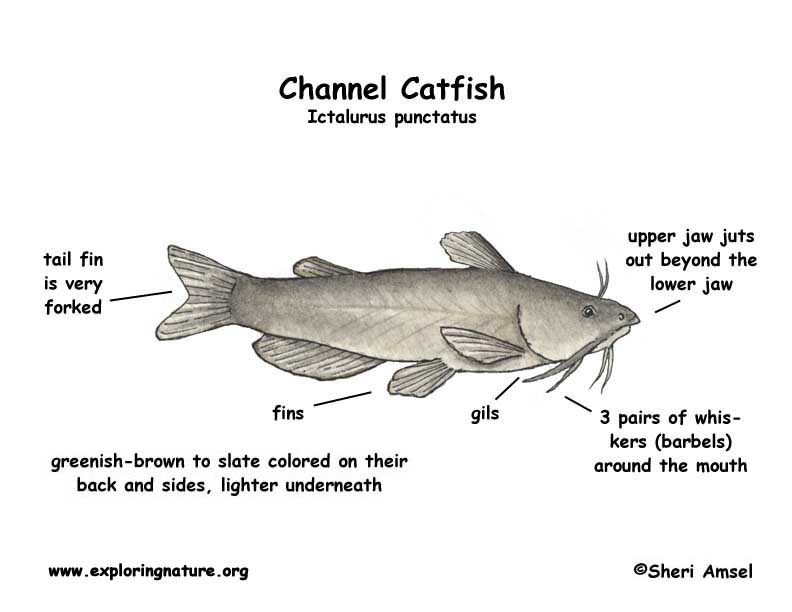 |
| Identification aids of a channel cat |
I will be fishing from land based spots which I will mark with GPS, of course fishing is not a guarantee you will catch what you are after or even any fish at all.
I will attempt to catch fish near discharges and watersheds in Falgler county as well as in the intra and inter coastal.
 |
| Basic diagram of Intestinal track |
Although Congress has started to remove these products with micro plastics, they still exist in other countries products that we use. Toothpaste and exfoliates are some of the major products that have used these plastics since as early as the 1960's
Now my title should make sense to you! :)
Below are just a few peer reviewed articles I have found on the subject along with the abstract and/or highlights.
http://www.int-res.com/abstracts/ab/v17/n1/p29-34
ABSTRACT: The ingestion of plastic fragments by 3 species of Gerreidae (Eugerres brasilianus, Eucinostomus melanopterus and Diapterus rhombeus) in a tropical estuary in Northeast Brazil was assessed for 3 different size classes corresponding to juveniles, sub-adults and adults. In all, 425 individuals were analysed. The gut contents of 13.4% of these individuals contained plastic debris.
http://www.sciencedirect.com/science/article/pii/S0269749113005642
Highlights
- >100 works on microplastic marine pollution were reviewed and discussed.
- Microplastics (fibres, fragments, pellets) are widespread in oceans and sediments.
- Microplastics interact with POPs and contaminate the marine biota when ingested.
- The marine food web might be affected by microplastic biomagnification.
- Urgently needed integrated approaches are suggested to different stakeholders.

Steve--please remember that folks reading your post may not know what "IRP" and "SQ" mean. You should always explain these terms before abbreviating them. Also, the genus and species names of an organism are always placed in italics. I also think you've jumped way ahead with this post--your SQ, material and methods are coming up in later weeks. You've over-stepped this post quite a bit which could easily confuse the blog reader. Please slow down! and don't expect the reader to do your work for you...they are likely NOT going to read your link--you take the time (in the future) to explain it to them--one of the goals of blogging is learning how to communicate your science to others.WAY too much info in this blog!!!!!!!!!!!!!!!
ReplyDeleteI understand what your saying Dr. Woodall, I fixed those issues
DeleteMy copy of the syllabus says that IRP and Scientific question was due this week, is it wrong?
This comment has been removed by the author.
ReplyDelete