
 |
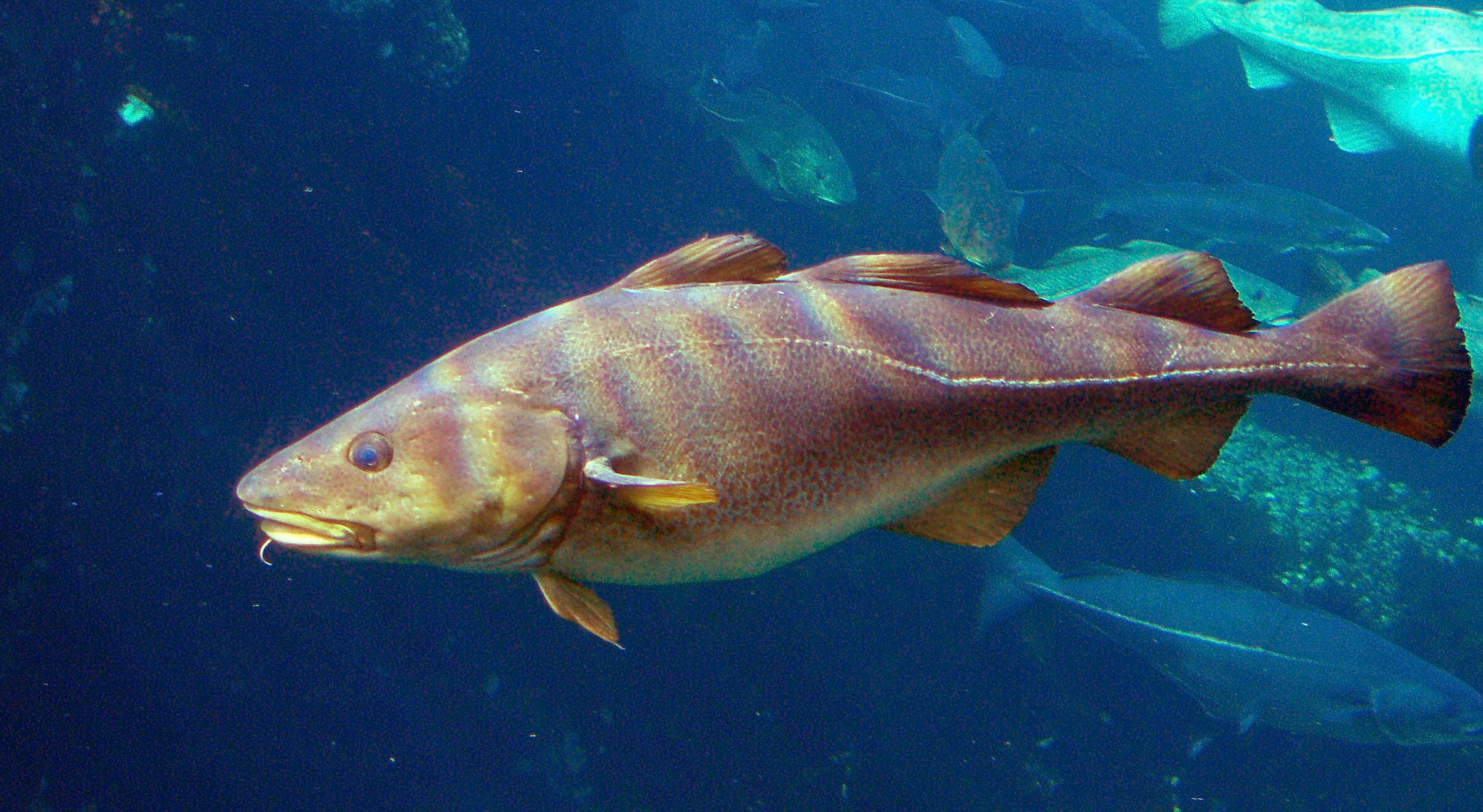
| Gadus Morhua, "Atlantic Cod fish" |
Since learning about the hazardous effects of sunscreen in the environment, I started to wonder if we were doing anything to try and overcome this issue. My article this week is about a group of Portuguese researchers developed a sunscreen filter from cod fish bones. The material they made is powder in form, and can be used with sun protection creams or in fabrics. It is coupled with iron and iron oxide, and is able to absorb both UVA and UVB radiation. The material is based on hydroxyapatite, which is a main component of fish bones, but it is unmodified, so it cannot absorb the UV. That is why iron is introduced to the material.
According to Prof. Manuela Pintado, this new material "is highly biocompatible and safe to use, as it is mainly made of calcium phosphates, compounds which are already present in our bodies". I love their idea of using fish bones to create a UV filter. The researchers originally came up with the idea because Atlantic Cod fish is an extremely popular dish in Portugal, and using their bones would help lessen their by-products. The article stated that hydroxyapatite is found in fish, animal, and human bones. If these researchers are able to create a safe, workable sun screen from fish bones, then this could spread around the world, using all sorts of different kinds of fish bones.
_________________________________________________________________________________
Deb 'n Paul: I would wonder what are the common plants found in our local springs? And - do you think any would be less tolerant of reactions associated with these sunscreens?
Also - UV radiation. How much UV radiation does Florida typically receive? Does it change seasonally and how does our "dosage" compare to other areas of the country?
 |
| Eelgrass |
According to Florida Springs, Eelgrass (Vallisneria americana) and Pond Weeds (Potamogeton pectinatus) are two of the most common submerged plants found in our springs. They provide both food and shelter for many marine organisms. I am unsure how the ingredients of sunscreen would affect some of these plants. The original study showed that sunscreen affected the ability of some phytoplankton to grow, while stimulating others. In the least, if sunscreen did not physically affect the plants, the death/overgrowth of certain phytoplankton could cause depletion of these underwater grasses. Under the EPA and the Florida Department of Agriculture and Consumer Services, herbicide products can be reviewed for use of controlling weeds. Depending on how toxic hydrogen peroxide is to pond weeds, they may or may not be tolerant to it.
I could not find an exact number for the amount of UV radiation we in Florida receive.
 |
| UV-B Irradiance of the world, 11/2000 |
The photo to the left is from NASA and shows estimates of UV-B irradiance at the surface during November of 2000. Given the map, it looks like we had anywhere from 1000-2000 J/m². UV radiation depends on many factors. Altitude, cloud coverage, and reflectivity just to name a few. UV radiation changes daily, but most parts of the country tend to stay around the same number. The EPA actually has a website where you can enter in your zip code and they will give you a UV Index Forecast for the day. Daytona Beach is registered as an 8 - Very High.
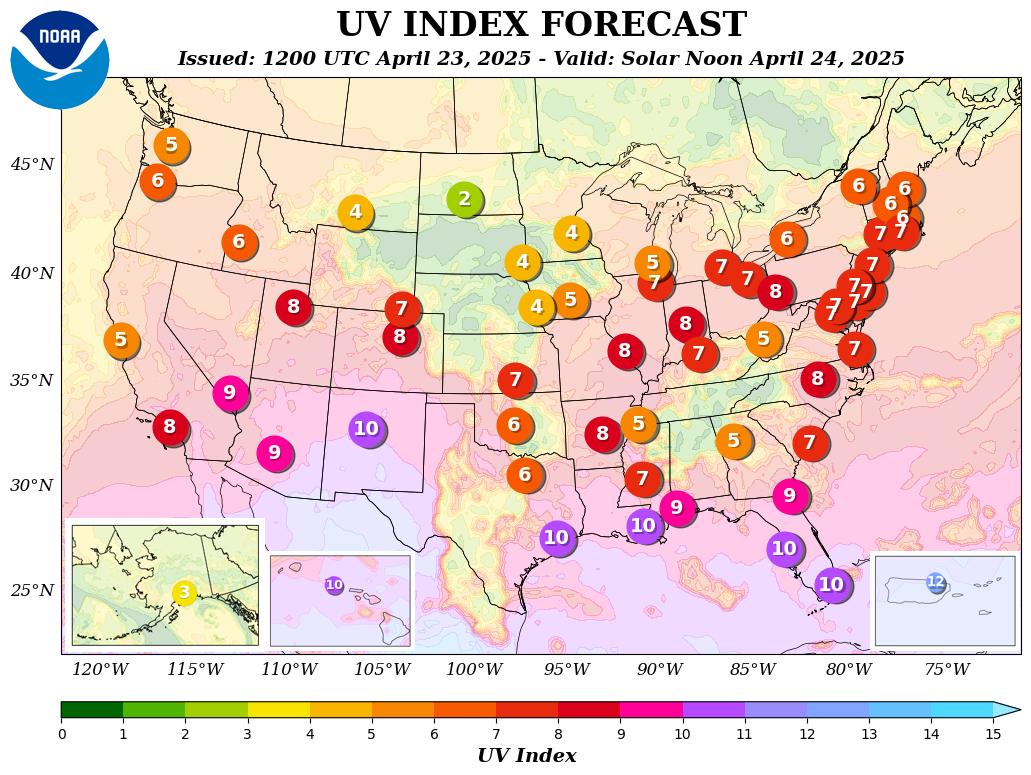
The photo to the right is of the Unites States, categorized by UV Index. The southern part of the country is registered with high numbers, while the Northeastern states are moderate with UV radiation.

I guess at this point, I would wonder what you might test your sunscreen on and how you would set up any experiment. Any thoughts?
ReplyDelete