IMES

IMES

Monday, March 26, 2018

Michelle (UR) - From Fake Smiles to Bloody Scars: Current and Future Uses of Alginate

I am using my IRP to investigate alginate, and its possible use as a filter for microplastics. My scientific question is can water pass through alginate, and if so, is it a viable filter material?


Makeup mold
Dental mold
What is Known:
Alginate is a seaweed-derived substance that is used in biomedical applications, dental molds, and even as a food thickener. There are both paste and powder versions of alginate, and it can be mixed with different substances based on the desired consistency and properties. Makeup artists use alginate molds for special effects, while dentists use them for prosthetic teeth. In biomedical applications, it is used for a range of applications, from wound dressing to drug delivery.
Microplastics are tiny plastic fibers that are less than 5mm, or 1/5 of an inch. These are too small to be removed at wastewater treatment plants, and end up in the environment. Microplastics are a result of larger pieces of plastic that have degraded, or fibers that are manufactured that small. Manufactured microplastics include the fibers of synthetic clothing, which release over a thousand microfibers per wash.


Carolina Biological's Alginate Powder
Materials and Methods:
The materials that I will be using are alginate powder from Carolina Biological, distilled water to mix with the powder, lab dishes and beakers, and screens.
Example of filter backing
The first step will be to test the alginate for different consistencies and thicknesses. Each thickness will be tested for water permeability. This will be done by testing how much water passes through the filter in a predetermined length of time. The three thicknesses that allow the most water through in the fastest amount of time will be chosen for use as filters. These filters will be made using two screens each. The screens will be utilized to limit the amount of large particles from potentially contacting the alginate, as well as to help lower the amount of water pressure on the alginate. The screen will be backed in a crisscross shape, similar to an air filter. This shape will be used for additional strength and stability. Each filter will be tested for the amount of fibers that are collected, as well as the sizes of the particles. I intended to represent the results using two graphs.
This graph does not represent real data; only an example of anticipated results

This graph does not represent real data; only an example of anticipated results
The scatterplot will represent any possible correlation between the thickness of the alginate and the amount of water filtered. The water will be measured in mL per minute. The column graph will represent the amount of each size particle the filters collect.

What if it fails?
If water cannot pass through alginate, that would still be a good result. Instead of making a filter, I would concentrate on attempting to make environmentally friendly, truly disposable cups, plates, and utensils.


References:
Browne, M.A., Galloway, T.S., & Thompson, R.C. (2010). Spatial Patterns of Plastic Debris along Estuarine Shorelines. Environmental Science & Technology, 44, 3404-3409. http://pubs.acs.org/doi/abs/10.1021/es903784e
Carolina Biological (n.d.) Sodium Alginate. https://www.carolina.com/catalog/detail.jsp?prodId=888171&s_cid=ppc_gl_products&utm_source=google&utm_medium=cpc&scid=scplp888171&sc_intid=888171&gclid=Cj0KCQiA2Y_UBRCGARIsALglqQ2Bu4Bw1zd8nrqxnT5xou9IrHOx9ih5FaQZzmbajqxVMToyvWVA31EaAosqEALw_wcB
EnvironMolds, LLC. (n.d) The Many Uses of Alginates. https://www.artmolds.com/alginate-uses
Instructables. Alginate mold photo. https://cdn.instructables.com/FLA/03U5/H0OIZSUN/FLA03U5H0OIZSUN.LARGE.jpg
Lee, K.Y., & Mooney, D.J. (2012). Alginate: properties and biomedical applications. Progress in Polymer Science, 37(1), 106-126. http://doi.org/10.1016/j.progpolymsci.2011.06.003
Nandini, V.V., Venkatesh, K.V., & Nair, K.C. (2008). Alginate impressions: A practical perspective. Journal of Conservative Dentistry: JCD, 11(1), 37-41. http://doi.org/10.4103/0972-0707.43416
Stan Winston School. Alginate dental mold photo. https://www.stanwinstonschool.com/ckeditor_assets/pictures/1103/content_mark-viniello-cynthia-garza-molding-casting-prosthetic-fake-teeth-tutorial-mini-lesson-009.jpg?1357935904
Yang, Y., Rodriguez-Jorquera, I.A., McGuire, M., & Toor, G.S. (2015). Contaminants in the Urban Environment: Microplastics. EDIS Publications. http://edis.ifas.ufl.edu/ss649

Jenna Westfall(UR)- Plastics Vs. Birds

Hi everyone! I know it’s been confusing because I’ve been back and forth with different topics but finally, Renee and I have decided to do a project together. We will be researching the different kinds of birds around the area and see what type of species usually hangs out around the beach more. We will research what they eat and how often they are there also how long they stay near the beach or if they stay there all year long. We still have to figure out who will be researching what exactly. We will be splitting it in half so she will research some and i will research some but I’m super excited. We will be researching micro plastics in the birds. Can’t wait!

Thursday, March 15, 2018

Hannah Vu-Bennett (UR) - Urgent! I need your water!

Hello OCE!
I'm happy to say my IRP is finally coming together! As you know I'm conducting water sample testing through Volusia County to find evidence of potential contaminates. For my project, I plan to test the salinity, pH, nitrate levels, and phosphate in water from different sites around Volusia county. By comparing the required levels of salinity, pH, nitrate, and phosphate in public water systems to the data I collect, I could potentially find indications of contaminated water. For example, elevated levels of salinity could indicate evidence of salt water intrusion caused by coastal development or over pumping of aquifer. An off pH level could potentially indicate an imbalance of chemicals in an area. High levels of nitrate could be caused by leaching and runoff from areas near landfills or agriculture that uses strong pesticides and other chemicals. Some scientific tools I plan on using to collect my data is a refractometer to test the salinity, the Hach HQ11d to test pH,  and the DR/890 Each Colormeter to test for levels of nitrate and phosphate. After I collect my data, I would be able to find a conclusion to my IRP. 
The DR/890 Hach
Colormeter is used to test the
nitrate and phosphate levels.
This is the refractometer. I will be using this to test the salinity of my water samples.
This tool will be used to test the pH levels.

In order to collect my water samples, I would need the help of my fellow classmates! In the very near future, classmate who have well water will be given a water sampling bottle. I would greatly appreciate it if each person would take a water sample from their homes. You are to fill the bottle with water just like you did with the TSS v.s Turbidity lab. By taking your samples throughout Volusia County, it provides more variety to my data. I hope each of you can help me gather my sample! Thank you in the meantime!


Tuesday, March 13, 2018

Jenna Westfll(UR)- Finally, at last!

So after getting stuck without a topic and trying to narrow down a to of choices, I have finally decided to do "How Rising Sea Levels Effects Sea Turtle Nesting". Now I just have to do a ton of research. If anyone has any tips they would like to share on how to get this project started, please let me know. I am a little weak when it comes to starting an idea but once I got it, I'm on a roll. Have an awesome spring break!

Saturday, March 10, 2018

Cynthia UR Living under the magnifying glass


The information began to accumulate, proving a challenging task to identify numerous and diverse individuals and communities we never really see under normal circumstances.  Because of this, it is stepping into another realm. However, cultivating my understanding of these tiny creatures’ will allow an image of the conditions within the sample to reveal itself.   

I wonder if I will discover evidence the differences between developed areas (urbanized) and undeveloped impact the species of plankton found in the region. I can’t imagine these samples will not.
I reached out to The Marine Science Center to begin the process of identification and classification from Mr. Chad Macfie I received some illustrations along with what I believe are genus of a number of  plankton I will find local in this area.
I also reached out to the Florida Oceanographic Society, and
Mrs. Pamela Hopkins, PhD who has directed me to an on-line site by
The National Centers for Coastal Ocean Science (NCCOS), this Cooperative Oxford Laboratory is in an agreement between the Maryland Department of Natural Resources and the National Ocean Service that cooperate in research. Partnering with the National Oceanic and Atmospheric Administration (NOAA). It is a vast resource of information for anyone looking at oceanic research.
To begin I believe knowing a bit about each individual plankton I could find, would help me build an understanding of hierarchy and perhaps a clue to any differences between the sites may indicate.

  
 Pamela Hopkins, PhD                           Mr. Chad Macfie
 Florida Oceanographic Society              The Marine Science Center
 890 N.E. Ocean Blvd Stuart, FL.           100 Lighthouse Dr, Ponce Inlet, FL 
.

Thursday, March 8, 2018

Jenna Westfall (UR)- Jellyfish Vs. ghost crabs

Hey guys! So I’ve done lots and lots of research on jellyfish. I found out that Moon jellyfish migrate in huge communities. I could maybe research why they travel in such large groups. I also could search why there is so many washed up on the beach at one point in the year and then the rest of the year you don’t really see any. Or what is it inside of a jellyfish that stings you? Maybe research on all of the types of jellyfish and the locations of them. I’m not sure if any of these are good ideas or not but it’s an idea. I also did some research on ghost crabs. I found out that the males burrow closer to the water than females. If anyone has any advice feel free to help! :)

Michelle (UR) - April Fool's!

April Fool's in March is more unexpected. Similarly, my research project has taken an unexpected twist. After talking to Dr. Woodall, we've decided it is best for me to go back to my original idea (refresh your memory here, here, and here) of creating a filter for microplastics. I have decided to try using alginate for the filter.
Carolina Biological's Alginate Powder

Carolina Biological has the alginate in powder form, and this is what I will be using for my filter. I can't wait to get started.

Tuesday, March 6, 2018

Karen (UR) They're here !!!

My Lemna minor arrived this week.  They're really tiny, I was surprised how small they actually are.
This is so exciting !! I feel like things are finally starting to move forward.

 
10 plants on a petri dish to show size


Right now I have them in culture dishes in the environmental chamber here in the lab at the south campus.  I haven't started anything related to my IRP, just trying to keep the plants alive until we come back from spring break.  This means that I will put them in 2 very large containers with plenty of water and a liquid fertilizer.  There should be enough water in the dishes to cover any evaporation issues as well.  These plants double in mass every 48 hours, so it will be interesting to see how many there are when we come back !  Hopefully, they will be OK until we get back. 
 

Friday, March 2, 2018

Even though you can't see it, doesnt mean it isn't there. UR- Allie


   My scientific question is are local fish species suffering from the impacts of microplastic consumption? And is there any evidence that shows this to be true?

andaman-south-sentinel
Plastic pollution and marine debris, South Sentinel Island, Bay of Bengal. 

I have been trying to research this topic in hopes to collect previous data involved with fish species in the area and plastic ingestion on a local scale (Daytona Beach). However this study is seemingly hard to come across, as I search and come up with little results for Daytona Beach in particular. In anyway, I still learn a whole lot. In time, I plan on coming up with my own local data to attempt to answer my scientific question. Through my independent research project and my method of studying local fish guts, I am certain to come across some answers.

Image result for daytona beach plastic garbage on beach
Crew of hundreds cleaning up Daytona Beach.
Persimmon Hollow Brewing and Outsiders USA will host 10 cleanup events during 2018, pursuing beaches, inland waterways and springs. For more information about getting involved in the volunteer efforts, please visit www.persimmonhollowbrewing.com or www.outsidersusa.com  


   I continue to study the outcome of plastic on the marine environment as a whole, which almost always promises a result of death and mutations. In the 1970's people began to notice the issues of plastic in the seas and make records of plastic ingestion in fish. Since the first era of observations and records, at least 92 species of fish have paid the price.

   Fish are naturally curious creatures and consume most of the detrimental wrath from man made materials that do not naturally breakdown. Among species their eating habits, environment preference, way of life and many other aspects vary.

   In the water, all marine animals depend on each other in their ecosystem- in one way or another. Species are typically very different in terms of survival from their neighbors, but they share the same home and the effects of plastic pollution. Plastic ingestion happens in our seas often by species mistaking trash for food, and/or eating other animals that have also ingested harmful substances.

           Prevalence of ingested plastic particles in fish

Chart from data of % of microplastics from Species of fish in different areas of water. 

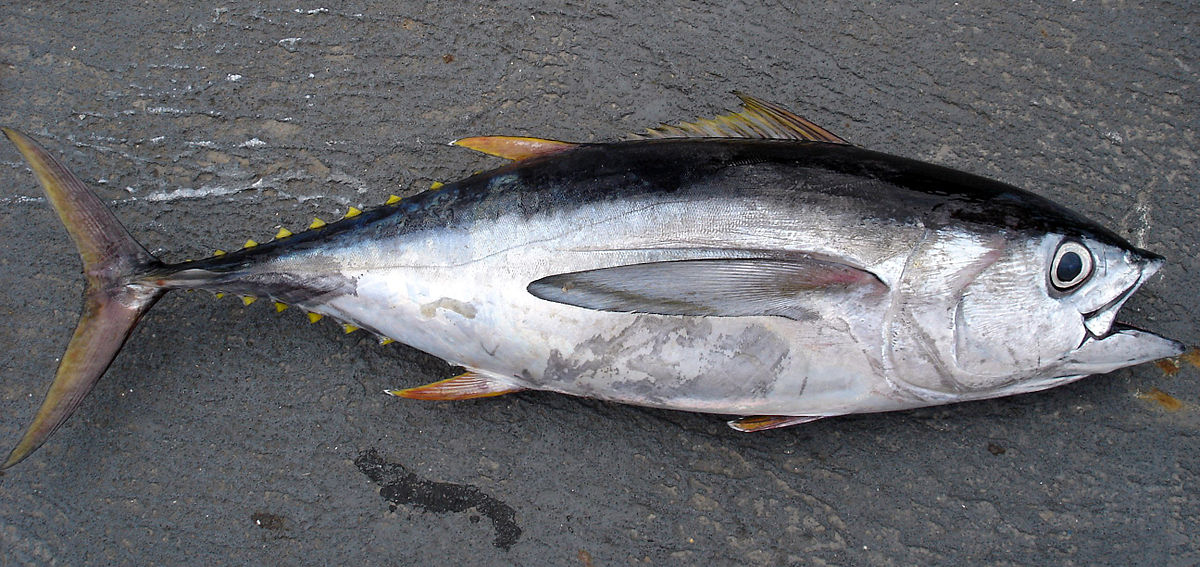
Image result for bigeye tuna (Thunnus obesus)
Predatory fish recorded for plastic consumption- the bigeye tuna (Thunnus obesus) in the central North Atlantic.

For example, predatory fish can aim for a tasty protein packed meal and end up with a mouth full of plastic. They mistake garbage for means of food.

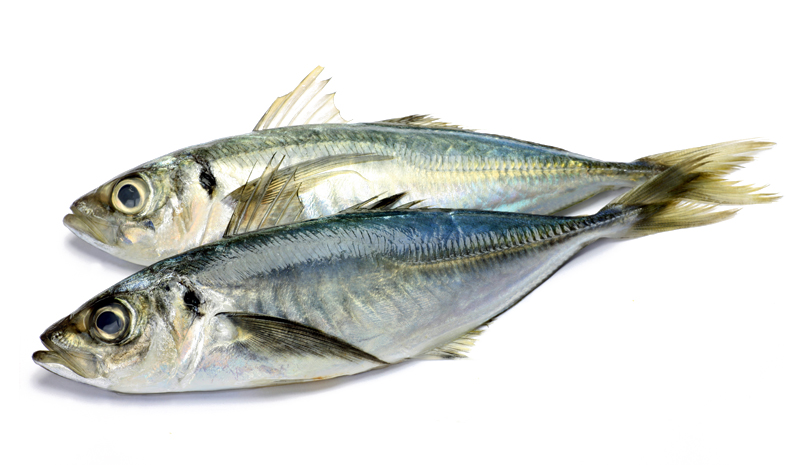
Image result for herring (Clupea harengus)Image result for horse mackerel (Trachurus trachurus)
Filter-feeders recorded herring (Clupea harengus) (left) horse mackerel (Trachurus trachurus) (right) in the North Sea and English Channel.Another example is bottom feeders/ filter feeders whom feed along the bottom of the sea floors. It could be easy for them to accidentally eat tiny particles of improperly disposed plastics as they feed. Small plastic pellets referred to as "Mermaids tears" have spread rapidly across the world's waters. I'm talking some of these pellets had fragmented to tiny little particles thinner than the diameter of one human hair. These super small plastics are introduced at large and since they are not naturally biodegradable, they never truly leave.   

Through my research it has been determined there have not been clear differences in plastic consumption between the pelagic and benthic fishes. Which was something I wondered about in an earlier blog. It's also prevalent that the plastic micro-pollution and relation to toxicity and impact on the oceanic food chain have also yet to be further studied. Clearly, these very important topics need to be looked into and studied. Questions are important, they lead to the answers of the future. One day the right question may later solve the plastic pollution takeover.  


Cited Sources

Plastic ingestion by fish. (n.d.). Retrieved March 02, 2018, from https://www.blastic.eu/knowledge-bank/impacts/plastic-ingestion/fish/

G.BEA EXPORT FISH | Sale of pelagic species – HORSE MACKEREL / Trachurus trachurus. (n.d.). Retrieved March 02, 2018, from http://www.gbea.es/products-gbea-export-fish/horse-mackerel-trachurus-trachurus/

What Do Fish Eat? The Answer Will Leave You Stupefied. (n.d.). Retrieved March 02, 2018, from https://animalsake.com/what-do-fish-eat

Cleaned up the Daytona Beach You Hippies! (n.d.). Retrieved March 02, 2018, from http://www.persimmonhollowbrewing.com/blog/2018/1/17/clean-up-the-daytona-beach-you-hippies

When The Mermaids Cry: The Great Plastic Tide. (n.d.). Retrieved March 02, 2018, from http://plastic-pollution.org/


Augustus (UR) - Radio Silence

So I believe I've kept everyone in the dark long enough. I haven't been as consistent as I'd like to be but before you get the pitchforks hear me out. The time I've been using to switch gears from my previous project to my new one. I've learned a lot about this HOBO data logger in a short period of time and at first it was overwhelming but now I believe it will be a pretty straight forward but a long research project.

So first, what is a HOBO data logger?
Well According to Onset, the company that produces these Magnificent Measuring Machines, A data logger is a compact, battery-powered device equipped with an internal microprocessor, data storage, and one or more sensors, or sensor ports aka it is a compact computer that measures things like Temperature, Water Level, Dissolved oxygen, but for this project this little guy is going to be used to measure water level, specifically along the Volusia county coast. So without further adieu here is the compact calculating computer being held by someone who needs to trim their nails and is obviously photo shopped into some generic stream....
This is the U20L
As for materials other than the logger, I will need to make some type of still which is basically a PVC enclosure to stop the U20L from flying around and getting improper readings, and really the only other thing I need is a computer and a lot of patience. I believe the most difficult part of the project will be launching and retrieving the logger to collect data.

After doing research Dr. Woodall and I just need to find a location suitable to drop the logger, that will include getting permission from a variety of people. This research will take a while to complete so I won't have my presentation ready until the fall most likely, but with the help of Dr. Woodall and her peers at FIU who are also conducting research like this we will be able to get important data to how our coast is experiencing climate change and be able to compare our data with others to possibly extend our data and graphs to all of the eastern coast.
This is what we are trying to protect

If you'd like to read up on why this project is important NOAA has some simple articles about them that I'll link:

This is going to take time but with the help of Dr. Woodall I'm extremely confident that we will reach our goals and be able to contribute to the study of climate change.


Sources:
Department of Commerce, National Oceanic and Atmospheric Administration, US. “NOAA's National Ocean Service.” NOAA's National Ocean Service, 1 June 2013, oceanservice.noaa.gov/.

Onset, Corp. “What Is a Data Logger?” What Is a Data Logger? | Onset Data Loggers, www.onsetcomp.com/what-is-a-data-logger.

And if for some Crazy reason you'd like to read up on this device, clear out your day and do some educational Binge Watching 

Thursday, March 1, 2018

Michelle (UR) - New month, new project idea

Originally I was going to attempt to build a filter using alginate, in an effort to remove microplastics from water. While I still believe in this attempt, it was brought to my attention that a filter may have already been created for this purpose. I have not found any information on it yet, but I've decided to move from a filter to other uses for alginate.
As Allie mentioned in an earlier post, plastics take many years to degrade, and they never completely go away. Since alginate is an extract of seaweed, I have decided to attempt to make cups and plates that are truly disposable. I would like to mold them using alginate, and test their ability to hold food/drink compared to plastic, as well as testing for any taste differences. Should this work out, I would like to also simulate a landfill to measure how long it takes for the alginate to break down.
I have high hopes for the potential of this material. My mind has been rattling off different possibilities should this project idea work. Perhaps someone in a later class could continue those?
Alginate: derived from seaweed
 
The Seaweed Site. (n.d.) Alginate production in Ireland. Retrieved from http://www.seaweed.ie/uses_ireland/irishalginateprod.php

Katie UR: Wash Your Hands for 20-30 Seconds. Always.

Related image
Bacteria on a Human hand.

Bacteria is defined as microscopic single-celled organisms that thrive in diverse environments. This single celled organism is what my project is thriving off of if you think about it. I m testing for bacteria found in 2 species of sharks. Bacteria can live in soil, the ocean and inside the human gut. Bacteria is all around us, its either something that is helpful or something that is destructive. Bacteria can help with our digestion but can also cause diseases like pneumonia and MRSA. This single-celled organism is what is leading me on this journey and I am excited to share with you guys the methods I will be using during this whole process
                     
Methods
         

Catching the Shark
First we will be using a Big Game Pro Extreme 10 Foot Rod, with 25 pound grade line. The bait that will be used will be caught with a fishing net at the site of where we will be doing the catching at. Once the bait is on and we have caught a shark we will bring it up to the side of the boat and if it is small enough it will be brought onto the boat but if it is to big we will leave it on the side of the boat to conduct the scrapings. If brought onto the boat we will cover its eyes with a wet towel and take the fork length, length, find out the gender and the species of shark.

Getting the Samples
By then the mouth will be dried enough for me to do the samples. I have built a swabbing device (Ill bring it on Friday to show you guys!) that will extend and be able to swab the sharks inside and outside gum so I do not have to stick my hand in its mouth. If brought onto the boat we will cover the sharks eyes with a damp towel and take the fork length, length, find out the sex and then also the species of shark. we will have a bit down piece so we wont have to yank the sharks snout back to take the swab. While getting the sample I will be wearing gloves and so will my grandfather so there is not a chance of cross-contamination. I lock the swab into place in the swabbing device and I will swab the sharks mouths. Once done i will break off the swab into a Santi-bag and then once that is done I will transfer it to the Petri dish and label the bottom of the dish. I;l tap the dish super tight so nothing gets in or out then place it into a cooler with ice packs to keep the bacteria at a good temperature.  
Returning to the lab 
Once the samples for the day have been written down and labeled I will bring the samples to Dr.Woodall and from there we will hopefully have the help of Dr.Horikami who will help us ran the tests on figuring out what bacteria inhabits the sharks mouths.