IMES

IMES

Thursday, February 16, 2017

Pam, UR - Diatoms, Tiny storehouses of historical information

Who would have thought one of the smallest species on earth could be a historical archive and current indicator of life in that particular area? It turns out that just as their beautiful little silica shells are works of art, they don't decompose but are deposited in sediments. Because they don't decompose, they are an indicator species of ancient time and current state of biological affairs.
Diatom with lacy jewel like structure

While watching a video about diatom research in a lake in Greenland I learned the above and how they are associated with climate change study. And we all know, the Arctic is warming at a rapid pace.  Climate clues from diatoms in Greenland lake

Another study from the English Channel describes researching diatoms from suspended particulate matter (SPM) being used as biogenic tracers. This added to the information about the exchange of  particles between different water masses such as from the Bay of the Seine, the Straights of Dover and so on. Using diatoms as biological tracers


Indian River Lagoon
So what can I expect to find in my own backyard? I plan to drag a seine net behind the boat in both the northern Indian River Lagoon (IRL) at Turnbull Creek area and another in the Tomoka River by the state park. I'm sure my 'catch' will be interesting. Will my species be totally different in the more saline area of the IRL verses the brackish water area of Tomoka River? Will they be similar? How different, how similar? Will I see historical evolution from pre-development era verses current? Stay tuned for more!

Ashley, C., (2013, Dec. 10). Searching for Climate Clues in Greenland's Diatoms. video:Science Nation, Live Science Retrieved from http://www.livescience.com/41852-searching-for-climate-clues-in-greenland-s-diatoms-video.html

Huault, M.F., Lafite, R, & Dupont, J.P. (1994) Diatoms as particulate tracers in the water column in the eastern english channel. Retrieved from SAO/NASA ADS Physics Abstract Service, http://adsabs.harvard.edu/abs/1994NJSR...33...47H

Steve Cofone, UR - What are microplastics and should I even care?


Hello everyone, this endeavor I have taken on has been very interesting, to say the least.
I have found a plethora of information on micro-plastics, but not very much research has been done on how much is actually finding their way into our marine animals, or if it is even there at all.
Microplastics under an electron microscope*

*http://stjohns.ifas.ufl.edu/SEA/microplastics/index.html


Most of the research I am finding is done by water sampling. Here is a great interactive map I found at
 https://www.google.com/maps/d/u/0/viewer?mid=1fPC629x59mvyVO98Cbb33RuORzc&ll=29.735128650339902%2C81.1403476878906&z=10This is based on water samples, black=0 found, blue=1-5, green=6-10, orange=11-20 and red=20+ plastic samples found in the water samples taken, most of these were actually done by volunteers.

I have reached out to Maia McGuire who is the NE Florida Sea Grant Extension agent. She will be my main source of information and I plan to run my project through her to get her thoughts and use her experience and knowledge. I will invite her to view my blog and get her opinion, this connection with Maia will be key in a successful project I believe.
As far as methods/materials, as of right now it looks like I will be coming up with this on my own. I feel confident that Maia will be able to help me in this area. I will continue to search for other research done in the area of marine life, the DSC library doesn't have that information but I will not stop there, I will continue to search. Google Scholar and UF will be a possible source.
Although I haven't found methods on my actual Independent Research Project, I am able to use some of the methods used in other projects such as water sampling.
https://www.youtube.com/watch?v=5_ew876ZybU&feature=youtu.be This is a Utube video put out by UF which will help ID what are and what aren't microplastics.

There is an awareness project here in Florida sponsored by UF and Maia McGuire
Which I will be joining. 

                                                                                   FMAP logo

Also, I did find a great guide to microplastic Identification here at
http://stjohns.ifas.ufl.edu/sea/documents/MERI_Guide%20to%20Microplastic%20Identification.pdf which will be a great source of information for me.
The more I look into this, the more I am getting interested and excited about my project. I feel the work I am doing here can make a real difference, which is extremely exciting and rewarding to me.

Wednesday, February 15, 2017

Alex, UR - IRP be stressin' me out!

Image from Google
Hello friends,
I have been struggling quite a bit on what I would like to do for my IRP, I'm most interested in sharks! Shark tagging and tracking would be an amazing thing to experience and learn more about but I believe I'm not quite qualified for that just yet nor do I think I'd be able to swing something like that for my research project. I tried to narrow something else down that would be a little more realistic for me but I don't think I have it just yet. I have come to the conclusion that I will be going with option two instead of the IRP. I have plenty on my plate at the moment and I don't want to bite off more than I can chew.

I feel like we have learned so much in this class already and I'm excited to for our field trips that we will be taking throughout the semester. I felt so completely lost the first few weeks since I have never used Excel before and it was a lot to take in and understand right away. I'm thankful for Dr. Woodall being so patient and so helpful or else I'm not sure I would have made it this far. I am taking Dr. Woodall's Lecture class as well, which has been quite helpful taking these two courses in the same semester. I know I need to get more comfortable with Excel, making my graphs, and coming up with my scientific questions. So far, I'm really enjoying using out field notebooks, I feel so official when we are using them and I'm ready to start using them in the field! I look forward to our first field trip to Ponce Inlet and can't wait to hear the talk on sharks in weeks to come. I also I'm interested to see what my classmates do for their IRP's so I can better understand what to do for mine.
:)

Chelsey, UR, Finally Figured it Out

I've had a lot of trouble and bee pretty frustrated at the fact that I couldn't find a solid thing to do my IRP on. I Also know I'm behind, so I'm redoing my last post to come up to date with what I'm doing.
So i got to talking to Mrs. Woodall about what direction i wanted to go in for my project and I wanted to do something involving coral and how it's affected by changes in salinity and temperature. I finally found a great project that involves these things and will possibly help other people in the future.

IRP: The impact UVB light and a fan system have on the stability of salinity and temperature in a controlled laboratory tank study.
 Some of my tanks will include corals, so I can document if they affect the water as well.

My project will look a little like this
A UVB light is ultraviolet radiation, or commonly known as artificial sunlight. I have been researching the effects it has on corals and lab experiments. Interactions between climate change, ozone, and ultraviolet radiation are altering exposure to UV radiation in aquatic ecosystems, (2) and this can effect many things involving the aquatic world, including water temperatures. Like most things in this world, corals and other sea life require UV to sustain themselves. Just like the wild, experimental salt water tanks and personal fish tanks need the perfect level of stability between temperature, salinity, and sunlight to thrive. My goal in this experiment is to find the perfect balance of all these things. Now while I have been researching, I can't find anything on this exact topic, but maybe throughout my research i will be able to discover more. I have found that UVB light is beneficial to corals and helps them thrive, (1)  and a part of my experiment will be to see if the UVB light and fan system will cause my corals to affect the water differently then the UVB light and fan system alone.  I will continue my research  and hopefully be able to provide more references to experiments like mine in the future.

1. https://orphek.com/is-uv-light-a-gimmick-in-led-fixtures-or-do-corals-benefit-by-it/
2.http://pubs.rsc.org/en/content/articlehtml/2015/pp/c4pp90035a

Saturday, February 11, 2017

Amber Hanick, UR- Head is Spinning & Time is Ticking

I've been doing a lot of thinking the past three weeks and as the title says, my head is spinning at unimaginable speeds and I can't get it to slow down or stop for that matter. From the stress of taking 18 credit hours this semester, to working 30+ hours a week, trying to figure out how to use and master Excel and trying to focus in on what I want to do as far as my IRP is concerned, you can definitely say I don't have a life haha. I decided, while trying to research and narrow down exactly what I want to do for my IRP and having no luck, that I will be taking the second option and blogging weekly about our class field work, discussions, weekly graphs, and other important information. This will be the best option for me not only, because I have trouble narrowing down broad topics, but also because I am overwhelmed with everything else and reporting weekly about class will help new information I learn stick in my memory and also provide to others an overview of class that week.
So far, this class has taught me a lot about Excel since I only used Excel about three times in previous classes, it was a real eye opener to learn the basics again as well as more complex features like inserting superscripts and highlighting data and having Excel calculate the standard deviation or the average of the data set. Learning to master and use Excel during this class will definitely help me in earning my degree, my career, and in my daily life. This class will definitely shine light on what I really want to do my own research on later in life and I can't wait to find that topic while working through this class and finding my niche in this amazing field.
One of the many reasons I love this field

Friday, February 10, 2017

Christian Vinciquerra UR, So many topics to choose

Well since I have never conducted an Independent Research Project I am unsure of what to really do for it. For students in the 1001 lab, we were given the choice between doing our own IRP or just blogging what we do in our labs and analyzing the data from that. I feel as if I am taking the easy way out here, but I'm just unaware of what to do, and how to do it. I would rather take this course, receive more knowledge of the instruments used, and learn the process of conducting research. Graphing research is all new to me also, I have never used Excel before this course surprisingly.
Lion fish found in the swim canal
          Honestly I’m really excited for what this course offers, going out into the field a handful of times is really exciting. I want to learn more about how to write about scientific data and analyzing it. Deciding to watch and blog about our data from class, I have thought a little about my IRP for the future. I know I’m going to eventually have to conduct my own. Usually when i get to choose what to do my projects on, I always bite off too much instead of keeping it simple. In my post last week, I said I would possibly like to do something with ocean pollution and boating. Is there some sort of correlation between knowledgeable boaters and how much trash is thrown overboard into the environment? I believe doing some critical thinking now will help me down the road when the time comes to really conduct my own.
FWC's lab grown lobster molt
         My Uncle from NOAA was integer of the Lionfish catching groups in the keys. They're an invasive species and eat nearly everything, and can kill almost everything in the water. They have been found in 2 ft of water and 700 ft of water. Over summer, I thought about how this is possible na dhow did they come to U.S. Some other ideas that I’ve thought about this past summer were how coral spawn, and how do many eggs get released vs how many are fertilized, and when helping Dr. Jeff Carrier with nurse sharks he mentioned something about how nurse sharks like to be together and they form giant “cuddle puddles”. I would have never thought that they were a social shark, do they use this as a defense strategy or are they just lonely? Also, my friends at FWC were telling me that they're trying to raise the size limit for Florida lobster due to lobster mini season nearly whipping out the population every summer. This had me thinking, if they let the lobster grow, will the lobster population burst out of control. Look how big this molt is! Will we have lobster this size found everywhere? I hope


Stephanie Guyotte, UR- I'll have the Grouper

A grouper fish (google)
Microorganism dinoflagellate genus Gambierdiscus (from link below)
Grouper is a staple fish on our local menu but just what are you eating? Yes it is a delectable white flaky fish that pairs nicely with a citrusy sauvignon blanc and a side of Ciguatera. Ciguatera?! I didn't order that! Oh don't worry it's complimentary. Well in that case... eat up. Ciguatera is a food borne illness caused by ciguatoxins. Ciguatoxins are found inside dinoflagellates more specifically genus Gambierdiscus and are released from the microorganism after being digested. The dinoflagellates can be found in a benthic habitat in warmer water regions (like ours in Florida) and stick to plants and algae where they are then eaten by marine organisms. The ciguatera then biomagnifies up the food chain until you find it on your plate and you devour every bite. The toxin does not degrade due to heat so cooking does no good against this fish poisoner. Identifying ciguatera is a difficult task which requires equipment that is not available at our beloved DSC, so as much fun as it would be to test grouper directly for the toxin, instead testing for the source will be the best data collection method. My scientific question is going to be directed at seeing if dinoflagellate can be found in some of our local environments and if an increase in ocean temperature will produce an increase in the appearance of the dinoflagellate. This could be achieved by taking samplings of plants and algae and viewing them under a microscope and identifying the dinoflagellate genus Gambierdiscus. Determining if temperature is a factor will be a bit more difficult to observer, more brainstorming required. This seems like a rather known about toxin in fish but not one that is talked about often so the findings will hopefully be interesting! Below is an informative link about ciguatera if you are looking for more knowledge on the topic now.


http://oceanbites.org/big-fish-eats-little-fish-biomagnification-of-natural-toxins-leads-to-poisoning/              

Garth P. UR - Since when was a dog a clown and what does this have to do with global cimate change?


SO, IRP topic...well since I am going into forestry conservation I found it particularly important to make that great connection between the land and the sea. I have always been like a clown for trees. They have their red noses and tiny bicycles…I have trees. I tell you what, all the crazy stuff I did as a child, like jumping tree top to tree top 30 feet in the air, swaying the tree to build momentum for the jump. Awesome. Also, incredibly dangerous.


Now having never personally studied that connection I understood that there is a deep relationship between ocean temperature and climate. Climate is everything for an ecosystem. You change that and the organic world bows to mother nature. Another point I would like to address is how climate change has affected weather patterns. Briefly I would like to touch on ecosystems and talk about how the average temperature and rainfall is potentially effecting our national parks. I plan to pick several national parks in separate climate zones within the United States to build a statistical outlay of data to compile, collect, collaborate and study these variances in climate change or lack thereof.


Dr. Woodall has shown me that vast resources are available for global/regional, climate/change and more specifically climate data which is available from reliable organizations through the internet. With these sources and others, I might find.  I plan to compile and contrast recorded changes in different state park climate zones. So, my scientific question might read…How do our oceans effect inland climate and weather patterns and has global warming and rising sea levels affected weather patterns/climate, creating changes impacting our forest ecosystems and overall health. Or so, I think.

Thursday, February 9, 2017

Kelly-Ann, UR - What are you swimming in?

     The St. Johns river is classified as a class three water source, meaning it is appropriate for recreation, propagation, and maintenance of a healthy, well-balanced population of fish and wildlife.  This is more commonly known as being safe for fishing and swimming (Maher, n.d.).  Despite its classification, the St. Johns river has had several algae blooms that has killed off fish causing red tides.  Algae blooms are caused by an excess amount of nutrients in the water, usually from anthropogenic (human) sources.  One of the nutrients that has historically been a problem in the St. Johns river is nitrogen (Issues, n.d.).
http://www.sjrwmd.com/images/Watershed_map_800px.jpg
     Nitrogen is naturally found in freshwater systems.  Blue-green algae fix atmospheric nitrogen into nitrate, which aquatic plants need to survive.  When aquatic plants either die or are digested by marine animals, nitrogen returns to the environment as ammonium.  Bacteria oxidize ammonium into nitrite and then into nitrate, which is the most common form of nitrogen found in freshwater sources.  Natural levels of nitrate in freshwater sources are typically less than 1 mg/L.  Toxic levels of nitrate for both marine life and humans is anything above 10 mg/L, however, some fish species are sensitive to concentrations of nitrogen over 0.06 mg/L (Behar, 1997).
     Sources of elevated levels of nitrate in the St. Johns include fertilizers, damaged septic tanks, storm water runoff, industrial waste, and wastewater treatments plants (Issues, n.d.).  For my independent research project (IRP) I have chosen to investigate and measure the nitrate levels in two location on the St. Johns River, at Ed Stone Park, and Lake George.  Are the nitrate levels at these two popular areas on the river really safe for fishing and swimming?  Ideally, I would like to be able to take samples from the lower basin, upper basin, and a central part of the river, however, as you can see in the figure the St. Johns river is rather large and sampling those three areas wouldn't be feasible for me at this time.  Instead, I chose to focus on popular fishing and recreation areas close to me.


Behar, S. (1997). Testing the waters: chemical and physical vital signs of a river. Retrieved February        9, 2017, from https://fosc.org/WQData/WQParameters.htm
Issues. (n.d.). Retrieved February 09, 2017, from http://www.stjohnsriverkeeper.org/issues#nutrients
Maher, J. R., P.E. (n.d.). Water quality and the st. johns river [PDF]. Department of Environmental          Protection.

Monica Barrick, UR - It's all about the angle!


As I said in my last post, solar energy has caught my attention and I am excited to get started on this project. Even though I found it difficult to find a good project for me, I want to go forward with this experiment. I think it will not only better me for the future learning of photovoltaic (PV) cells but it could be the future renewable resource of most of the world.


Image result for solar panel and sun


Independent Research Project (IRP): 
Learning more about how solar panels work and how the angle can affects its performance.

Scientific Question:
How does the angle of the PV panel affect performance? (at my location)

Now, there are many factors on how well a solar panel will work. As I am starting my research it seems to differ between the seasons and where are you located. (CLICK HERE for more info) To narrow down my data I will be conducting my experiment in my backyard located approximately at 29° 6' 10.7" N 81° 0' 5.54" W. I have a lot to learn, not only about solar panels but the sun its self and how it changes angles during different seasons. The out come of other peoples data seem to say certain angles have a better performance so I am eager to see my results in my location. (CLICK HERE for more info) Both these websites has helped me make a plan for my project.

Angles of the sun at different times.


Carly, UR - Smile for me!

Last time I left off I didn't have a confident direction in what my independent research project would be, not much from that has changed.  I've always been slightly indecisive when given a broader choice, but usually pull through in the end.  Independent research in any subject has always helped me figure out what my likes and dislikes efficiently, so I do have an interest in doing one.  Especially in this subject I feel I'm still just at my beginning with.

Sand Tiger Shark - showing off it's pretty smile. 
I've had a broad idea range from sand tiger shark teeth comparisons (from male to female, age, etc), how ocean chemistry effects different fish, or maybe building a small marine system. 

 Like many of my age, I have an attraction to sharks, and sand tigers in particular since I have spent a large amount of time with them and talking about them at Marineland.  I have a growing collection of teeth, from different individuals ranging from all sizes and shapes.  Some that still have gum on them and some that have been rolling around in algae.  So there might be something there.

Ocean chemistry is something I have minimal knowledge of, but I'm aware its chemistry changes throughout the seasons, has regional differences, and some other basics.  Certain species migrate to more temperate waters (ex. sea turtles), some hang around the same region and change their behavior temporally.  If there was some species to study locally that could prove interesting.  Possibly the effects an invasive species has on local chemistry.

In conclusion, I'm interested in species and what kinds of impacts their environment has on them.  I'm still quite new to this field and have a lot to learn, but positive in my approach. 

Best fishes,
Carly


Casie UR- Beautiful Yet Deadly?

Water Hyacinth
I have always had a love and fascination for plant life. I find that even the smallest things have some of the greatest impacts on the environment. I think that having a better understanding of plant and animal life we can have a greater understanding of the earth and individual habitat. So when we were instructed at the beginning of the semester to start thinking about what we might do our Independent Research Project on I immediately thought about invasive species.

 I have taken quite sometime thinking about the ins and outs of how I might do my IRP this semester. I had started thinking about invasive species in the Florida water ways and been wavering between studying marine life or plant life.  I have finally narrowed it down to the Eichhornia Crassipes. More commonly known as the Water Hyacinth. I am very interested in knowing how these beautiful plants smoother out the water ways and how this impacts other plant and marine life in the areas that it is effecting.

Illustration courtesy of Florida Fish and Wildlife
 I believe that taking root samples of the Hyacinth and the water that surrounds it can give me more clues to what this plant is doing to the marine life and to the
water quality. I am very excited about this project and I can't wait to see what the data reveal.

Steve Cofone, UR - Should I brush my teeth today?


Independent Research Project- Investigating the digestive track of bottom feeding fish in Flagler county waterways for micro beaded plastics and micro fibers.

Scientific Question- Are Micro-plastics finding their way into bottom feeding species intestinal track in Flagler County, Florida, fresh and brackish waterways?

Micro-plastic's triple threat- The billions of tons of plastics that we release into the environment for the most part do not biodegrade. But they do degrade, breaking into ever smaller particles that end up in the oceans. Eurasian perch larvae exposed to microplastics were less active, less responsive to predator cues, more likely to be eaten, and less likely to thrive—preferring to eat plastic rather than their natural prey.

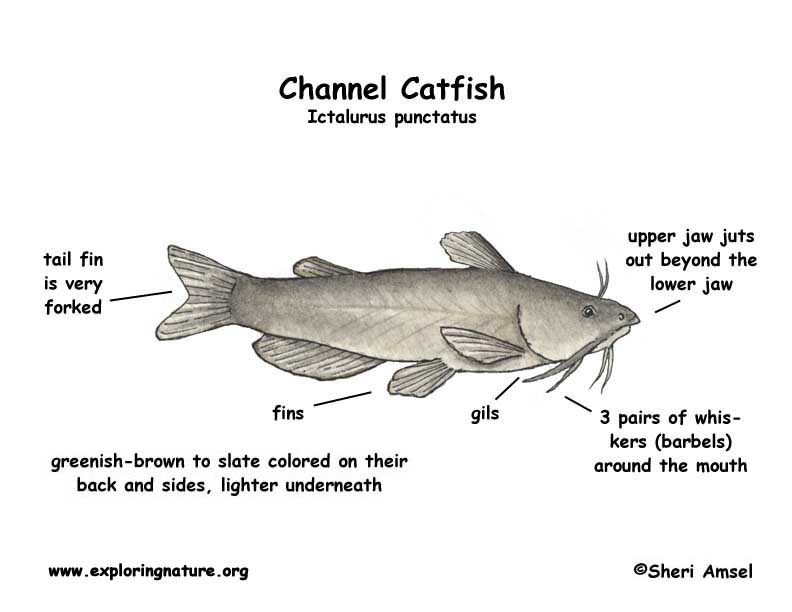
Fish_ChannelCatfish.jpg
Google Photo of a channel cat
Image result for anatomy drawings  of Ictalurus punctatus
Identification aids of a channel cat
       Primary species I will be looking at is the Channel Catfish: Ictalurus punctatus, but will investigate other species that are caught. Primarily bottom feeders, channels also feed higher up. Major foods are aquatic insects, crayfish, mollusks, crustaceans and fish - not detritus or decaying material.


I will be fishing from land based spots which I will mark with GPS, of course fishing is not a guarantee you will catch what you are after or even any fish at all.


I will attempt to catch fish near discharges and watersheds in Falgler county as well as in the intra and inter coastal.


Image result for anatomy and  diagrams  of Ictalurus punctatus
Basic diagram of Intestinal track
http://www.yourarticlelibrary.com/fish/anatomy-and-physiology/digestive-system-in-fishes-with-diagram/88195/

Although Congress has started to remove these products with micro plastics, they still exist in other countries products that we use. Toothpaste and exfoliates are some of the major products that have used these plastics since as early as the 1960's
Now my title should make sense to you! :)

Below are just a few peer reviewed articles I have found on the subject along with the abstract and/or highlights.


http://www.int-res.com/abstracts/ab/v17/n1/p29-34

ABSTRACT: The ingestion of plastic fragments by 3 species of Gerreidae (Eugerres brasilianusEucinostomus melanopterus and Diapterus rhombeus) in a tropical estuary in Northeast Brazil was assessed for 3 different size classes corresponding to juveniles, sub-adults and adults. In all, 425 individuals were analysed. The gut contents of 13.4% of these individuals contained plastic debris.


http://www.sciencedirect.com/science/article/pii/S0269749113005642

Highlights

>100 works on microplastic marine pollution were reviewed and discussed.
Microplastics (fibres, fragments, pellets) are widespread in oceans and sediments.
Microplastics interact with POPs and contaminate the marine biota when ingested.
The marine food web might be affected by microplastic biomagnification.
Urgently needed integrated approaches are suggested to different stakeholders.


Lyle UR On the Half Shell

Hey there again. I am going to be doing my independent research project (IRP) on micro plastics in oysters. My scientific question is, are there micro plastics in oysters? What my thinking on this is, if there are micro-plastics in oysters, then they aren't filtering the water that they should be and that's not a good thing. Oysters that are healthy are supposed to filter up to 50 gallons of water each day. That doesn't sound like much but that is PER oyster and there can be literally thousands of oysters on one oyster bed. With as dirty as the Indian River Lagoon has been over the past years, are micro plastics a contributing factor of it staying dirty?

Indian River Lagoon Oysters
After doing a quick search on micro plastics in oysters, I found some research that has been done on the Pacific oyster, and the results are scary. It shows that the oysters have had a decrease in reproduction, smaller offspring and feeding modifications.

After reading that article I'm even more excited to get out and do some research in our backyard. If my results turn out that there are micro plastics in our lagoon system, hopefully we caught it soon enough to get a plan to help clean the waters.The picture to the right is a picture of an oyster bed in the Indian River Lagoon.

If you would like to see more of the research that was done on the Pacific oysters, I have included the link below.
https://www.ncbi.nlm.nih.gov/pmc/articles/PMC4780615/

Dylan Radford UR, Getting a Little Better with Excel!!

     My experience through this lab so far has been both eye opening and filled with new knowledge that I know I will need throughout my career. This is the reason why Excel was so intimidating for me at first. I know that I will probably use this program a lot in my life and I need to be comfortable and quick when using it. In fact, My Dad is a school psychologist and tests young students to see if they are fit for the gifted program in elementary school. He uses the same Excel program to track the children's scores and use them to tell whether they are ready or not. This is a good example to show that Excel can be used for a multitude of things not just ocean science.
     The first week of Excel was definitely tough and I was not really sure what I was doing but I stayed after class with Dr. Woodall and she helped me create the graphs and complete the assignment. The next day when I woke up I had forgotten most of what I had learned and was freaking out! I took pretty decent notes in my field notebook but there were still little details that were left out that I desperately needed. This was a wake up call telling me "you need to practice taking descriptive notes!" After about an hour of trying to figure it out I asked my dad to help me. The way he was using the program looked so simple because he was changing things and putting in graphs so quickly.
I had trouble with this graph at first but I think it has improved!
By the next class I was pretty good at putting in the graphs, but then we had to put in our own Information and tell which Graph to use. This time I took a deep breath and told myself "you just have to bit the bullet and get right in" so that's what I did and I was pretty comfortable with putting in the information and telling my graphs what to do. I still needed my dads help for a few things but in just a week I could see that I was a lot better with using this program and I think that with a few more weeks of graphing the activities we do in lab, I will be an Excel master.

Wednesday, February 8, 2017

Pam, UR - Lucy in the Sky of Diatoms

Picasso's dream
While thinking about my research project I thought it was a slam-dunk seagrass subject. But the direction and focus was eluding me. Maybe I needed a new direction, a new focus.

What is it about the environment that makes my heart sing?
What can I narrow it down to, and narrow more, and pinpoint
a focus onto?  So I'm casting my net wider, and looking for that
little diatom of a jewel for a research project.
The Ferris Wheel

Lucy in the Sky of Diatoms
Yes, that's it. Diatoms! Never mind there may be 2 million species, they are a beautiful work of art. In my life at this moment in time, I need art. I need the beauty of creation. Now, mind you, I won't be so happy when I discover they may be a culprit in the environment. But right now, they are amazing with silica walls like little glass houses.

Valentine diatom for that special someone
 It turns out they are very picky about where they live too. This makes them useful for environmental studies, and their pretty little silica cell walls don't decompose so they are used in paleoecology. Now there's a field I've never heard of. Guess I've been living under the proverbial rock. Hmm... more to come.

Monday, February 6, 2017

Chelsey, UR, I Just Feel at Home When i'm in the water

A good example of how dead our reefs look
(and no i'm not naked)
Key West, 2016
Since the age of 12 I've known that what I want to do in life needs to involve the water. I got in to scuba diving at a young age thanks to my mom who forced me to go to a scuba camp over a summer break. Since the day I got on a scuba tank I just knew this was it i want to do this the rest of my life. When i was younger I used to volunteer all the time at the Marine Discovery center in New Smyrna, and i learned a lot of cool things about the ocean and i think that's what really motivated me to go to college to try and make a difference for it one day. I've always been amazed by how crazy it is there's a whole other world beneath the surface of ours, i'm also obsessed with sharks and i want to do anything i can to be around them. I used to go diving almost every weekend before i went off to college in Key West, where I went diving almost every day. It really breaks my heart seeing how bad off our reefs are, especially Florida's reefs, They just look half dead. There also is a huge difference in animal life on them compared to 20 years ago and it's just horrible. Seeing as about 1/3 of the Worlds reefs are gone, i just want to do anything i can to help reverse whats's happening. I've re planted coral on coral farms multiple times and it makes me feel genuinely good to know that even though what i'm doing is small, it's still a step in the right direction for our oceans.