IMES

IMES

Thursday, February 9, 2017

Monica Barrick, UR - It's all about the angle!


As I said in my last post, solar energy has caught my attention and I am excited to get started on this project. Even though I found it difficult to find a good project for me, I want to go forward with this experiment. I think it will not only better me for the future learning of photovoltaic (PV) cells but it could be the future renewable resource of most of the world.


Image result for solar panel and sun


Independent Research Project (IRP): 
Learning more about how solar panels work and how the angle can affects its performance.

Scientific Question:
How does the angle of the PV panel affect performance? (at my location)

Now, there are many factors on how well a solar panel will work. As I am starting my research it seems to differ between the seasons and where are you located. (CLICK HERE for more info) To narrow down my data I will be conducting my experiment in my backyard located approximately at 29° 6' 10.7" N 81° 0' 5.54" W. I have a lot to learn, not only about solar panels but the sun its self and how it changes angles during different seasons. The out come of other peoples data seem to say certain angles have a better performance so I am eager to see my results in my location. (CLICK HERE for more info) Both these websites has helped me make a plan for my project.

Angles of the sun at different times.


Carly, UR - Smile for me!

Last time I left off I didn't have a confident direction in what my independent research project would be, not much from that has changed.  I've always been slightly indecisive when given a broader choice, but usually pull through in the end.  Independent research in any subject has always helped me figure out what my likes and dislikes efficiently, so I do have an interest in doing one.  Especially in this subject I feel I'm still just at my beginning with.

Sand Tiger Shark - showing off it's pretty smile. 
I've had a broad idea range from sand tiger shark teeth comparisons (from male to female, age, etc), how ocean chemistry effects different fish, or maybe building a small marine system. 

 Like many of my age, I have an attraction to sharks, and sand tigers in particular since I have spent a large amount of time with them and talking about them at Marineland.  I have a growing collection of teeth, from different individuals ranging from all sizes and shapes.  Some that still have gum on them and some that have been rolling around in algae.  So there might be something there.

Ocean chemistry is something I have minimal knowledge of, but I'm aware its chemistry changes throughout the seasons, has regional differences, and some other basics.  Certain species migrate to more temperate waters (ex. sea turtles), some hang around the same region and change their behavior temporally.  If there was some species to study locally that could prove interesting.  Possibly the effects an invasive species has on local chemistry.

In conclusion, I'm interested in species and what kinds of impacts their environment has on them.  I'm still quite new to this field and have a lot to learn, but positive in my approach. 

Best fishes,
Carly


Casie UR- Beautiful Yet Deadly?

Water Hyacinth
I have always had a love and fascination for plant life. I find that even the smallest things have some of the greatest impacts on the environment. I think that having a better understanding of plant and animal life we can have a greater understanding of the earth and individual habitat. So when we were instructed at the beginning of the semester to start thinking about what we might do our Independent Research Project on I immediately thought about invasive species.

 I have taken quite sometime thinking about the ins and outs of how I might do my IRP this semester. I had started thinking about invasive species in the Florida water ways and been wavering between studying marine life or plant life.  I have finally narrowed it down to the Eichhornia Crassipes. More commonly known as the Water Hyacinth. I am very interested in knowing how these beautiful plants smoother out the water ways and how this impacts other plant and marine life in the areas that it is effecting.

Illustration courtesy of Florida Fish and Wildlife
 I believe that taking root samples of the Hyacinth and the water that surrounds it can give me more clues to what this plant is doing to the marine life and to the
water quality. I am very excited about this project and I can't wait to see what the data reveal.

Steve Cofone, UR - Should I brush my teeth today?


Independent Research Project- Investigating the digestive track of bottom feeding fish in Flagler county waterways for micro beaded plastics and micro fibers.

Scientific Question- Are Micro-plastics finding their way into bottom feeding species intestinal track in Flagler County, Florida, fresh and brackish waterways?

Micro-plastic's triple threat- The billions of tons of plastics that we release into the environment for the most part do not biodegrade. But they do degrade, breaking into ever smaller particles that end up in the oceans. Eurasian perch larvae exposed to microplastics were less active, less responsive to predator cues, more likely to be eaten, and less likely to thrive—preferring to eat plastic rather than their natural prey.

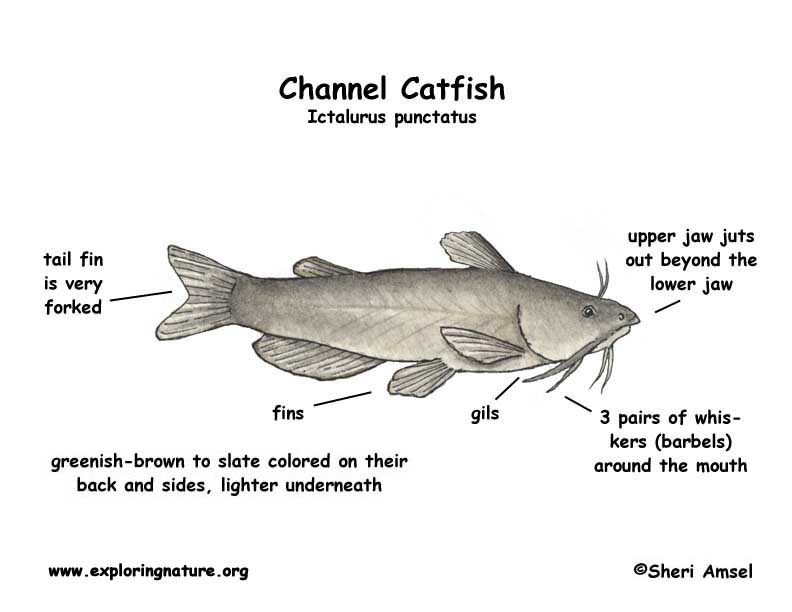
Fish_ChannelCatfish.jpg
Google Photo of a channel cat
Image result for anatomy drawings  of Ictalurus punctatus
Identification aids of a channel cat
       Primary species I will be looking at is the Channel Catfish: Ictalurus punctatus, but will investigate other species that are caught. Primarily bottom feeders, channels also feed higher up. Major foods are aquatic insects, crayfish, mollusks, crustaceans and fish - not detritus or decaying material.


I will be fishing from land based spots which I will mark with GPS, of course fishing is not a guarantee you will catch what you are after or even any fish at all.


I will attempt to catch fish near discharges and watersheds in Falgler county as well as in the intra and inter coastal.


Image result for anatomy and  diagrams  of Ictalurus punctatus
Basic diagram of Intestinal track
http://www.yourarticlelibrary.com/fish/anatomy-and-physiology/digestive-system-in-fishes-with-diagram/88195/

Although Congress has started to remove these products with micro plastics, they still exist in other countries products that we use. Toothpaste and exfoliates are some of the major products that have used these plastics since as early as the 1960's
Now my title should make sense to you! :)

Below are just a few peer reviewed articles I have found on the subject along with the abstract and/or highlights.


http://www.int-res.com/abstracts/ab/v17/n1/p29-34

ABSTRACT: The ingestion of plastic fragments by 3 species of Gerreidae (Eugerres brasilianusEucinostomus melanopterus and Diapterus rhombeus) in a tropical estuary in Northeast Brazil was assessed for 3 different size classes corresponding to juveniles, sub-adults and adults. In all, 425 individuals were analysed. The gut contents of 13.4% of these individuals contained plastic debris.


http://www.sciencedirect.com/science/article/pii/S0269749113005642

Highlights

>100 works on microplastic marine pollution were reviewed and discussed.
Microplastics (fibres, fragments, pellets) are widespread in oceans and sediments.
Microplastics interact with POPs and contaminate the marine biota when ingested.
The marine food web might be affected by microplastic biomagnification.
Urgently needed integrated approaches are suggested to different stakeholders.


Lyle UR On the Half Shell

Hey there again. I am going to be doing my independent research project (IRP) on micro plastics in oysters. My scientific question is, are there micro plastics in oysters? What my thinking on this is, if there are micro-plastics in oysters, then they aren't filtering the water that they should be and that's not a good thing. Oysters that are healthy are supposed to filter up to 50 gallons of water each day. That doesn't sound like much but that is PER oyster and there can be literally thousands of oysters on one oyster bed. With as dirty as the Indian River Lagoon has been over the past years, are micro plastics a contributing factor of it staying dirty?

Indian River Lagoon Oysters
After doing a quick search on micro plastics in oysters, I found some research that has been done on the Pacific oyster, and the results are scary. It shows that the oysters have had a decrease in reproduction, smaller offspring and feeding modifications.

After reading that article I'm even more excited to get out and do some research in our backyard. If my results turn out that there are micro plastics in our lagoon system, hopefully we caught it soon enough to get a plan to help clean the waters.The picture to the right is a picture of an oyster bed in the Indian River Lagoon.

If you would like to see more of the research that was done on the Pacific oysters, I have included the link below.
https://www.ncbi.nlm.nih.gov/pmc/articles/PMC4780615/

Dylan Radford UR, Getting a Little Better with Excel!!

     My experience through this lab so far has been both eye opening and filled with new knowledge that I know I will need throughout my career. This is the reason why Excel was so intimidating for me at first. I know that I will probably use this program a lot in my life and I need to be comfortable and quick when using it. In fact, My Dad is a school psychologist and tests young students to see if they are fit for the gifted program in elementary school. He uses the same Excel program to track the children's scores and use them to tell whether they are ready or not. This is a good example to show that Excel can be used for a multitude of things not just ocean science.
     The first week of Excel was definitely tough and I was not really sure what I was doing but I stayed after class with Dr. Woodall and she helped me create the graphs and complete the assignment. The next day when I woke up I had forgotten most of what I had learned and was freaking out! I took pretty decent notes in my field notebook but there were still little details that were left out that I desperately needed. This was a wake up call telling me "you need to practice taking descriptive notes!" After about an hour of trying to figure it out I asked my dad to help me. The way he was using the program looked so simple because he was changing things and putting in graphs so quickly.
I had trouble with this graph at first but I think it has improved!
By the next class I was pretty good at putting in the graphs, but then we had to put in our own Information and tell which Graph to use. This time I took a deep breath and told myself "you just have to bit the bullet and get right in" so that's what I did and I was pretty comfortable with putting in the information and telling my graphs what to do. I still needed my dads help for a few things but in just a week I could see that I was a lot better with using this program and I think that with a few more weeks of graphing the activities we do in lab, I will be an Excel master.

Wednesday, February 8, 2017

Pam, UR - Lucy in the Sky of Diatoms

Picasso's dream
While thinking about my research project I thought it was a slam-dunk seagrass subject. But the direction and focus was eluding me. Maybe I needed a new direction, a new focus.

What is it about the environment that makes my heart sing?
What can I narrow it down to, and narrow more, and pinpoint
a focus onto?  So I'm casting my net wider, and looking for that
little diatom of a jewel for a research project.
The Ferris Wheel

Lucy in the Sky of Diatoms
Yes, that's it. Diatoms! Never mind there may be 2 million species, they are a beautiful work of art. In my life at this moment in time, I need art. I need the beauty of creation. Now, mind you, I won't be so happy when I discover they may be a culprit in the environment. But right now, they are amazing with silica walls like little glass houses.

Valentine diatom for that special someone
 It turns out they are very picky about where they live too. This makes them useful for environmental studies, and their pretty little silica cell walls don't decompose so they are used in paleoecology. Now there's a field I've never heard of. Guess I've been living under the proverbial rock. Hmm... more to come.

Monday, February 6, 2017

Chelsey, UR, I Just Feel at Home When i'm in the water

A good example of how dead our reefs look
(and no i'm not naked)
Key West, 2016
Since the age of 12 I've known that what I want to do in life needs to involve the water. I got in to scuba diving at a young age thanks to my mom who forced me to go to a scuba camp over a summer break. Since the day I got on a scuba tank I just knew this was it i want to do this the rest of my life. When i was younger I used to volunteer all the time at the Marine Discovery center in New Smyrna, and i learned a lot of cool things about the ocean and i think that's what really motivated me to go to college to try and make a difference for it one day. I've always been amazed by how crazy it is there's a whole other world beneath the surface of ours, i'm also obsessed with sharks and i want to do anything i can to be around them. I used to go diving almost every weekend before i went off to college in Key West, where I went diving almost every day. It really breaks my heart seeing how bad off our reefs are, especially Florida's reefs, They just look half dead. There also is a huge difference in animal life on them compared to 20 years ago and it's just horrible. Seeing as about 1/3 of the Worlds reefs are gone, i just want to do anything i can to help reverse whats's happening. I've re planted coral on coral farms multiple times and it makes me feel genuinely good to know that even though what i'm doing is small, it's still a step in the right direction for our oceans.

Friday, February 3, 2017

Amber, UR- Manatees, Dolphins, and Fish Oh My!

Messing around at The Florida Aquarium
Picture I took of a manatee in Three Sisters Springs


From a very young age, I was introduced to the ocean, the beach, boating, swimming with the many organisms that call the oceans and waterways home, and visiting aquariums and science centers during the summer months every year from the age of 4. Throughout my educational years, I've always had a strong passion for science, especially Biology and the Marine Sciences. When my classes would visit the local aquarium I would always be the child lagging behind everyone else taking my time to inspect and marvel at each organism in every tank. During my high school years, as I mentioned in my introduction blog last week, I was one of roughly 89 students in my county selected to attend the Academy of Environmental Science in Crystal River. This is where my love for science not only blossomed into something more than just something I loved, but where I planted the roots for my future career and began thinking about spending the rest of my life getting paid to do what I love. Every day that my classmates and I went out on the river and into the Gulf of Mexico, I was not only in love with going to school, but I was in love with everything that surrounded me, the seagulls calling from above, the sounds of waves crashing into oyster beds and shores nearby, the pain of paddling about 4 miles to our destination and 4 miles back to school, and the daily sights of dolphins, bonnet head sharks, and gators. I knew instantly what I wanted to build my career upon after creating and maintaining my first marine aquarium during my sophomore year of high school. I was instantly bewildered by building my own habitat in our classroom and doing everything in my power to make sure it was properly cared for and maintained throughout the school year. We would visit a local Native American "dumping ground" island and wade about 1,500 feet off its shore to dip net for all sorts of fascinating creatures like pipefish, seahorses, and small crustaceans to fill the tank with. I would always watch the T.V. show "Tanked" on Animal Planet every night after school and spent every waking hour learning everything I could and making myself fall more in love with aquarium maintenance and building. I loved building aquariums, maintaining them, and caring for all of their residents whom call the tank their home. After moving to Daytona, I had the privilege of meeting Brett and Wayde from Tanked and I couldn't be more inspired to keep on track with my dream career of being an aquarist. I aspire to be either owning a business or working for a business that builds aquariums, or to be working at SeaWorld, Disney, or an aquarium maintaining and caring for the many marine animals who call these places their home. I believe that I'm going to take some sort of aquarium maintenance approach to my IRP whether it be interviewing and learning from current aquarists or volunteering my time to an aquarium or business to learn even more about my future career than i currently know now.
Brett and Wayde from Tanked

Carly, UR - Art is I; Science is we.

Brother(left) and I (right) in front of the lake we grew
up on.
When I was around five years old I remember being in our family SUV and we had just arrived to SeaWorld Orlando, that's when I threw up.  Luckily, my mom is amazing and brought some extra clothes for me, so we continued what was my first of many visits to SeaWorld.

Fast forward to sophomore year of high school, 16 years old, avid artist, but I need to take some elective courses so I chose a Marine Biology class.  I absolutely adored the class, every aspect from odd deep sea invertebrates to marine mammals.

These were just a couple of the many factors that have led me to where I am today.  As I said in my previous post, I have been working at Marineland Dolphin Adventure for almost two years.  Working there basically rekindled my love for marine life and helped me realize where I really need to be.  The first coworkers I befriended weren't those of my own department (guest services), it was the aquarists.  These kind-hearted, hard-working folks that take care of our gallery of aquariums from sand tiger sharks to hogfish.  I constantly asked them questions about why they did this or that, what the lifespan of something was, etc.
After a year, a couple of aquarist positions opened up and I figured I would apply; however the interview was a total disaster, I had no idea what I was talking about, other than some random facts about dolphins, sharks, and sea turtles.  I didn't know how our life support systems worked and didn't understand the position.  The head aquarist from our parent company talked to me a couple days after and commended me on my positivity, but I didn't have the knowledge or experience needed.

A year later, I'm now in this course, with almost a year of volunteering with the aquarists under my belt and continuing my education for my second Bachelor's degree.

Our common ocotopus taking apart a Mr. Potato Head.  One of her
many EEDs (Environmental Enrichment Device).
Every chance I get to volunteer grows my love for the zoology field, especially the variety it brings.  It involves the creative problem solving hands-on approach I enjoy from art (and video games), with a biological science.  It's the best of all the worlds I've come to know and love growing up.

One of our 12 sand tiger sharks, Female 4. 
My specific interests between the animals continues to change every week (this week it's our new cuban hogfish!), my first and still over-arcing love is our sand tiger sharks.  For my independent research project, I'm still not confident in my direction.  I would enjoy studying some new aspects of our sand tiger sharks or one of the other animals I work with.  There are also gaps in my knowledge on things like water quality that I would like to learn more about as well, so that is another route I could take.

Best fishes, Carly Magnus

Lyle UR

People always ask me, why are you getting your degree in environmental studies? Well, I want to keep my options open for when I graduate. The field I would love to be in would be the coastal waters conservation or even the conservation of the oceans. There is so much wrong with the Indian River Lagoon (IRL) system right now and it infuriates me. How is it gonna be in 10-20 years from now when my sons want to go out and fish or
(Cameron Spencer/Getty Images)micro plastics
kayak out there? The way things are going, it will suck tremendously.  With me getting into environmental science it will give me a chance to do something about it on a bigger scale that just being self conscious about what I do out there. The even bigger fear I have is what about in the ocean? The amount of trash that we have put out there is completely insane. There is a trash vortex in the Pacific that is twice the size of Texas and that's not the only one out there, each ocean has a trash vortex. It's now getting into our fish and according to a article that Dr. Woodall emailed me, it has infiltrated into the coastal fish and shellfish. As residents of a peninsula, Florida, a lot of our revenue comes from the water that we are surrounded by.
 If you couldn't tell by how passionate I seem talking about this, my Independent Research Project (IRP) will be on micro plastics in fish and shellfish, and if the weather would cooperate I would be able to get out there and start getting some research started. I want to see how much of the plastic dump in the Atlantic has effected our little piece of paradise.

Melody, UR - Inspiration All Around

Every chance I have, I set up camp in a hammock by the river or the beach. I use the natural specimens around me for inspiration in my art. A breath of fresh air, a crisp breeze off the glistening water, and a blue sky above me are the simple factors that make a perfect day for me. Environmental
Taking a break from paddling at Piddler Island. 
Science feels like an obvious field for me to study. I am driven by how much I enjoy the natural world and I want to help keep the environment in tact for future generations. Seeing the destruction of the environment right before my eyes motivates me to pursue a career in conserving the beauty and wonder in the environment. I have been witnessing environmental genocide in politics and it only drives me to work harder to understand the world around me to better utilize my voice in democracy. I care about preserving every ecosystem--large or small--from the vast expanse of Florida's very own Everglades to the small lakes and creeks around town. My Independent Research Project might be about the destruction of the Everglades and the repercussions that it may have on Florida's inhabitants. The Everglades have been exploited for decades.
The sunrise in Daytona Beach, a common inspiration for my art. 
The Southeast Museum of Photography has an inspiring exhibit on the Everglades through February 4, 2017. Adam Nadel, the artist who created Getting the Water Right: The Culture and Politics of Water in the Everglades stated "the development of South Florida's coastal communities and agriculture has reduced the Everglades in size by half. Now, the ecosystem is at risk, threatening the region's water supply..." A link to the exhibit's information can be found here. I am still searching for my perfect role as an environmental scientist, the only thing I know for sure is that I am passionate about this field. A healthy environment means a clean, crisp place to paint. To picnic. To kayak. To swim. To share with our loved ones now, and our future generations later. More importantly, it means the difference between ecological collapse and sustaining Earth's populations.

Christian Vinciquerra UR, Basically A Pirate


        Why did I choose this field? Well if you were fortunate to read my first post introducing myself, I mentioned my aunt and uncle that live in the Florida Keys. Growing up near the numerous water sources of different varieties, I was always attracted to the water. I knew right after my summer in the Florida Keys in 2013 that I wanted to work on, for, and with the water. My uncle at NOAA and my aunt as a marine biologist for the county, I was destined to be a scientist. 
Tomoka Basin 
         Also in my first post I mentioned Seacamp Association in Big Pine Key. My first marine science based job. Having so many colleagues that were scientists and full of knowledge was truly a blessing. Being surrounded by like-minded individuals for the first time in my life inspired me to push myself to graduate and enter the professional work force. Seacamp was the catalyst in my academic career. If I didn’t enjoy myself and all the science I would’ve probably changed my major when I returned home to start the semester, however that didn’t happen. I was introduced to  captaining vessels and learned the rules of the road in greater depth than just obtaining a boating license. Something about being in charge on the ocean makes you feel like a pirate. In charge of where you go and what everyone on board is doing. As of right now I’m looking into maritime academies to possibly further my education later this year. I still would like to acquire a marine science degree but focus my attention mainly on ships.
Coral heads trash clean up
         The ocean is hypnotic and so rhythmic. True beauty on the surface and beneath. As much as I love boating, i love protecting the environment. An avid fisherman, fishing line pollution is a major risk for marine organisms. Recycling used line and picking up trash can make a huge difference in your own environment.  Seagrass beds full of scars makes me want to help make boaters aware of how protect the environment as well as themselves. I believe there is a correlation between aware boat handlers and environmental destruction.  Maybe I can do my IRP on something that is related to pollution effects on the local environment.   

Stephanie Guyotte,UR-Tree Hugger for Life...or as Long as There are Trees

Me in a Tree
As a child it was not my dream to be an Environmental Scientist but instead a Veterinarian because I just loved every animal and wanted to safe them all. Then when I came to the realization that I would have to preform surgeries and put animals down that dream did not look so appealing any longer but my love for animals has not wavered. Growing up I was lucky enough to have the freedom to be able to explore the vast wilderness of my own backyard, with boulders to scale, streams to hop, rivers to ride, hills to roll down, and trees to climb I was a very curious kid. I remember asking my father how did all those boulders get in our back yard, to which he replied I don't know look it up in the Encyclopedia, so I did. After learning that those very boulders where left behind by glacier movement thousands of years ago I just had even more questions. I have always had respect for nature and all that it supplies me with be it the basic necessities for life or something more like a secrete hideaway or peaceful escapes or views that makes you feel smaller than an ant, but I never thought about turning that into a career.

This Beautiful Jacaranda down the road from my house was lost
in the last hurricane
     About four years ago I was awoken to the sound of a chain saw which was not too uncommon in my neighborhood so I did not think too much about it, but then I walk out my door and the tree guys are cutting down this massive oak tree in the middle of my front yard. I walk up to them and asked with some choice words what they where doing cutting down the tree. He said it got hit by lighting and died so they had to cut it down so it did not fall into the house, you don't want the tree to fall into your house do you? I then told him that this tree was here long before the house and if the tree fell on the house it would be the houses problem and walked away all huffy and puffy like. My aunt looked at the trees guys and then at me and back at the tree guys and said you will have to excuse my niece she's a tree hugger. It was right then that I decided I needed to do something with my passion for the environment and started down this path towards becoming an Environmental scientist.
      Narrowing down just one field of study for me is a difficult choice, after all there are seals to save, oceans to clean, ozone to repair, glaciers to cool, and trees to hug who can just pick one? I do really like geology so I might do something with fracking seeing as we are in Florida and this is a important issue for the area.      


Thursday, February 2, 2017

Alex (UR) OBSESSED with our oceans!!

                                                          
Cabo San Lucas
Hello all,
  The ocean is my happy place, I can't tell you many times I get out on a boat that I don't get all warm and fuzzy inside and almost start to laugh because I'm SO darn excited when I'm out there, honestly can't explain it much more than that. Every year I would go to Cabo and go out deep sea fishing (LOVE deep sea fishing) I sit at the front of the boat the entire ride out and in, its my favorite place to be when I'm out there, I just get lost in my own little world. :)

It all started in 6th grade when I lived in Arizona, I took a class trip to the Catalina Islands off the coast of California, called CIMI (Catalina Island Marine Institute). I became fascinated by the ocean so I then went on the Orca trip in 8th grade as well which then continued to feed me interest. Ive dreamt of the ocean ever since then and decided it was time to move somewhere that made more sense....I've watched many documentaries on our oceans, fished all over the place, learned to dive(soon to have my certification), gone to tons of aquariums, & stopped loving Seaworld along the way. Now is the time that I'm finally starting to follow my dreams and do something that I truly love. 
        

I'm quite the dolphin whisperer
 When you are growing up, everyone around you is always saying "follow your dreams", "do what you love" until you say something like "I want to be a marine biologist." Its always either that blank stare followed by "you'll never make any money doing that?!" or the " WOW, that's so cool! I love seaward." I usually just laugh and tell them I wasn't interested in the money part of it and I was also told that when you're doing what you love and the money will follow. I can honestly say that I would rather be giving it my best shot and saying I tried than be sitting in an office cubicle day dreaming about the ocean all day. I love learning new things everyday about the ocean and all the life within it.  I'm still trying to find out what my niche will be in this field but I know that I'm interested in shark tagging, saving sea turtles, coral reef restoration, and the Global warming effects on our oceans. One of these topics will be what my IRP will be based on as well. I am so excited to be apart of this class and can't wait to see if it will guide me in the right direction of where I want to be in this field.