
Climate change. The leading cause of coral bleaching. A warming planet means a warming ocean, resulting in a change in water temperature. Similar to the way that human's bodies need to stay between the temperatures 91.8-100.8°F in order to function properly, corals also need to maintain the proper temperature to function properly. With an increase of as little as 2 degrees Fahrenheit, coral will drive out their photo-synthesizer algae, bleach, and eventually die. Coral and their zooxanthellae algae component have a symbiotic (mutually beneficial relationship), and one cannot survive without the other. Or can they...?
The coral reef ecosystem Oculina is known only off the coast of East Central Florida. This coral exists nowhere else in the world and it is unique among all other corals! Oculina can survive with or without its algae symbiont, identifying it as an azooxanthellae (it lacks symbiotic algae) coral. Additionally, this coral has exceedingly high biodiversity, similar to that of tropical reefs. Not much is known about this coral species since it is only found off the coast of Florida, and because large ivory bushes of this species live at depths that are too deep for recreational divers to visit.
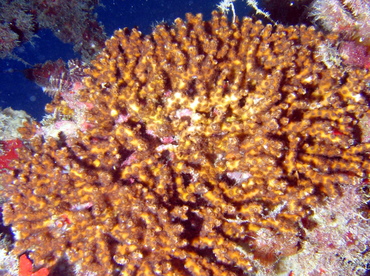 |
| You can tell that zooxanthellae are present here because the algae give the coral this orange color |
 |
| The photosynthetic zooxanthellae cannot survive at this deep depth, but the coral and its polyps can! This is an example of azooxanthellae, you can tell by its white color. |
My prospective scientific question is two fold: What is the *level of resilience in shallow water Oculina in regards to growth, biodiversity, and symbiosis. How does this compare to Oculina that are growing in deep waters, natural reefs, and artificial reefs?
*This means i'll have to establish a point system for coral that portrays their level of resistance to factors that affect their health, then rate each location of coral residence.
References
Avent, et al. “Deep-Water Oculina Coral Reefs of Florida: Biology, Impacts, and Management.” Hydrobiologia, Kluwer Academic Publishers, 1 Jan. 1977, link.springer.com/article/10.1023/A:1016588901551.


