IMES

IMES

Wednesday, October 8, 2014

Heather UR- "There's poison in the drinking water!!!"


Last week I mentioned a handful of the chemicals that I keep stumbling across in my research on cigarette butts; Cadmium, arsenic, and lead. I was asked the question: “What levels are acceptable in the environment, based on EPA standards, and what levels actually produce the impacts that you mentioned in your post?” 


while looking at the EPA website I could only find the “acceptable” levels for drinking water and they are as follows:
Cadmium- 0.005 mg/L
Arsenic- 0.010 mg/L
Lead- 0.015 mg/L


However I have been trying to research the different chemicals that are associated with cigarette butts and the tobacco within them and I was running into very vague explanations. After extensive research over the past weeks finally (Eureka!) I have found information on the chemical’s effects on the marine environment! I found a UK website that researched the effects of the chemicals on marine environments and the toxic levels.


Cadmium is naturally found in the earth’s crust at an average concentration of 0.1 mg/kg and is in higher concentration in sedimentary rocks. Cadmium also occurs naturally in the atmosphere because of volcanic activity; this atmospheric cadmium is absorbed by phytoplankton in the ocean’s surface waters and then transported to the depths. Due to upwelling the cadmium will be brought back to the surface and added to the concentrations from human activity. Cadmium is toxic to a range of micro organisms and effects the growth and replication. What I found interesting is that apparently the toxicity is reduced by the presence of sediments and high concentrations of dissolved salts and organic matter. I am expecting the presence of sand and aquatic plants will have a positive result on the levels of cadmium when I run my experiments. Certain factors like increased temperature, lowered salinity, and the combination with zinc will increase the toxicity on marine invertebrates effecting not only the growth and reproduction but also cause structural abnormalities in gill structures. The effects of cadmium toxicity on fish include malformation of the spine and is most susceptible to the embryo and larvae, surprisingly the egg is least susceptible to the effects of toxicity. To answer the question about the “acceptable” levels in the environment are any concentrations above 2.5 µg/l in the water column and 0.7 mg/kg in sediments (Canadian interim marine sediment quality guidelines) pose a risk to marine organisms and sediment dwelling organisms


Lead is poorly soluble in water so its main entry into the water is through releases. Due to its low solubility in water lead deposits into sediments and suspended particles. The organic compounds are found to be more toxic than the inorganic lead salts to fish and is more susceptible to younger fish than adults and eggs; the symptoms of lead toxicity include spinal deformity and blackening of the caudal region. The toxic range for fish has been documented as a range from 0.04 mg/L to 0.198 mg/L. Since lead deposits into the sediment it can possibly be toxic to sediment-dwelling organisms at concentrations above 30.2 mg/kg. Lead will bioaccumulate in the environment and it is unsure whether organisms absorb the lead or consume it. In fish lead is accumulated mostly in gill, liver, kidney, and bone. The eggs show increasing lead levels with increased exposure concentration, but there are indications that lead is present on the egg surface and not accumulated in the embryo. In shell fish the lead accumulates in the shell rather than the flesh, and dolphins will pass it to young through fetal development and lactation. The acceptable levels in the environment are as follows: acute toxicity to algae, invertebrates and fish at concentrations of dissolved lead above 10 µg/L annual average in the water column and concentrations above 30.2 mg/kg in sediment will effect sediment dwelling organisms. 


Arsenic is naturally found in the environment as a result of biological activity, the acceptable range of arsenic in the marine environment is 25 mg/L annual concentrations. Concentrations in sediments above concentrations above 7.24 mg/kg have been found to pose a risk for sediment dwelling organisms. Bioaccumulation can occur due to the sediments and the water column; however it is not biomagnified in food chains. This means that arsenic will accumulate in the environment through sediments and suspended particles, and will be absorbed by organisms, but will not be increased from fish feeding on each other like the accumulation of mercury.


Samm, UR - Fear the Filter!

So, through research, I have learned that titanium oxide and zinc oxide can create hydrogen peroxide with help from UV radiation in the water. While these ingredients are not necessarily toxic to us in the form of sunscreen, this pair of ingredients can be hazardous to marine life. But zinc and titanium oxide are not the only UV filters out there, it got me thinking to other ingredients, such as octinoxate and oxybenzone.

The Environmental Working Group created a table on toxicity levels for the nine most commonly used sunscreen filters. They range from higher toxicity concerns to lower toxicity concerns. The EWG are basing these filters on their toxicity to humans; if they penetrate through the skin into our tissue, mess with our hormones, or cause skin allergies. Out of the five moderate to higher toxicity level filters, four were found in breast milk. All five penetrated the skin up to 1%, with the exception of oxybenzone, which sports the highest amount of skin penetration (anywhere from 1-9%). Funnily enough, titanium and zinc oxide have lower toxicity levels, so they aren't as harmful to us. 

Zinc and titanium oxide are the only ingredients on the table that were tested by the original study. According to an article by Women's Health magazine, chemical filters (such as octinoxate) can also produce free radicals that can damage our cells. It's funny that both the chemical filters and zinc and titanium oxide produce free radicals, and I have to wonder if the free radicals produced by the chemical filters have the same effect on the marine environment as the free radicals from the oxides. If this is true, than could it be possible that these chemical sunscreen filters could help make hydrogen peroxide in our ocean?
________________________________________________________________________________

I guess at this point, I would wonder what you might test your sunscreen on and how you would set up any experiment. Any thoughts?

I have been thinking about this for quite a while. At first, I thought I could take some seagrass samples from a couple of different locations, but I am unsure of what I would test for. I thought of just doing what was done in the original study, by taking water samples from different locations and testing for zinc and titanium oxide. Given what I learned from today's article, if I go down that road I might also test for other common sunscreen ingredients. I am still a little unsure of which road I want to go down.

Although, I think no matter what, I definitely want to test for hydrogen peroxide in the water.

Brent Meister- Can You Hear Me Now?

     Imagine jumping into the water and dunking you're head under the water to hear the peaceful sound of water crashing on the beach, but instead you here a slew of explosions, boat propellers, and sonars. All of this is screaming in you're ear and you would want to jump out immediately. well some animals in the ocean cant jump out of the water and just walk away. Blue whales can hear human oriented sound and considerable scientific attention has been made to study the effects of high-intensity anthropogenic noises on the communication of blue whales. Whales use a series of clicks, whistles, bales, and songs to communicate with each other and each noise tells a different message. Most of the tests ran have had one thing in common and that is they all study the impact of human noises that happen to fall in the auditory range of blue whales. The most common blue whale call is a D-call which have a frequency of less than 100Hz and are believed to alert other blue wales to the location of food. There was a test done at mid to high range frequency or, 1000-8000Hz, to monitor D-call Behavior to see if the frequency blocks or messes with blue whale D-calls. In all a total of 4643 hours of data where recorded and D-calls were heard 48% of the time, however; mid to high range sonar was picked up only 9% of the time. Now during the time the sonar was playing all D-calls from blue whales stopped. This shows that blue whales can hear sounds produced outside there range. Also another reason for the sudden stop in D-calls is that Killer whales, who prey on blue whales, use mid frequency sounds, this also suggests that the blue whales may have stopped communicating because since blue whales can hear noises above there range killer whales can here noises below there range so the can locate blue whales. in allif we keep producing noise in the ocean the whales will not communicate and be able to find food, in this instance, and we can see a drop in whale population just due to starvation.

http://blogs.scientificamerican.com/thoughtful-animal/2012/02/29/can-you-hear-me-now-human-noise-disrupts-blue-whale-communication/

D-call Graph with mid to high range sonar

Blue Whale
Angela Boney
     Just to Clarify: the instruments used to put the tags on sharks and whales make the noise, or the tags themselves that make the noise?
   Great question and i feel a little concerned that i Didn't specify what actually makes the noise. although the tools used to put the tags on sharks and whales are noisy its only for a short time like if you snapped you're fingers underwater. what really makes the noise are the tags and depending how long the tag is supposed to be transmitting relates to how far it can travel through the ocean physically by being attached to a whale or shark, and these tags can omit a mid to high frequency signal for up to six miles.

Deb n' Paul
     Based on all of your ocean noise info-- what are you interested in exploring, what are you going to measure and how are you going to measure it?
     What i am interested in exploring is toothed whale frequencies. being that they communicate at high frequencies and are able to hear lower frequencies to hunt prey. i would like to see if there is a struggle for toothed whales to find food and if the boat traffic, sonar, or natural noise inhibits there ability to find their food. i would measure the frequencies of noise pollution and hopefully my own toothed whale noises and fish noises, and see if any of the noise made by noise pollution is close to the noise of fish to see if toothed whales are getting confused and having a tougher time finding food. i would measure this by recording the frequencies of toothed whales local to hear, noises of prey fish, and common noise pollution problems and see which noise pollution, if any, are on the same frequency as toothed whale prey fish.

Mike Salisbury, UR - Money, Get Away!


This week’s article is a bit dated, but it contains some really valuable information. The first sentence is very blunt, and I quote, “Volusia County won the right to allow vehicles on the beach until 2030, through a federal permit granted Friday that keeps beach driving in place despite the potential harm to endangered animals.” That’s a big deal! The article tries to justify this decision by stating the following: the harm to turtles is minimal, the county compensates by restricting driving areas/times, tourism, and of course tradition. Why break tradition for an endangered species, right?  Ha!

While these ideas are nice, they don’t really justify anything. Driving on the beach will never be good, or even neutral, for marine/coastal animals and their habitats. Beach driving is a very unnatural thing; there is no way around that statement.

Let’s look at a few reasons why:
  • Vehicle fluid leakage 

  • Tire ruts 
  • Compaction/movement of sargassum 
Sargassum habitats provide food and protection for many animals 

  •       Noise pollution (radios, engines, etc.)


These are just a few of the reasons why beach driving is bad for sea turtles and other marine animals. The important thing to note is that sea turtles and beach driving are not separated, both in space and time. The first three reasons are not dependent on a vehicle being present twenty-four seven. Overall, we need to look at things from different perspectives before we make decisions.  

_________________________________________________________________________________

Comments from last week:

Deb 'n Paul

Now that you have researched a great deal of info on sea turtles and beach driving, what do you think you might like to explore; how would you do it and what would you measure?

I have been asking myself the same question for weeks! I think it would be interesting to measure the amount of sea turtle nests on driving beaches vs. non-driving beaches from the past few years. I would have to do some searching for the data, but I think it would be worth it. 

Thursday, October 2, 2014

Heather UR- The grass is greener on the otherside... of the ash tray


In doing research trying to find what chemicals and metals are leaching from cigarette butts I stumbled upon something interesting. They are called Green Butts and they are biodegradable cigarette butts! 


Apparently these new aged cigarette butts are made from flax, hemp and cotton with a starch based binder; as well as, will have no added chemicals. If that doesn’t sound too good to be true, apparently when these filters are thrown on the ground they will actually grow grass and flowers too and full biodegrade in two months! Unfortunately Green Butts are not readily available quite yet, according to their website they are trying to release them by 2014. While trying to look up more information on the Green Butts I also found another company called Cigg Seeds which is also another biodegradable cigarette butt that is infused with wildflower seeds.


All these ideas are still concepts and have yet to be produced so it leaves me with the question of how? How are the chemicals that will still be present in the tobacco be absorbed by the natural filter, and how will the seeds be affected by the toxins? Will the plant aid in the filtering out of the toxins before they are leached into the environment?


Some of the chemicals that I have found to leach out of cigarette butts are cadmium, arsenic, and lead into the water which have been shown to bioaccumulation in marine organisms. Cadmium has been shown to cause a malformation of the spine in fish and increased cadmium in the sediments poses a risk to sediment dwelling organisms and Arsenic levels have been shown to slow the growth of some marine algae’s as well as being potentially lethal to organisms. Lead can have the ability to wipe out entire populations of microorganisms, it affects the nervous system of organisms, and it is able to accumulate in sediments and plant life. These are some of the chemicals that I will like to test for when I run my experiment, especially lead since I will be able to test the sediments, plants, and the water.

Samm, UR - Fish Bone Sunscreen?!

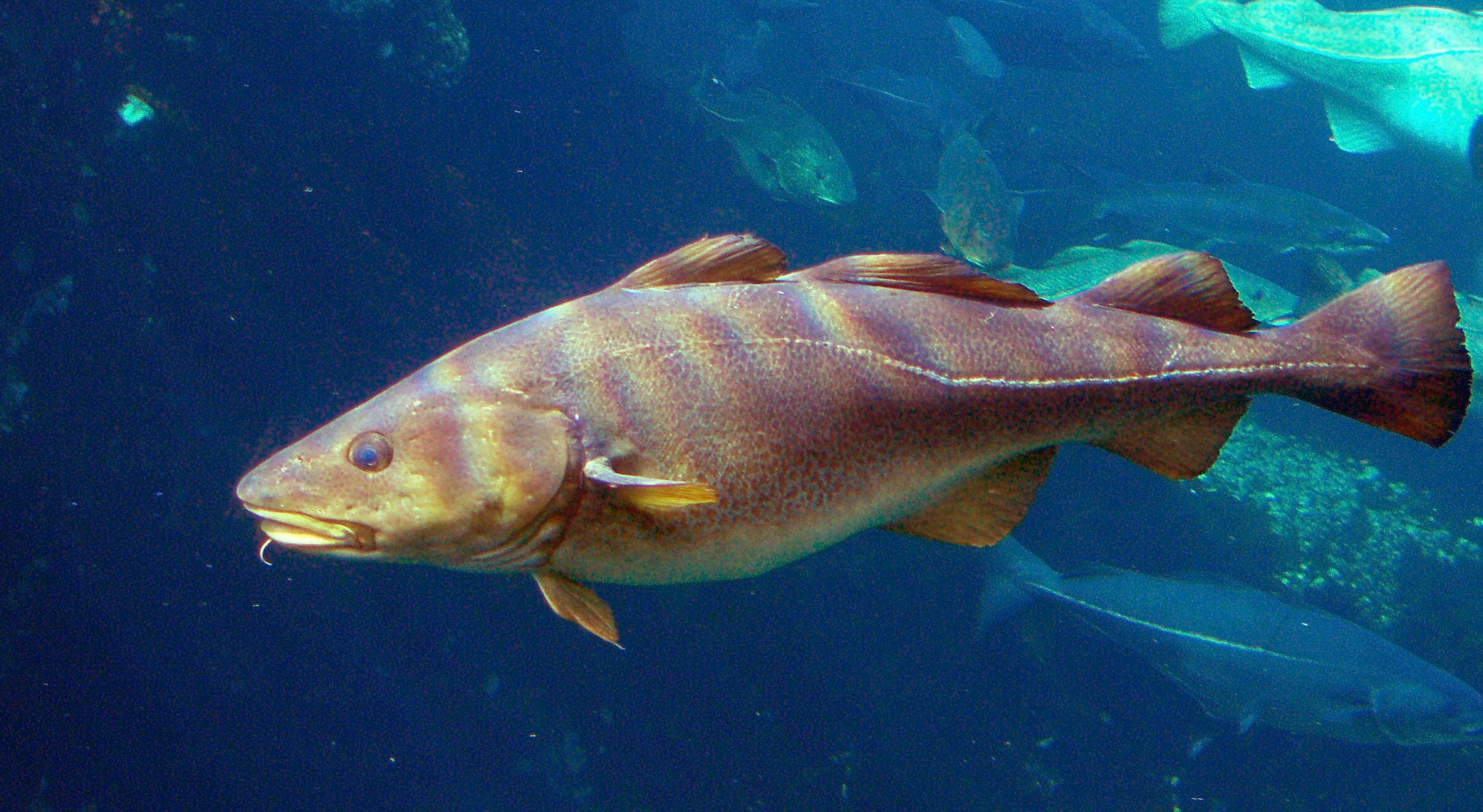
Gadus Morhua, "Atlantic Cod fish"
Since learning about the hazardous effects of sunscreen in the environment, I started to wonder if we were doing anything to try and overcome this issue. My article this week is about a group of Portuguese researchers developed a sunscreen filter from cod fish bones. The material they made is powder in form, and can be used with sun protection creams or in fabrics. It is coupled with iron and iron oxide, and is able to absorb both UVA and UVB radiation. The material is based on hydroxyapatite, which is a main component of fish bones, but it is unmodified, so it cannot absorb the UV. That is why iron is introduced to the material.
According to Prof. Manuela Pintado, this new material "is highly biocompatible and safe to use, as it is mainly made of calcium phosphates, compounds which are already present in our bodies". I love their idea of using fish bones to create a UV filter. The researchers originally came up with the idea because Atlantic Cod fish is an extremely popular dish in Portugal, and using their bones would help lessen their by-products. The article stated that hydroxyapatite is found in fish, animal, and human bones. If these researchers are able to create a safe, workable sun screen from fish bones, then this could spread around the world, using all sorts of different kinds of fish bones.

_________________________________________________________________________________

Deb 'n Paul: I would wonder what are the common plants found in our local springs? And - do you think any would be less tolerant of reactions associated with these sunscreens?

Also - UV radiation. How much UV radiation does Florida typically receive? Does it change seasonally and how does our "dosage" compare to other areas of the country?

Eelgrass
According to Florida Springs, Eelgrass (Vallisneria americana) and Pond Weeds (Potamogeton pectinatus) are two of the most common submerged plants found in our springs. They provide both food and shelter for many marine organisms. I am unsure how the ingredients of sunscreen would affect some of these plants. The original study showed that sunscreen affected the ability of some phytoplankton to grow, while stimulating others. In the least, if sunscreen did not physically affect the plants, the death/overgrowth of certain phytoplankton could cause depletion of these underwater grasses. Under the EPA and the Florida Department of Agriculture and Consumer Services, herbicide products can be reviewed for use of controlling weeds. Depending on how toxic hydrogen peroxide is to pond weeds, they may or may not be tolerant to it.

I could not find an exact number for the amount of UV radiation we in Florida receive.
UV-B Irradiance of the world, 11/2000
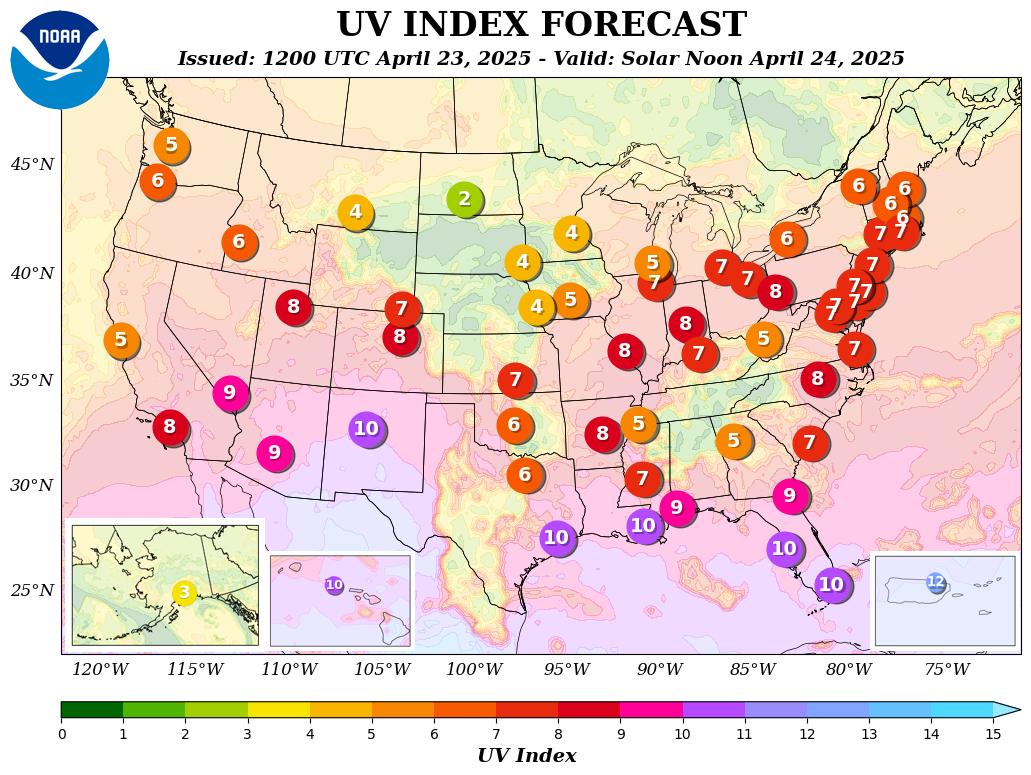
The photo to the left is from NASA and shows estimates of UV-B irradiance at the surface during November of 2000. Given the map, it looks like we had anywhere from 1000-2000 J/m². UV radiation depends on many factors. Altitude, cloud coverage, and reflectivity just to name a few. UV radiation changes daily, but most parts of the country tend to stay around the same number. The EPA actually has a website where you can enter in your zip code and they will give you a UV Index Forecast for the day. Daytona Beach is registered as an 8 - Very High. 
The photo to the right is of the Unites States, categorized by UV Index. The southern part of the country is registered with high numbers, while the Northeastern states are moderate with UV radiation.

Wednesday, October 1, 2014

Brent Meister UR: Ocean Noise

     To start I am going to reiterate the most common themes of human generated noise pollution in the ocean. The most common human generated noise in the ocean are shipping noise, military sonar, and air-gun arrays. Most noise pollution is in the range that most humans can here so you can imagine how loud it would be if you had a shipping lane right above your house. The article goes on to explain that most toothed whales use a high frequency bio sonar , which is similar to sonar ran by military ships and is well above the human range of hearing. there was a study done off the coast of Neptune Canada. this study showed the noise rating all year long in the ocean. what they found was there was an Eco sonar used to monitor ocean currents was show in a cyan color band in between 30 Hz and 40 Hz which is just out of the range of human hearing. also the article goes on to explain that the noise can travel. as we place tags on sharks and even whales they give off the same sound as the eco sonar off the coast of Neptune Canada and can travel up to 10 kilometers (6 miles).
http://newswatch.nationalgeographic.com/2013/09/20/ultrasound-ocean-noises-pose-risk-to-marine-life/

Shark Tag

Year long ocean noise survey off Neptune Canada
Deb n' Paul
Ok--I need more elaboration on the questions you answered for me this week. Please remember--you will often times need to answer these questions to persons not at all familiar with these concepts/terms such as students in an intro oceanography class!. e.g., " The decibel value is the logarithmic ratio of the intensity of the wave to a certain reference point." followed by a link for me to continue searching for the answer. No, no, no! Again I ask--and in layman's terms--what is meant by hertz, frequency and decibel and how do they differ from one another. Also--if you are going to direct the student to more information, please help them out by giving them an example of how the information might be used or what you will be using it for. YOU do the work--that's your job! Not the job of the reader!

     To start hertz is the standard unit of frequency. Frequency is the number of cycles a wave has. if you think of a wave in the ocean you measure it from crest to crest or trough to trough. so you can say however many times you see a wave pass an end point in a certain amount of time that is the frequency of that wave. it works the same way as as if you are measuring sound because sound travels in waves and hertz is the frequency of that wave in a given time. so you can say frequency and hertz are related. a decibel simply put is how intense the wave is. you can look at it as the higher the frequency the shorter the wave length and the higher decibel rating will be. decibels are usually measured in a confined space. most of the time in the water it is up to 1 meter. so the decibel of a lighting strike is 260 dB in one meter of water. however most times you measure noise in the ocean it is almost always in hertz because it is more relate-able to the mammal hearing process.

Rebecca UR - Introduction

My family at The Natural Bridge park
Hi everyone, my name is Rebecca Leahey. I currently live in Ormond Beach. I was born in Virginia but grew up in South Florida. I moved back to Virginia for awhile but couldn't resist the sun & humidity and have been back in Florida for the last 6 years. I am married and have two amazing kids that remind me everyday what's really important in life.

I am in my final year here at Daytona State College (YAY!!). I will be receiving my Bachelors degree in Secondary Earth/Space Science Education so I can teach Middle School. Because of this, my goal with this blog is a bit different than the other students. My project this semester is to develop two separate lesson plans for middle school students based on experiences in this class.

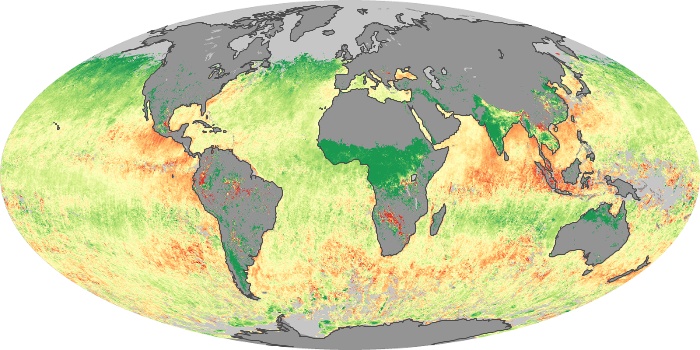
Aerosol Size
 Aerosol Size Map
My first lesson plan will require students to use data found online to create graphs, tables, and/or charts. The lesson plan will also require students to read and interpret graphs, something that we do a lot in this lab! The Florida Department of Education actually has a standard that requires middle school students to learn this so I will definitely be using this in my classroom someday.  I really wanted to use the interactive maps, like the one on the left, found at Earth Observatory.
The maps, however, do not contain any data that students can analyze and to create graphs with. So I have been scouring the internet for middle school appropriate sites that include data. I found one site My NASA Data that has a wealth of pre-made lesson plans along with links to other websites that my be useful. I've been going through, link by link, trying to find a site with hard data I need for my first project.

Mike Salisbury, UR - Always Look on the Bright Side of Life

My last few posts were a bit depressing, so I want to look for the silver lining this week; or at least talk about something that isn't killing sea turtles.

Click here to view this week’s article

This week’s article discusses the Sea Turtle Habitat Conservation Plan (HCP) for Volusia County. This plan, which is currently in effect, balances beach driving and protecting sea turtles, piping plovers, other coastal wildlife and their habitat.

Here is a link to the Habitat Conservation Plan

A few of the county’s efforts to protect coastal wildlife mentioned are as follows:
  • natural beach management areas and conservation zones that are off limits to public vehicles 
  • no driving on the beach at night
  • during nesting season, beaches are not open to public driving until they have been inspected by specially trained and permitted sea turtle monitoring teams
  • a volunteer group called “Washback Watchers” search for and rescue hatchlings that have been washed ashore by storms or tides
Photo showing post and signage used to mark eastern boundary of the Conservation Zone, Volusia County Beaches.


All of these are great! I had no idea our beaches are inspected during nesting season before they are opened to public driving.

The article also mentions the Marine Science Center (MSC); this is one of my favorite places in Ponce Inlet. Among other things, the MSC rehabilitates sick and injured turtles, and return them to the wild once they are healthy. If you haven’t been, the MSC is an interesting place to visit.

Turtle rehab at the MSC
Heading back to sea after rehabilitation at the MSC

Overall, it is great to see Volusia County making progress towards sea turtle preservation.  I’m learning a lot about sea turtles and beach driving this semester. Although it may seem like an uphill battle, we are taking steps in the right direction.


Comments from last week:

Deb 'n Paul
I was recently introduced to an article about the fact that baby sea turtles (still buried/unhatched) actually 'talk' to each other. Researchers think this might be why baby sea turtles seem to hatch all at the same time, increasing chances of survival from predators. So it got me to thinking--if they need to be able to hear each other--how does our presence/activities on the beach impact their hatching activities--or does it? Could this be yet one more threat source?

I think you might have found another threat source! I did some research on this and found quite a bit of information on this.


This article mentions motor boats as a disruption, but there are plenty of other sources of noise pollution near the nests (vehicles, drunken tourists, radios, etc.). This definitely seems like another threat to sea turtles.  

Angela Boney
You mention people consume turtles and use parts of it. Does that happen here in the USA or mainly other parts of the world?

The consumption of sea turtles (eggs and meat) occurs in coastal communities around the world, especially in Central America and Asia. It might occasionally occur in the USA but the numbers are much lower when compared to other countries.